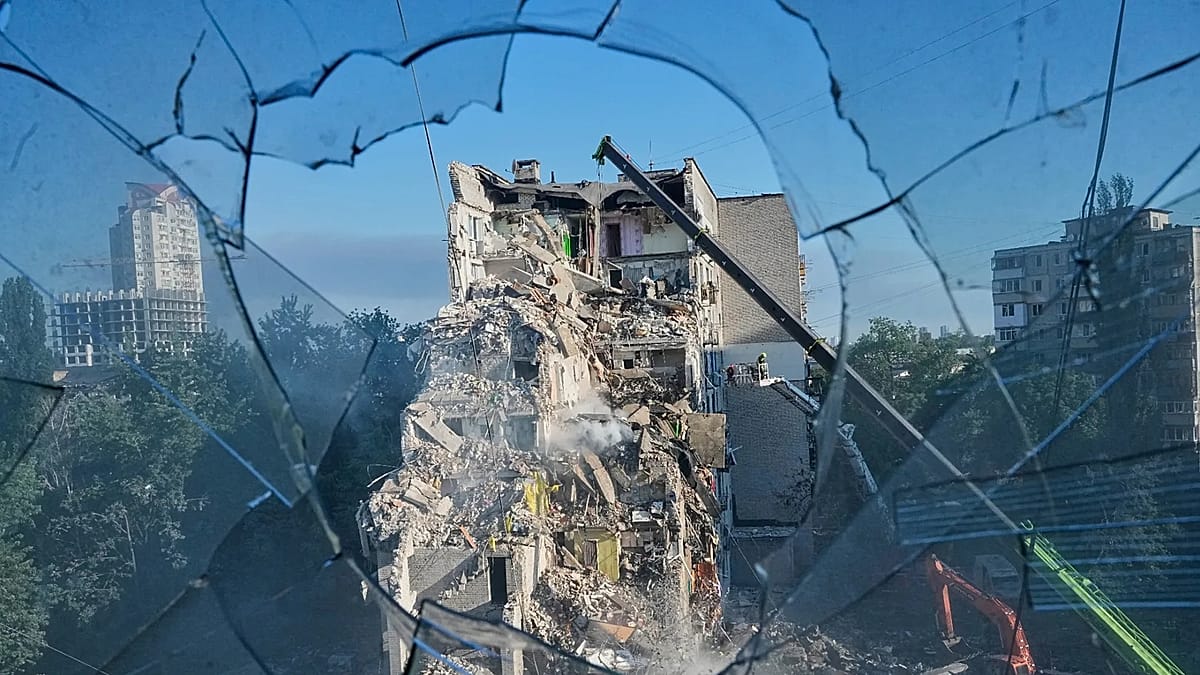
European Union foreign policy chief Kaja Kallas has announced a fresh round of sanctions targeting Russia's military-industrial complex, specifically firms involved in manufacturing components for Shahed and Geran drones. The move comes in direct response to a devastating overnight attack on Kyiv that killed at least 13 people and wounded dozens more.
“Today, I will propose to sanction more entities supporting Russia's military-industrial complex in response to the strikes,” Kallas wrote on X. “The more Moscow attacks civilians, the more sanctions must be imposed. We keep raising the cost until Russia understands it cannot win.”
The attack on the Ukrainian capital involved ballistic missiles, according to Ukraine's air force. President Volodymyr Zelenskyy cut short a visit to Dublin on Wednesday after receiving intelligence about an impending Russian strike. The assault underscores the ongoing threat to civilian infrastructure and lives across Ukraine.
New Sanctions Methodology
The proposed sanctions target five entities and one individual involved in developing and producing components that enhance the capabilities of Russian unmanned aerial vehicles (UAVs), including Shahed- and Geran-type drones. These listings were shared with EU ambassadors on Thursday, with further discussions scheduled for 8 July ahead of the Foreign Affairs Council on 13 July.
Notably, the new designations will not be included in the 21st sanctions package currently under negotiation among EU member states. That package is expected to be adopted by mid-July. Instead, the EU is adopting a new methodology: adding sanctions on a rolling basis. This approach is designed to speed up the application of measures without requiring the approval of a broader package, which can be slowed by political wrangling among the bloc's 27 members.
The shift to rolling sanctions reflects a growing frustration in Brussels and European capitals with the pace of punitive measures against Moscow. As Russia deploys faster jet-powered drones to overwhelm Ukraine's air defenses, the EU is under pressure to respond more nimbly to evolving threats.
Kallas's announcement also ties into broader European efforts to curb Russia's war machine. The EU has already imposed 21 rounds of sanctions since the full-scale invasion began in February 2022, targeting individuals, banks, energy exports, and technology transfers. However, enforcement remains uneven, and Moscow has found ways to circumvent restrictions through third countries and front companies.
The focus on drone components is particularly significant. Shahed drones, originally Iranian-designed, have been adapted by Russia for mass production. Geran drones are a Russian variant. Both have been used extensively to strike Ukrainian cities and energy infrastructure. By targeting the supply chain for these UAVs, the EU aims to degrade Russia's ability to sustain its aerial campaign.
Ukrainian officials have repeatedly called for faster and more comprehensive sanctions. Ukraine urges faster air defense deliveries after deadly Russian strike on Kyiv, highlighting the urgent need for both defensive systems and economic pressure on Moscow.
The new sanctions also come amid a broader debate within the EU about how to maintain unity on Russia policy. Some member states, particularly Hungary and Slovakia, have resisted certain measures, arguing they harm European economies more than Russia's. The rolling sanctions approach may help bypass such objections by avoiding the need for unanimous approval on each individual listing.
Meanwhile, the human toll of the war continues to mount. Wednesday's attack on Kyiv is a grim reminder that Russia shows no sign of scaling back its assaults on civilian areas. As European leaders prepare for the Foreign Affairs Council in July, the pressure is on to deliver tangible results—both in terms of sanctions and military aid.
The EU's latest move signals that Brussels is willing to experiment with new tools to keep pace with the conflict. Whether rolling sanctions will prove more effective than traditional packages remains to be seen, but the message to Moscow is clear: the cost of war will keep rising.