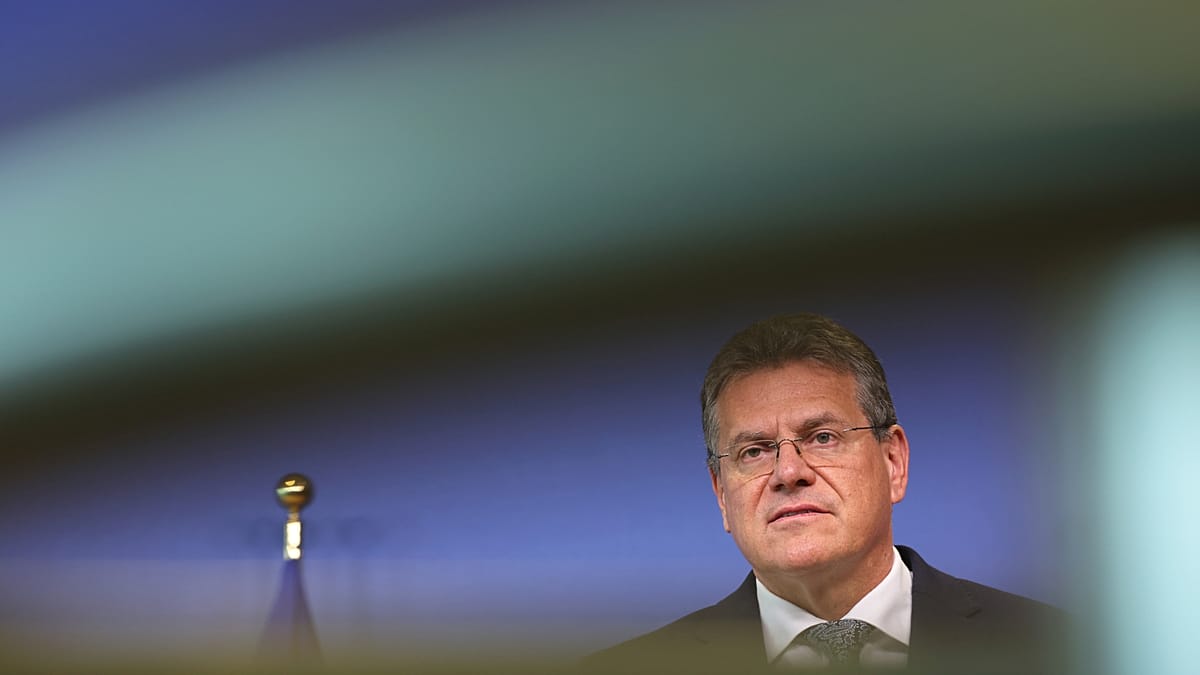
EU Trade Commissioner Maroš Šefčovič is set to visit Washington on Thursday and Friday in a bid to break the deadlock over the 50% tariffs imposed by US President Donald Trump on European steel and aluminium shortly after his return to power last year. The trip marks Šefčovič’s first to the US since the July 2025 EU-US trade deal, which was clinched at Turnberry, Scotland, by European Commission President Ursula von der Leyen and Trump after weeks of escalating trade tensions.
The Turnberry accord included commitments to negotiate quota arrangements for steel and aluminium that would replace the 50% duties. However, implementation of the broader agreement—which also involved cuts to EU tariffs on US industrial goods—has been stalled by the European Parliament, effectively freezing the metals talks.
Taking Stock of Commitments
European Commission Deputy Chief Spokesperson Olof Gill said on Tuesday that the visit will be an “opportunity to take stock of the broad sweep of EU/US trade deal and investment relations.” He added that the focus will be on where both sides “stand” on the implementation of their “respective commitments” under the deal. Resolving issues over steel and aluminium trade will be top of the agenda, Euronews has learned.
The agreement was reached after Šefčovič made repeated trips to Washington to defuse the dispute and avert even steeper tariffs. The European Commission ultimately accepted 15% duties on European exports to the US—a deal widely seen in Europe as unbalanced. The accord is now under discussion among EU member states and MEPs before full implementation.
Šefčovič’s visit comes amid a complex backdrop. The Turnberry deal has been frozen several times by EU lawmakers following fresh tariff threats by Trump over Greenland. A ruling by the US Supreme Court also reshuffled the deck, finding that most US tariffs imposed in 2025 were illegal. In response, the White House shifted legal grounds to maintain tariffs as part of its nationalist 'America First' trade agenda. However, those measures are set to expire in July, after which they will require approval from the US Congress.
Pressure Points and Digital Tensions
In the coming days, Šefčovič aims to ensure the US sticks to the agreed 15% tariffs. His agenda includes meetings with US Trade Representative Jamieson Greer, US Commerce Secretary Howard Lutnick, and US Treasury Secretary Scott Bessent. He will also head to Capitol Hill to meet members of the US Congress.
Washington has also tied the removal of steel and aluminium tariffs to EU moves to relax digital rules it sees as targeting US Big Tech firms. While the European Commission has always defended its sovereign right to legislate—insisting rules are applied without discrimination—discussions on setting up an EU-US forum on digital issues have recently surfaced. This adds another layer of complexity to the negotiations, as the EU seeks to maintain its regulatory autonomy while securing trade concessions.
The outcome of Šefčovič’s visit will be closely watched across the continent, particularly in steel-producing regions of Germany, Italy, and Poland. The broader implications for EU-US relations are significant, especially as the bloc continues to navigate its own energy and defence challenges. For context, EU leaders recently gathered in Cyprus for crisis talks on energy, defence, and the Middle East, highlighting the interconnected nature of these issues.
As the July deadline for US tariff expiration approaches, the pressure is on both sides to find a resolution. Šefčovič’s trip may be a crucial step in unlocking the stalled talks, but the path forward remains uncertain.



