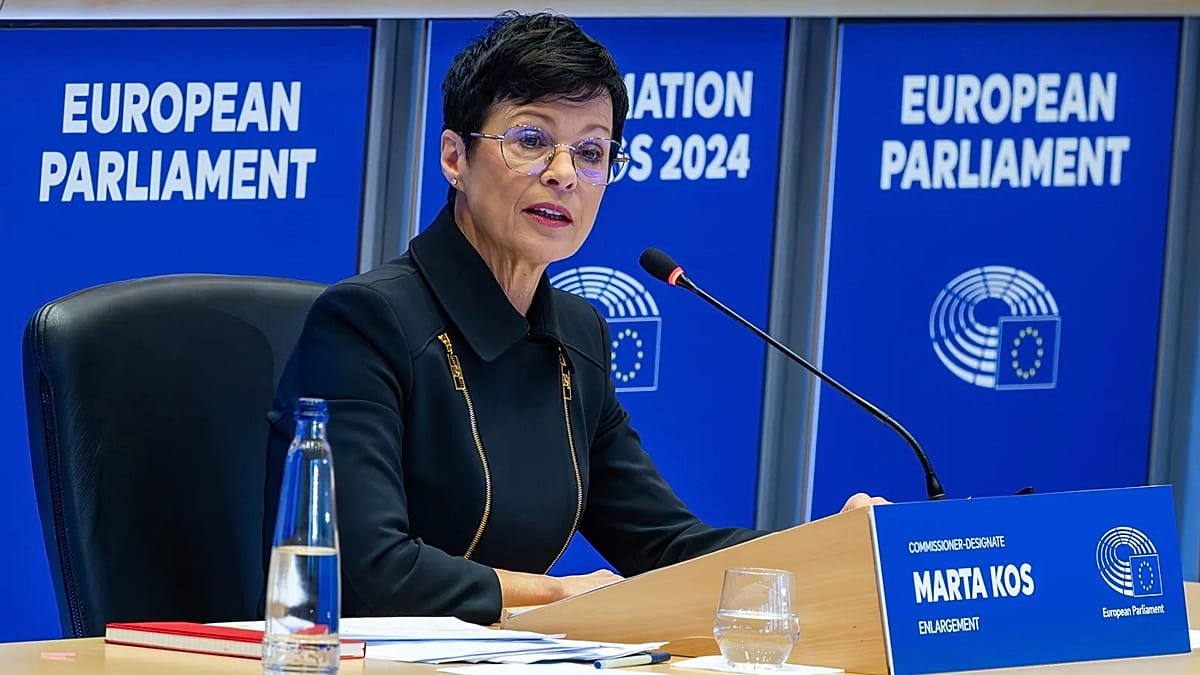
The European Commission is actively considering the suspension of €1.5 billion in pre-accession funding for Serbia, a move that would mark a significant escalation in Brussels's response to Belgrade's domestic reforms and foreign policy alignment. The potential freeze, confirmed by Enlargement Commissioner Marta Kos to members of the European Parliament, stems from profound concerns over rule-of-law backsliding, including contentious judicial reforms passed in January.
A Judicial Overhaul Under Scrutiny
At the heart of the dispute are legal amendments introduced by the government of President Aleksandar Vučić, which the Commission argues severely compromise judicial independence. Kos highlighted specific worries about changes to Serbia's anti-corruption prosecution, which she described as creating a "flawed form of autonomy" that weakens the overall judiciary. The Commission is awaiting a formal assessment from the Council of Europe's Venice Commission, whose experts visited Belgrade in March to evaluate the laws.
"We are increasingly worried about what is happening in Serbia," Kos told MEPs. "From laws that undermine the independence of the judiciary to crackdowns on protesters and recurrent meddling in independent media." Her statement underscores a broader pattern of democratic erosion that has strained Serbia's EU candidacy, a status it has held since 2012.
The political context in Serbia has grown more tense since December 2024, when a concrete awning collapse at a train station in Novi Sad killed 16 people. The tragedy sparked sustained anti-government and anti-corruption protests, which have reportedly faced a harsh crackdown from authorities, adding to the EU's litany of concerns.
Foreign Policy as a Persistent Flashpoint
Compounding the internal rule-of-law issues is Serbia's steadfast refusal to align with the EU's common foreign policy on Russia. While Belgrade has condemned Russia's war of aggression against Ukraine, it continues to reject joining EU sanctions on Moscow, maintaining close political and economic ties with the Kremlin. This stance has fuelled frustration in European capitals, leading the European Parliament to adopt a critical resolution in May 2025.
This tension places Serbia in a delicate position, seeking EU membership while cultivating a strategic partnership with Russia—a balancing act that Brussels finds increasingly untenable. The potential freezing of funds represents a tangible consequence of this misalignment, signalling that financial support is contingent on both internal reforms and foreign policy cohesion. The EU's stance reflects a broader hardening of its approach to enlargement, where adherence to core democratic principles is non-negotiable.
Kos reiterated the EU's conditional support: "We will continue to support Serbia on its EU path. But we expect the authorities to fully align its judicial laws with the Venice Commission's recommendations and to restore the independence of its media." The message is clear: continued accession progress and financial aid are directly linked to demonstrable action.
The Broader European Context
Serbia's situation is not isolated within the European political landscape. The EU's tougher line on rule-of-law conditionality mirrors its ongoing struggles with member states like Hungary, where democratic backsliding has triggered the withholding of billions in cohesion funds. It also coincides with the bloc's efforts to maintain robust support for Ukraine, having recently moved to release a major €90 billion loan package and new sanctions against Russia.
The Commission's deliberation over the Serbian funds underscores a pivotal moment in the EU's enlargement policy for the Western Balkans. With geopolitical competition intensifying in the region, the bloc faces pressure to uphold its standards while preventing further drift of candidate countries toward other global powers. The decision on the €1.5 billion will be a critical indicator of how Brussels intends to navigate this challenge—prioritising principled conditionality over geopolitical expediency.
The coming weeks will be decisive, hinging on the Venice Commission's opinion and the Serbian government's willingness to amend its contested laws. For Serbia's citizens and its political elite, the choice involves defining the nation's strategic orientation: a commitment to European integration with its requisite reforms, or a path that risks isolation from the bloc's substantial financial and political support.



