The energy crisis triggered by the closure of the Strait of Hormuz has forced the European Union to rethink its energy strategy. The International Energy Agency warned of a daily loss of approximately 13 million barrels of oil. In the first 17 days of the Iran conflict, the EU spent an additional €6 billion on fossil fuel imports due to soaring prices. This shock has accelerated a shift toward a more balanced energy mix, where nuclear power is being revived as a reliable complement to wind and solar.
From Hesitation to Embrace: Nuclear's Comeback
European Commission President Ursula von der Leyen acknowledged in a March 2026 address that “it was a strategic mistake for Europe to turn its back on a reliable, affordable source of low-emissions power.” This marks a clear departure from the post-Fukushima era, when countries like Germany completed their nuclear phase-out in 2023 and Italy abandoned the technology after a 1987 referendum. Now, Brussels is actively integrating nuclear into its long-term energy plans.
The EU’s renewed focus on nuclear is not without precedent. The 1957 Euratom Treaty laid the foundation, and a major expansion from the 1970s to the 1990s built most of today’s reactors. In 2023, the EU officially classified nuclear power as “economically sustainable” under the EU Taxonomy, unlocking private capital. The Net-Zero Industry Act of 2024 granted nuclear projects “strategic” status with 18-month permitting. In March 2026, the Commission adopted the SMR Strategy, introducing a €200 million investment guarantee to accelerate small modular reactor deployment.
AccelerateEU: A Five-Pillar Response
On 22 April, the European Commission launched AccelerateEU, a five-pillar initiative to enhance energy security and reduce reliance on foreign energy. The plan coordinates member states’ gas storage through the 2025 Energy Union Task Force and eases state aid regulations. A new Fuel Observatory will track production, imports, and exports of transport fuel, signaling potential shortages. Measures also include income support schemes and energy vouchers to cut electricity taxes for vulnerable households.
The Electrification Action Plan aims to simplify the electrification of industry, transport, and buildings, making electricity the dominant energy source. The Grids Plan focuses on modernizing the bloc’s energy infrastructure. To attract private investment, Brussels will host events like the Clean Energy Transition Investment Forum in May 2026 and the Clean Energy Investment Summit later this year.
According to Rosita Zilli, Policy Director at the European Energy Research Alliance, the Commission’s measures are driven by ongoing geopolitical pressures, showing that the “EU is not yet fully operating with a stable, forward-looking strategy.” Yet she welcomes Europe’s energy diversification, including nuclear, which she calls “a low-carbon, dispatchable source of energy.”
The Nuclear Landscape: Production and Logistics
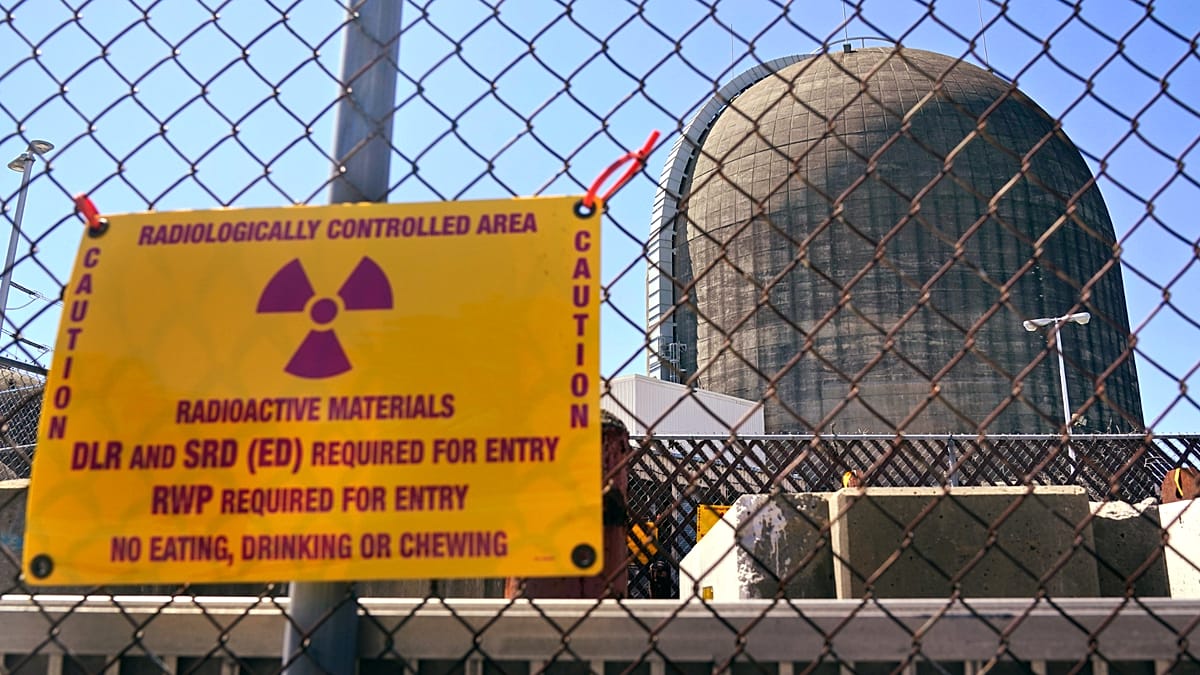
Nuclear energy currently generates 24% of the EU’s electricity, with 98 reactors operating across 12 member states, totaling about 96.2 GW of capacity. France dominates, supplying 58% of the EU’s nuclear electricity. Other major producers include Spain, Sweden, Finland, and Belgium, which together account for around 26% of output. Countries like Slovakia, Hungary, Bulgaria, Czechia, and Finland have smaller fleets but rely heavily on nuclear in their national energy mixes.
Expanding nuclear capacity requires maintaining a full fuel cycle and industrial ecosystem, including uranium supply, conversion, enrichment, and fuel fabrication. The EU must also address regulatory oversight, skilled workforce development, waste management, and long-term financing for construction, operation, and decommissioning. Life extensions for existing plants and new investments in reactors and supply chains are essential.
Geopolitical Pressures and Energy Independence
The US-Iran conflict has exposed the EU’s ongoing reliance on foreign fossil fuels. After Russia’s invasion of Ukraine in 2022, the EU shifted its dependency to liquefied natural gas (LNG), with the US providing 58% of the bloc’s overall LNG supplies in 2025. The European Commission warned that rising US-Iran tensions have cost the EU an additional €24 billion in energy imports, even with a steady supply.
Energy diversification has already yielded results: the EU’s energy imports fell 11.1% in 2025 compared to 2024, totaling €336.7 billion, down 51.4% from 2022’s €693.4 billion, according to Eurostat. However, Zilli warns that “energy systems experience time lags, meaning the effects of supply disruptions unfold gradually.”
The EU’s pivot to nuclear is part of a broader strategy to balance security, affordability, and decarbonization. As the bloc navigates the transition, the AccelerateEU plan and renewed nuclear investments signal a pragmatic shift. The energy mix debate continues, but nuclear’s role as a stable baseload partner to renewables is now firmly on the table.