The latest Eurobarometer survey on sport and physical activity reveals a continent in motion—but not for everyone. While more Europeans are playing sports and doing so more regularly than four years ago, the data underscores persistent gaps between countries, age groups, and socio-economic classes.
Nearly half of the 26,508 respondents across the EU said they exercise or play sport daily or several times a week. The share of those who never exercise has dropped from 45% in 2022 to 39% today. Yet the overall uptick masks a fragmented reality: in Finland and Denmark, about one in five people exercise every day, while in Portugal, Greece, and Romania, roughly two-thirds say they never engage in sport.
Who gets to be active?
Roxana Mînzatu, the European Commission's Executive Vice-President for Social Rights and Skills, Quality Jobs and Preparedness, highlighted the core issue: “More Europeans are getting active, but the opportunity to take part still depends too much on income, age and education.”
The survey confirms that education and financial stability are strong predictors of participation. Among those who studied until at least age 20, 59% exercise several times a week, compared with just 23% of early school leavers. Similarly, people who struggle to pay their bills are twice as likely to say they never exercise as those who are financially comfortable—54% versus 26%.
Age is another dividing line. Nearly three-quarters of 15-to-24-year-olds are active at least several times a week, but that share falls to just 25% among those aged 75 and over. For older Europeans, health problems or injury are the most common barrier, while younger and middle-aged adults cite lack of time.
Cost also plays a role, with 12% of respondents naming it as a barrier. Mînzatu stressed the need for affordable options: “Everyone should have access to affordable sport and safe places to exercise, close to home. This means opening doors to children whose families cannot afford club fees, older people and people with disabilities.”
Active commuting on the rise
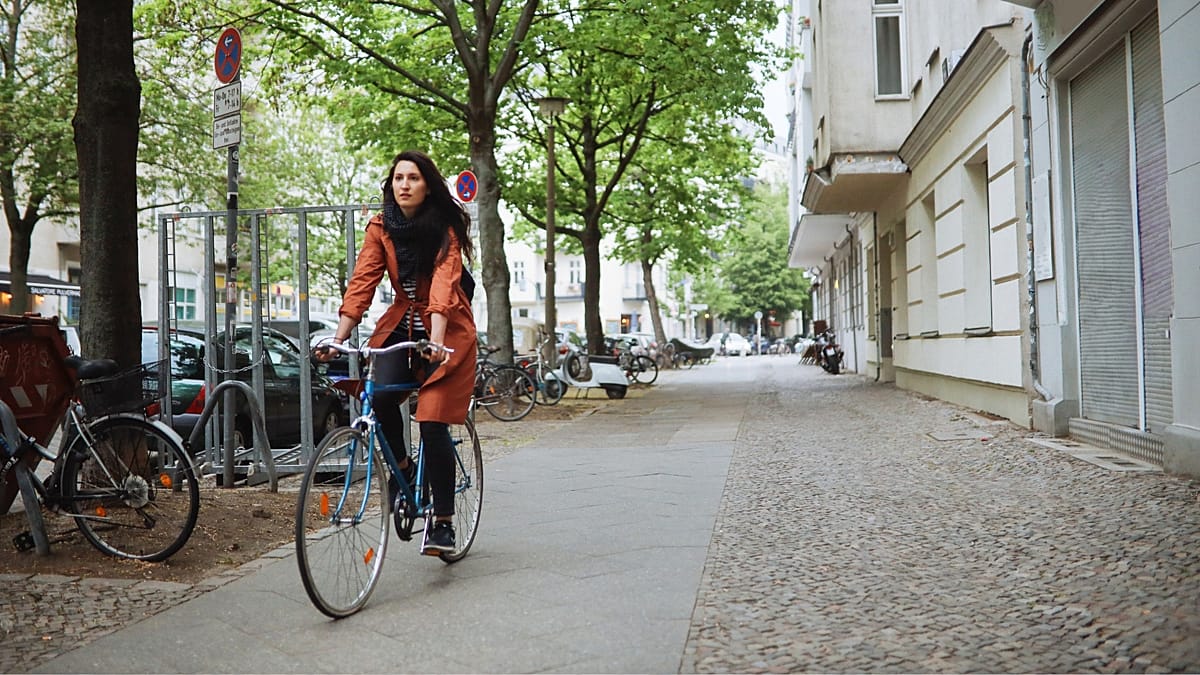
The survey also tracked physical activity beyond sport. The share of Europeans who actively commute—by walking or cycling—jumped from 24% in 2022 to 37%. Walking for at least 10 minutes at a time is now reported by 72% of citizens, a significant increase from 16% in 2022.
However, not all neighbourhoods are equally supportive of active lifestyles. Many respondents said their local areas are not well suited to walking or cycling, which could limit opportunities for those who want to incorporate more movement into their daily routines.
The findings come as European policymakers debate how to promote healthier living across the bloc. While the overall trend is positive, the survey serves as a reminder that the benefits of physical activity are not evenly distributed. As Mînzatu put it, the goal is to make sport and exercise accessible to all, regardless of background.
For a deeper look at how economic pressures shape European lives, see our piece on idle savings eroding purchasing power. And for insights into demographic challenges, read about how long Europeans actually receive pensions.