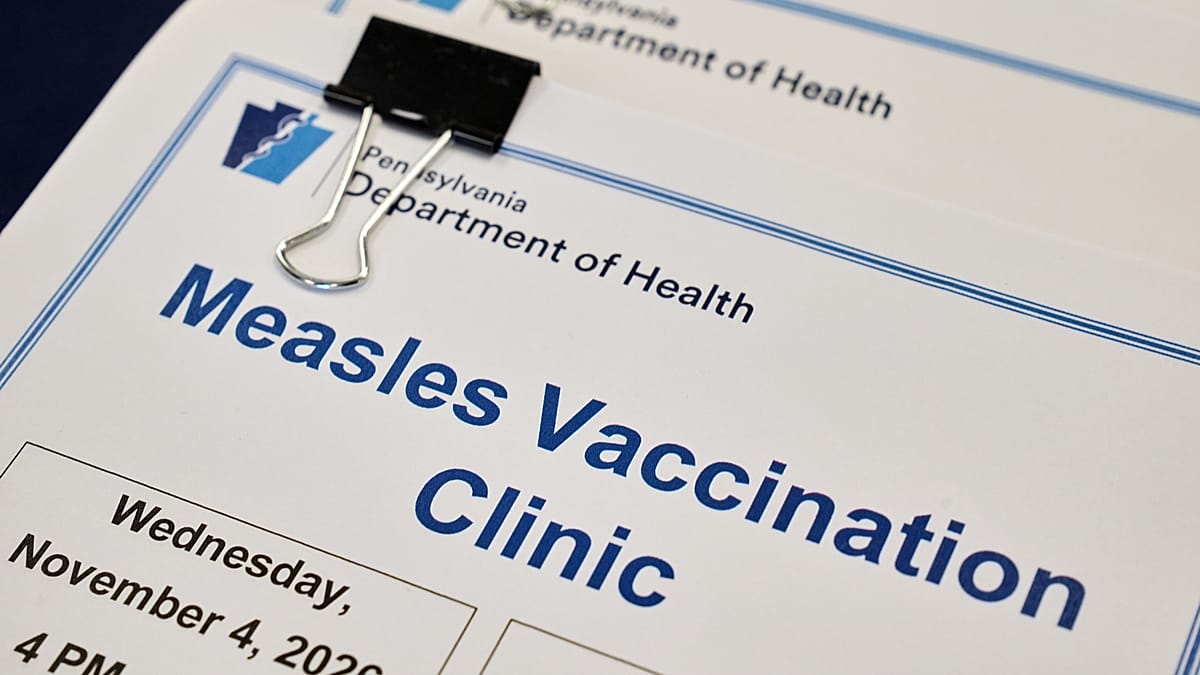
The United States has recorded more than 5,000 measles cases so far this year, the highest annual figure in 35 years, according to official data released on Friday. The Centers for Disease Control and Prevention (CDC) reported 5,182 confirmed cases nationwide, more than double the 2,289 cases logged throughout 2025 and the largest number since 1991.
State health authorities have confirmed at least eight measles-related deaths, including among very young children. The fatalities have alarmed paediatricians, who stress that the disease is entirely preventable through vaccination.
A preventable tragedy
Adam Ratner, a paediatric infectious disease specialist, told AFP that the deaths were “tragic, and that is completely preventable.” He added, “The burden of these diseases will fall on children, who are not the ones who are making these decisions.”
Measles was declared eliminated in the United States in 2000, largely thanks to widespread immunisation. However, the disease has made a significant comeback in recent years, fuelled by declining vaccination rates and growing public distrust of health authorities. US Health Secretary Robert F. Kennedy Jr., a long-standing vaccine sceptic, has faced criticism for contributing to that distrust.
“Robert F. Kennedy Jr. does not believe that measles is a big problem and does not want to believe that there are deaths from measles,” Ratner said.
Measles typically causes fever, respiratory symptoms and a characteristic skin rash. In more serious cases, it can lead to complications including pneumonia and inflammation of the brain, potentially resulting in lasting health problems or death. Before the introduction of the measles vaccine in 1963, an estimated 400 to 500 people died from the disease every year in the United States, according to the CDC.
The outbreak in the US serves as a stark reminder for Europe, where vaccination rates have also slipped in several countries. The World Health Organization has noted a rise in measles cases across the continent, with outbreaks in Romania, Italy, and Germany in recent years. European health officials are watching the US situation closely, as it underscores the fragility of herd immunity and the consequences of vaccine hesitancy.
In the European Union, the European Centre for Disease Prevention and Control has urged member states to maintain high vaccination coverage and to address misinformation. The US experience, with its high death toll, offers a cautionary tale for Europe's vaccination gaps.
While the US outbreak is a domestic health crisis, its implications resonate across the Atlantic. The return of a disease once eliminated is a reminder that public health gains can be reversed. For European readers, the story is not just about America—it is about the shared challenge of sustaining trust in vaccines and protecting the most vulnerable.