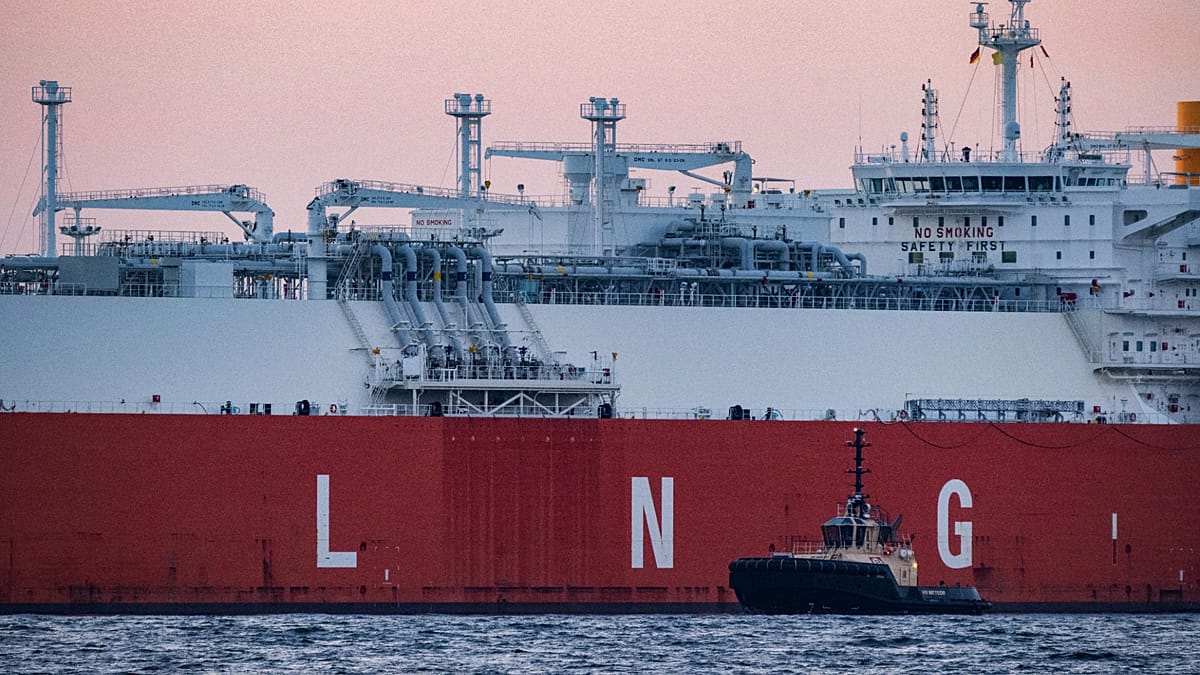
After two years of rebuilding its gas security following the loss of Russian pipeline supplies, Europe is again confronting high natural gas prices and a precarious supply outlook. The European Union's goal of filling storage to 90% before winter now looks unattainable, according to energy market intelligence firm Montel, as liquefied natural gas (LNG) cargoes from the Gulf are increasingly diverted to Asia.
The effective closure of the Strait of Hormuz, which handles roughly 20% of global gas transit, has tightened supplies and prompted the European Commission to relax storage targets. Member states have been allowed to aim for levels as low as 75%, a move intended to prevent panic buying and price spikes. Yet even with this flexibility, European storage stood at just 5% full at the end of July—12 percentage points below last year and 16 points below the five-year average, Montel reports.
Storage shortfall deepens
Montel's modelling projects storage levels between 69% and 84% by 1 November, depending on the pace of injections and LNG availability. That would leave the EU's 90% target firmly out of reach. “Continued disruption to LNG flows through the Strait of Hormuz means that pressure on Europe's gas market continues to build as winter approaches,” said Joachim Endress, a gas market expert at Montel.
The situation is especially acute in Germany, where storage was only 46% full at the end of July. Net injections between April and July were 11% below the five-year average and 18% lower than the same period last year. The shortfall leaves Europe with a steep challenge in the final three months of the injection season.
Montel estimates that Europe received an average of just 105 LNG cargoes per month between May and July, far short of the roughly 130 needed to approach 80% storage by early November. To reach even that level, Europe would need more than 140 LNG vessels each month in August, September and October—a figure Montel considers unlikely unless European gas prices rise substantially or Hormuz flows are restored.
Asia's pull
US LNG cargoes that previously flowed to Europe are increasingly heading to Asia, where buyers offer better returns. Deliveries to China, Japan, South Korea, Taiwan and India tripled between March and July, reaching record levels. In July, shipments to those five markets exceeded US deliveries to Europe for the first time. Since April, selling US LNG into Northeast Asia has generally yielded higher profits than sending it to Northwestern Europe, meaning Europe may need to pay more to attract cargoes back—ultimately raising energy bills for consumers.
This leaves the EU's gas market exposed as winter approaches. A cold spell, another supply disruption, or stronger Asian demand could quickly intensify competition for cargoes. The storage shortfall also reduces the safety cushion traders have if demand spikes or supplies are interrupted.
Despite the “volatile context” of global gas markets, a European Commission spokesperson dismissed concerns of winter shortages, saying the situation is “not an emergency at all.” The spokesperson noted that storage levels are close to 62% and that there is “no immediate concern for the security of gas supply in the EU ahead of the next winter season.”
Since Russia's full-scale invasion of Ukraine in 2022, the EU has worked to redesign its gas system to end reliance on Russian energy and prevent Moscow from using revenues to fund its war. The current challenges underscore how fragile that transition remains, as Europe competes with Asia for LNG and navigates geopolitical disruptions. For more on the broader energy pressures, see Europe's gas price surge.