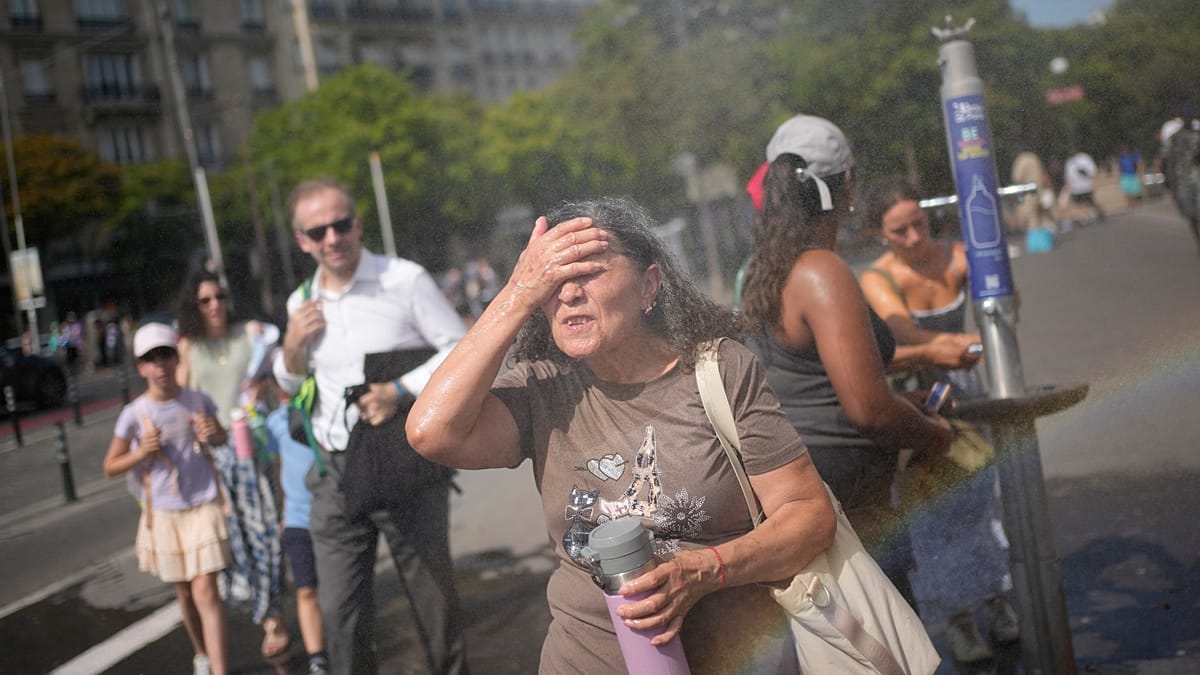
For decades, air conditioning was a rarity across much of Europe, a luxury associated with hotter continents. Thick stone walls, wooden shutters, and tree-lined boulevards kept homes and offices cool during the mild summers that defined the region. But climate change is rewriting that reality. Prolonged heatwaves, with temperatures routinely exceeding 35°C and urban heat islands pushing thermometers past 41°C, have made cooling a matter of survival—and a flashpoint in Europe's climate politics.
The tension came into sharp focus when an internal message at the European Commission revealed that air conditioning on the lower floors of its Brussels headquarters had been shut down for staff. The move, intended to save energy, underscored a broader clash: how to reconcile the urgent need to cut emissions with the equally pressing need to protect citizens from deadly heat.
Climate Policy Meets Social Inequality
The debate over air conditioning is no longer just about technology; it is about class. Wealthier Europeans are adapting by installing efficient heat pumps that provide both heating and cooling, upgrading insulation, or escaping the hottest weeks in second homes abroad. Meanwhile, lower-income households often live in poorly insulated apartments, top-floor flats under dark roofs, or dense urban neighborhoods with little green space. Renters frequently cannot install permanent cooling without landlord approval, and rising electricity prices make even portable units a financial burden.
“This heat is not only a climate emergency, but it is also a class war,” reads a statement from the left-wing European political alliance DIEM25, led by former Greek Finance Minister Yannis Varoufakis. “The rich burn the planet, then buy air conditioning, private pools and second homes while workers are left in overheated flats, unsafe jobs, failed public services and burning cities.”
The political fault lines are clear. French far-right leader Marine Le Pen has called for a mass, subsidized rollout of air conditioning, while Greens like Marine Tondelier, the French Green presidential candidate, acknowledge that air conditioning, which was “not necessary a few years ago, is becoming so.” EU lawmaker Jutta Paulus (Greens/Germany) insists that any new systems must meet “the highest efficiency standards, be powered by renewable electricity and definitely operate without climate-damaging F-gases.”
A Health Emergency Across the Continent
Heatwaves are not just uncomfortable—they are deadly. France recorded around 1,000 excess deaths during its June heatwave, mostly among older adults. Spain reported 327 heat-related deaths. According to a recent European Trade Union Institute report, around 130 million workers across Europe are exposed to workplace heat stress, resulting in 277,000 related injuries and 230 deaths annually.
Andreas Flouris, professor of physiology at the University of Thessaly in Greece, notes that while southern Europe sees the most heat-related accidents, “the centre and the north are catching up.” This trend is reflected in rising accident rates in countries like Germany and Poland, where buildings and infrastructure were not designed for extreme heat.
Green EU lawmaker Lena Schiling (Austria) warned that the latest deadly heatwave is the result of “global failure to tackle the climate crisis” and stressed that “the answer cannot be to leave people alone to cope with unbearable heat by expecting everyone to buy an aircon.” She called for targeted protection in schools, hospitals, and care homes.
On the other side, EU lawmaker Ondrej Knotek (Czech Republic/Patriots for Europe) emphasized adaptation measures, including “the promotion of air conditioning to help European citizens and their economy.”
The American Model: A Cautionary Tale
Globally, air conditioning ownership has surpassed 1.5 billion units, according to the International Energy Agency (IEA). In the United States, 90% of homes have air conditioning; in Europe, the figure is just 20%. The American model shows that widespread cooling can be achieved, but at a high environmental cost. Air conditioners consume vast amounts of electricity and use refrigerants that, if improperly managed, can have powerful greenhouse effects. Unless powered by clean energy, they risk creating a vicious cycle: more cooling leads to higher emissions, which in turn make future heatwaves worse.
Europe's challenge is to find a middle path. Some cities, like Paris and Barcelona, are investing in green infrastructure—planting trees, creating cool corridors, and installing reflective roofs—to reduce the urban heat island effect. Others are exploring district cooling systems or subsidizing efficient heat pumps for low-income households. The debate over air conditioning is likely to intensify as heatwaves become more frequent and severe.
Ultimately, the question is not whether Europe will adopt more air conditioning, but how it will do so without deepening social divides or undermining its climate goals. As the continent swelters, the answer will shape not only its buildings but its social contract.