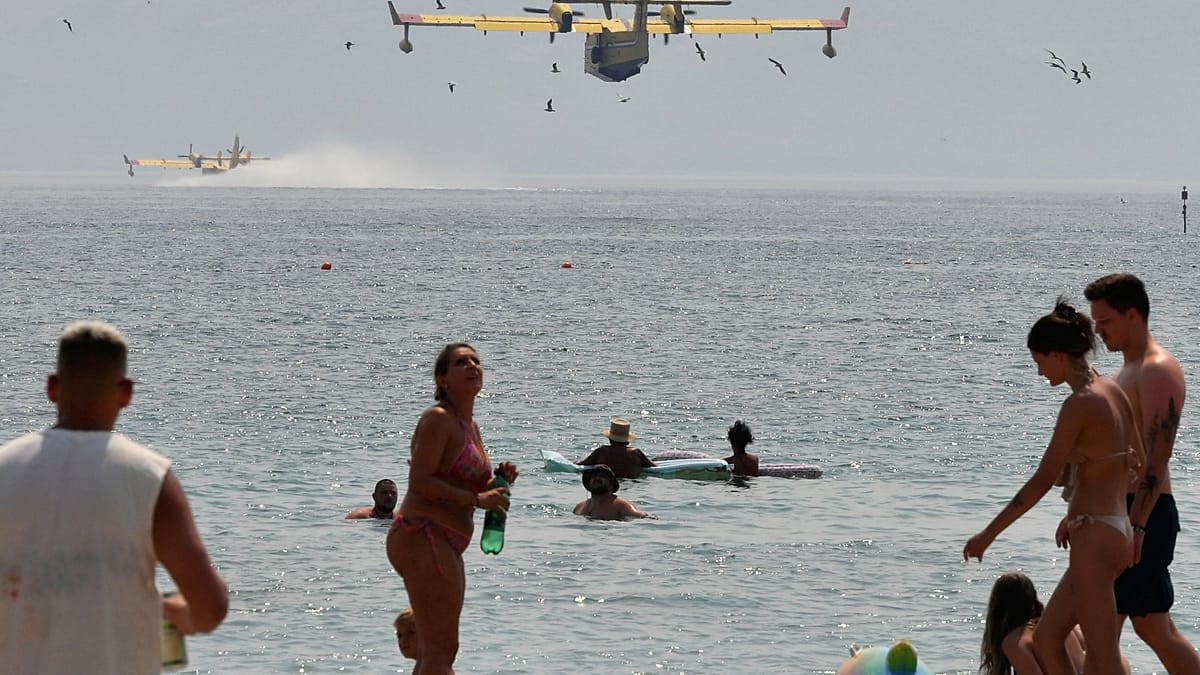
A fast-moving wildfire near the Croatian coastal town of Omiš, roughly 25 kilometres south-east of Split, forced about 1,200 residents and tourists to flee overnight on Thursday and into Friday. Strong winds pushed the flames toward the town, injuring several people and severely disrupting the peak summer holiday season.
Local emergency services reported that at least a dozen people sustained injuries, mostly from smoke inhalation and minor burns, though no fatalities have been confirmed. Firefighters, supported by water-dropping aircraft, worked through the night to protect homes and hotels along the Adriatic coastline.
Evacuations and travel chaos
The evacuation order covered several neighbourhoods on the outskirts of Omiš, a popular destination for tourists drawn to its beaches and medieval old town. Buses and boats were used to move people to safer areas, with many spending the night in temporary shelters set up in Split and nearby towns.
Holiday travel across the region has been severely affected. Roads leading to and from Omiš were closed for hours, and some flights at Split Airport experienced delays as smoke reduced visibility. Tour operators have been advising clients to check with local authorities before travelling to the Dalmatian coast.
The blaze is the latest in a series of wildfires that have hit southern Europe this summer, stretching firefighting resources across the continent. In Greece, similar fires have forced beach evacuations and prompted sea rescues, as wildfires strain Europe's firefighting capacity.
Climate and preparedness concerns
Meteorologists point to a combination of prolonged drought and unseasonably strong winds as key factors behind the intensity of the Omiš fire. Croatia, like much of the Mediterranean, has seen hotter and drier summers in recent years, increasing the risk of large-scale blazes.
Local authorities have urged residents to remain vigilant and follow evacuation orders. "The situation is under control but still dangerous," said a spokesperson for the Split-Dalmatia County civil protection unit. "We are doing everything we can to protect lives and property."
The fire has also raised questions about preparedness for the growing wildfire threat. Some experts argue that European countries need to invest more in prevention and cross-border cooperation. In Switzerland, for example, ski resorts have begun repurposing snowmaking pipes to fight wildfires, a sign of the changing risk landscape.
As the climate continues to warm, scientists warn that wildfires will become more frequent and intense across southern Europe. A recent analysis suggested that Europe's 2026 wildfire season could be among the worst on record, underscoring the urgency of adaptation measures.
For now, the focus in Omiš is on containing the flames and caring for the displaced. Many residents have returned to assess the damage, while tourists are being advised to postpone non-essential travel to the area. The Croatian government has promised support for those affected and is coordinating with EU civil protection mechanisms.
The incident is a stark reminder of the vulnerability of coastal communities to climate-related disasters, and of the need for robust emergency planning across the continent.