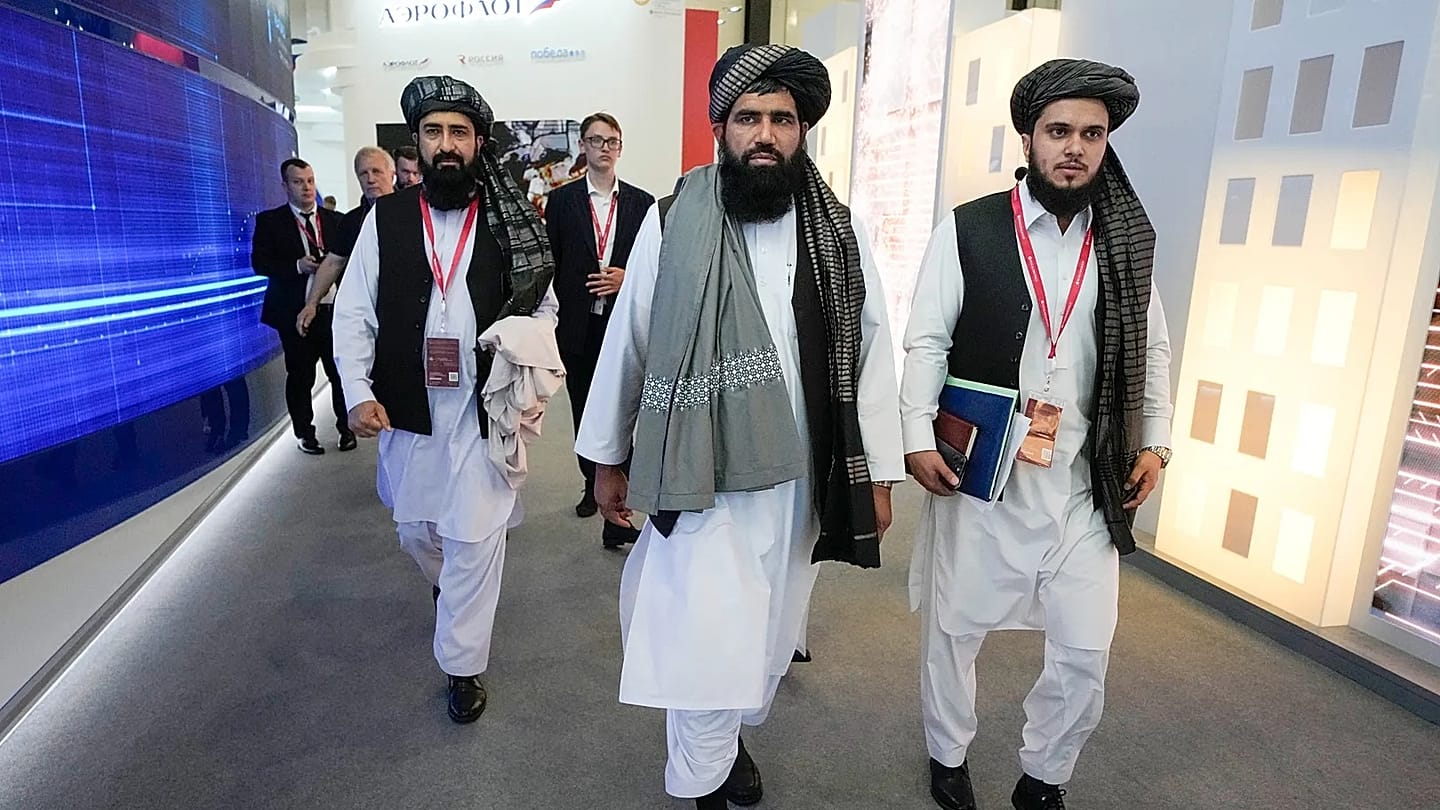
Brussels and several European capitals are quietly pursuing arrangements with Afghanistan's Taliban-led administration to facilitate the return of irregular migrants deemed security threats or convicted of serious crimes. The effort, which has involved secret talks in Brussels and visa grants to Taliban delegates, reflects a growing frustration across the continent with the limits of deportation under current conditions.
Since the Taliban's takeover of Kabul in August 2021, EU member states have largely halted forced returns to Afghanistan, citing the volatile security situation and the absence of a recognised government. However, a shift is now underway as countries like Germany, Austria, and the Netherlands push for a more pragmatic approach, arguing that the legal and moral case for retaining certain individuals—particularly those with criminal records or links to extremist networks—has become untenable.
Secret Diplomacy and Public Backlash
In recent months, EU officials have held secret talks with Taliban representatives in Brussels to explore the logistics of deportations. Belgium granted visas to a Taliban delegation for these discussions, a move that drew sharp criticism from human rights groups and some member states. The talks have focused on identifying individuals who pose a security risk and establishing procedures for their return, including the verification of identities and guarantees of safe passage.
Any formal agreement would carry significant political and diplomatic costs. European governments risk public backlash from constituencies opposed to legitimising the Taliban regime, as well as from human rights advocates who warn that returnees could face torture or execution. The Taliban's record on women's rights, freedom of expression, and due process remains abysmal, making any cooperation deeply controversial.
“Engaging with the Taliban on deportations is a moral hazard,” said a senior EU diplomat who spoke on condition of anonymity. “We are effectively recognising a regime that has imposed one of the most repressive systems in the world, and we are doing so for the sake of administrative convenience.”
Divisions Within the EU
The issue has exposed deep divisions among the 27 member states. Countries like Poland and Hungary, which have taken a hard line on migration, are pushing for swift action, while others, including France and Spain, have expressed reservations. French President Emmanuel Macron and Spanish Prime Minister Pedro Sánchez have rejected the idea of EU-run return hubs as ineffective and contrary to European values, arguing that the focus should be on integration and legal pathways instead.
Germany, which hosts the largest Afghan diaspora in Europe—over 400,000 people—has been at the forefront of the debate. The Bundestag has debated the issue intensely, with some lawmakers calling for a resumption of deportations for serious offenders, while others warn of the precedent it would set. The German interior ministry has confirmed that it is in contact with Taliban officials through intermediaries, but has stopped short of formal recognition.
The European Commission has so far avoided taking a unified stance, leaving individual member states to navigate the diplomatic minefield. The EU's foreign policy chief has stressed that any engagement must be conditional on the Taliban's respect for human rights, a condition that the regime has shown little inclination to meet.
Security Concerns and Legal Hurdles
Proponents of the deportations argue that the security imperative is clear. Several European intelligence agencies have identified Afghan nationals among individuals linked to extremist networks, and courts in countries like Sweden and Finland have convicted Afghan migrants for terrorism-related offences. Returning these individuals to Afghanistan, they say, is a matter of public safety.
Legal experts, however, point to significant hurdles. The principle of non-refoulement, enshrined in international and EU law, prohibits returning individuals to countries where they face a real risk of persecution or serious harm. The Taliban's judicial system, which includes summary executions and corporal punishment, makes it difficult to argue that returnees would be safe. European courts have consistently blocked deportations to Afghanistan on these grounds, and any new agreement would likely face legal challenges.
“The legal framework is clear,” said a lawyer representing Afghan asylum seekers in Berlin. “You cannot send someone back to a place where they are at risk of being killed or tortured. The Taliban's record speaks for itself.”
Wider Implications for EU Foreign Policy
The debate over Afghan deportations is part of a broader struggle within the EU over how to engage with de facto regimes that lack international legitimacy. The same tensions have played out in relations with Iran, Russia, and other states where diplomatic engagement is seen as necessary but morally fraught. The EU's internal power struggle over foreign policy has also been evident in its approach to Israel, where member states have clashed over the balance between security cooperation and human rights.
For now, the EU appears to be pursuing a dual-track approach: maintaining public condemnation of the Taliban's human rights abuses while quietly exploring operational cooperation on deportations. Whether this strategy can hold depends on the outcome of ongoing talks and the political will of member states to accept the risks involved.
As the continent grapples with the Taliban dilemma, the stakes are high. A misstep could not only undermine Europe's credibility on human rights but also embolden other authoritarian regimes to demand similar concessions. The coming months will test whether the EU can find a path that balances security, legality, and principle.