Twenty-five years after the September 11 attacks, the world continues to grapple with their consequences. On this week's Europe Today, we examine how that day reshaped transatlantic relations and global security, while also turning to pressing contemporary issues: Russia's war in Ukraine, the EU's trade disputes, and the Baltic states' security concerns.
9/11's enduring lessons
Stefan Grobe spoke with Anthony Gardner, who served as the United States ambassador to the European Union during Barack Obama's second term. Gardner reflected on how the attacks transformed American foreign policy and the transatlantic alliance. "The immediate response was unity, but the long-term consequences were more complex," he said, noting that the wars in Afghanistan and Iraq strained relations with European allies. He urged today's leaders to remember that "security and values must go hand in hand," a lesson that remains relevant as Europe faces new threats from the east.
Dombrovskis in Riga: Russia's aggression and Baltic security
From the Rīga Conference in Latvia, Maria Tadeo spoke exclusively with Valdis Dombrovskis, the European Commission's executive vice-president for an economy that works for people. Dombrovskis addressed the Baltic states' assessment of the Russian threat, which has become more acute since Moscow's full-scale invasion of Ukraine. "The Baltic states have been warning about Russia's intentions for years, and unfortunately they have been proven right," he said. He stressed that the EU must continue supporting Ukraine militarily and economically, while also strengthening its own defence capabilities. "We cannot afford complacency," he added, pointing to the need for sustained sanctions and investment in European security.
Dombrovskis also touched on the broader economic implications of the war, including energy prices and inflation, which have hit European households. He reiterated the Commission's commitment to maintaining fiscal discipline while supporting growth, a delicate balance as member states face rising debt levels.
Norway's foreign minister on European security
In the same interview series, Maria Tadeo spoke with Norway's Foreign Minister Espen Barth Eide. Eide, whose country shares a border with Russia in the Arctic, emphasised the importance of Nordic-Baltic cooperation. "We are seeing a more assertive Russia, and we must respond with unity and resolve," he said. He also highlighted the role of NATO and the need for continued transatlantic engagement, even as the United States focuses on other global challenges.
Ukraine's intelligence chief speaks
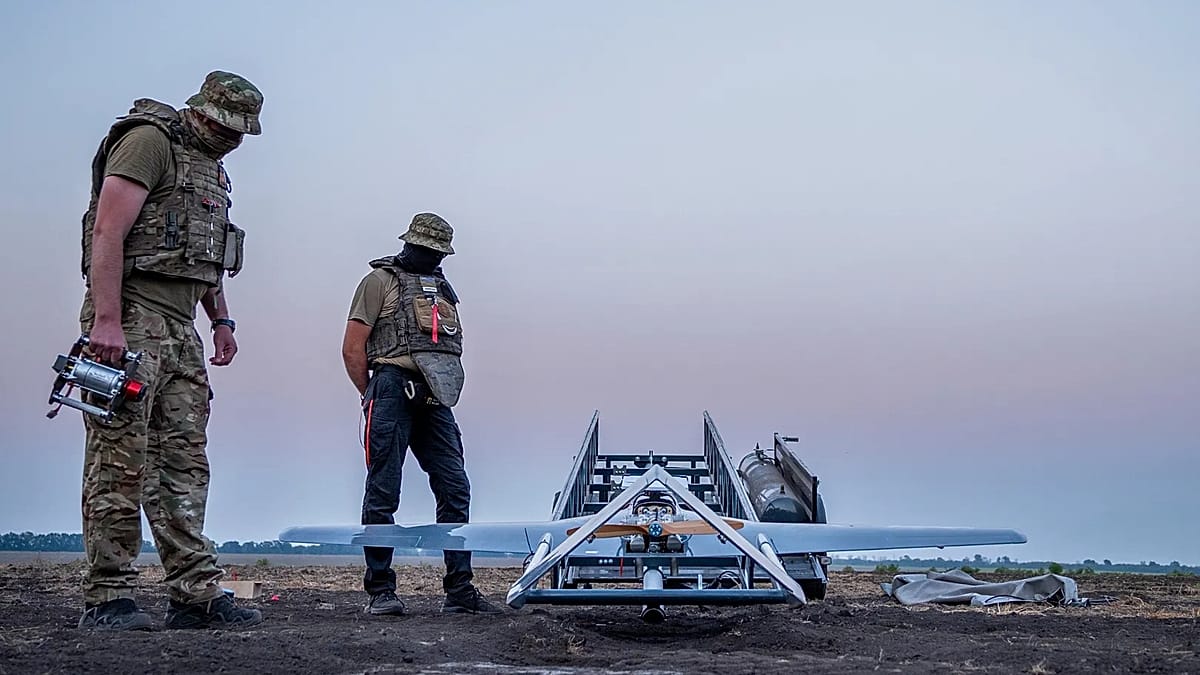
Angela Skujins interviewed Kyrylo Budanov, head of the Office of the President of Ukraine, who was also in Riga. Budanov provided a stark assessment of the battlefield situation, noting that Ukraine's counteroffensive is progressing but faces significant challenges. He called for more Western air defence systems and long-range weapons, echoing recent appeals from President Volodymyr Zelenskyy. "We need the means to defend our skies and our cities," he said, as Kyiv continues to seek a meeting with former President Donald Trump, with expectations of a possible encounter by late September.
Brazil meat imports suspended
In a separate development, Mared Gwyn spoke with Brazil's Ambassador to the EU, Pedro Miguel da Costa e Silva, following the European Commission's decision to suspend imports of Brazilian meat and other food products over concerns about antimicrobial substances used in production. The ambassador defended Brazil's agricultural standards, arguing that the suspension was based on "misunderstandings" and that Brazil is committed to food safety. However, the Commission maintains that the precautionary principle applies, and that European consumers must be protected. The dispute highlights the delicate balance between trade and regulatory standards, a recurring theme in EU relations with third countries.
The suspension comes as the EU seeks to diversify its food imports and strengthen its own agricultural resilience, a priority underscored by recent supply chain disruptions. It also raises questions about the future of the EU-Mercosur trade agreement, which has faced opposition from European farmers and environmental groups.
Looking ahead
As the week unfolds, Europe Today will continue to bring you in-depth analysis and exclusive interviews. For more on the latest developments, including the EU's response to the economic crisis in Iran and the UN climate chief's call for European leadership, stay tuned to our coverage.
Join us next time for more stories from across the continent and beyond.