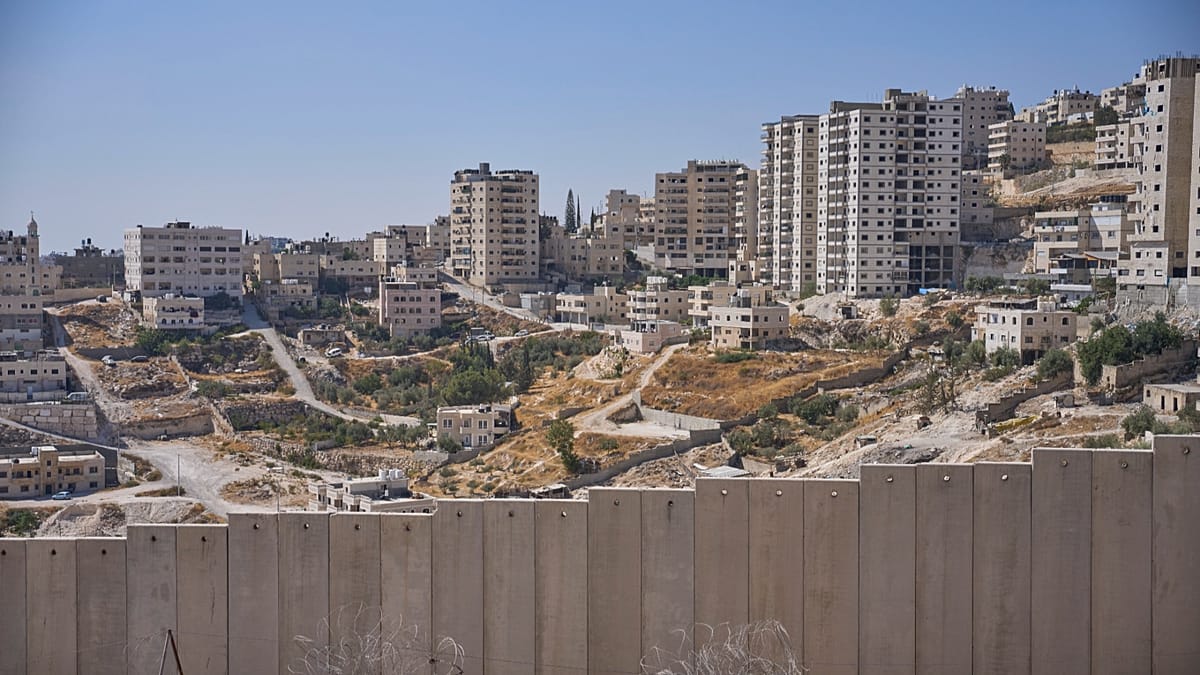
The governments of seven countries, including four European Union member states, have issued a joint condemnation of Israel's E1 settlement project in the occupied West Bank, urging the government in Jerusalem to abandon the plan and halt all settlement expansion. The statement, released on Thursday, follows the publication of tenders for more than 1,200 housing units in the contentious area east of Jerusalem.
Signatories included France, Germany, Italy, the Netherlands, the United Kingdom, Norway, and Canada. The joint statement described the timing as particularly alarming, noting "grave instability in the West Bank with unprecedented levels of violence by settlers against civilians, and serious restrictions on the Palestinian economy." The leaders called on Israel "to retract these plans immediately and end its expansion of settlements in the West Bank."
E1: A project that threatens a contiguous Palestinian state
The E1 plan, which was given the green light by Israeli authorities last year, covers a roughly 12-square-kilometre tract of land between Jerusalem and the Israeli settlement of Maale Adumim. If built, the project would further sever east Jerusalem—occupied and annexed by Israel and predominantly inhabited by Palestinians—from the rest of the West Bank. The United Nations secretary-general has warned that E1 poses an "existential threat" to the possibility of a contiguous Palestinian state.
Belgian Foreign Minister Maxime Prevot called the tenders "unacceptable" on Thursday, saying the project "would seriously undermine the viability of the two-State solution." His remarks were echoed by UK Foreign Secretary Ed Miliband, who demanded an end to the project and to settlement expansion. London summoned Israel's charge d'affaires to convey the message directly.
Miliband said he had delivered the same message to his Israeli counterpart, Gideon Sa'ar. Sa'ar, however, rejected the criticism "outright" and took issue with what he called "the patronising tone of his words." In a post on X, Sa'ar wrote: "The Jewish people have the right to live throughout the Land of Israel, just as the British have the right to live in London and throughout the United Kingdom." He accused the UK of "blaming only Israel while ignoring Palestinian extremism," which he claimed was fuelling antisemitic attacks against the British Jewish community. "The UK Government's decision to damage the relationship between our countries is deeply unfortunate," he added, vowing that "Israel will defend its rights, its interests and its people."
The latest tender, published by Israel's housing ministry on 18 August, covers more than 1,200 housing units—roughly one-third of the planned E1 development, according to the Israeli NGO Peace Now. The group said submissions are due by 19 October, one week before Israeli elections scheduled for 27 October. Peace Now accused the government of trying to advance construction commitments before the vote.
Israel heavily restricts the movement of West Bank Palestinians, who must obtain permits to cross checkpoints into east Jerusalem or Israel. The West Bank, excluding east Jerusalem, is home to around three million Palestinians and about 500,000 Israeli settlers. Violence against Palestinians by settlers has increased since the unprecedented 7 October 2023 attack on Israel by Hamas-led militants from the Gaza Strip.
Last year, Britain and France were among 21 countries that condemned Israel's approval of the E1 project, calling it a violation of international law. The latest joint statement from the seven nations reinforces that position, but it remains to be seen whether diplomatic pressure will translate into concrete action. The European Union has repeatedly called for a two-state solution, but its leverage over Israel is limited, particularly as the conflict in Gaza continues to shape regional dynamics.
The E1 project has long been a flashpoint in Israeli-Palestinian relations. Its construction would effectively cut off east Jerusalem from the West Bank, making a contiguous Palestinian state even more difficult to achieve. The international community, including the UN, has consistently opposed the plan, but Israel has pressed ahead, citing security and demographic needs.
As the Israeli election approaches, the settlement issue is likely to remain a central point of contention. The European leaders' statement, while strong in tone, may have limited immediate impact. However, it signals growing frustration in European capitals with Israel's settlement policies, which many see as undermining the prospects for peace.