European stock markets opened with mixed sentiment on Friday, as a broad sell-off in artificial intelligence-related shares weighed on Asian indices and tempered investor enthusiasm. London's FTSE 100 fell nearly 0.4% in early trading, while Frankfurt's DAX lost 0.3%. In contrast, the CAC 40 in Paris and the IBEX 35 in Madrid both rose 0.3%, and Milan's main index held flat. The EURO STOXX 50, tracking blue-chip eurozone companies, also remained unchanged.
The cautious start follows steep declines in Asia, where South Korea's Kospi dropped 5.1% to 8,199.44, driven by heavy losses in technology stocks. SK Hynix plunged 8.6% and Samsung Electronics shed 5.4%. Japan's Nikkei 225 slipped 1.3%, with chip equipment maker Tokyo Electron falling 7%. Hong Kong's Hang Seng declined 1.2%, and the Shanghai Composite Index fell 0.3%. Australia's S&P/ASX 200 dropped 0.7%, while Taiwan's Taiex gave up 1.3%.
AI Stock Sell-Off Spreads from Wall Street
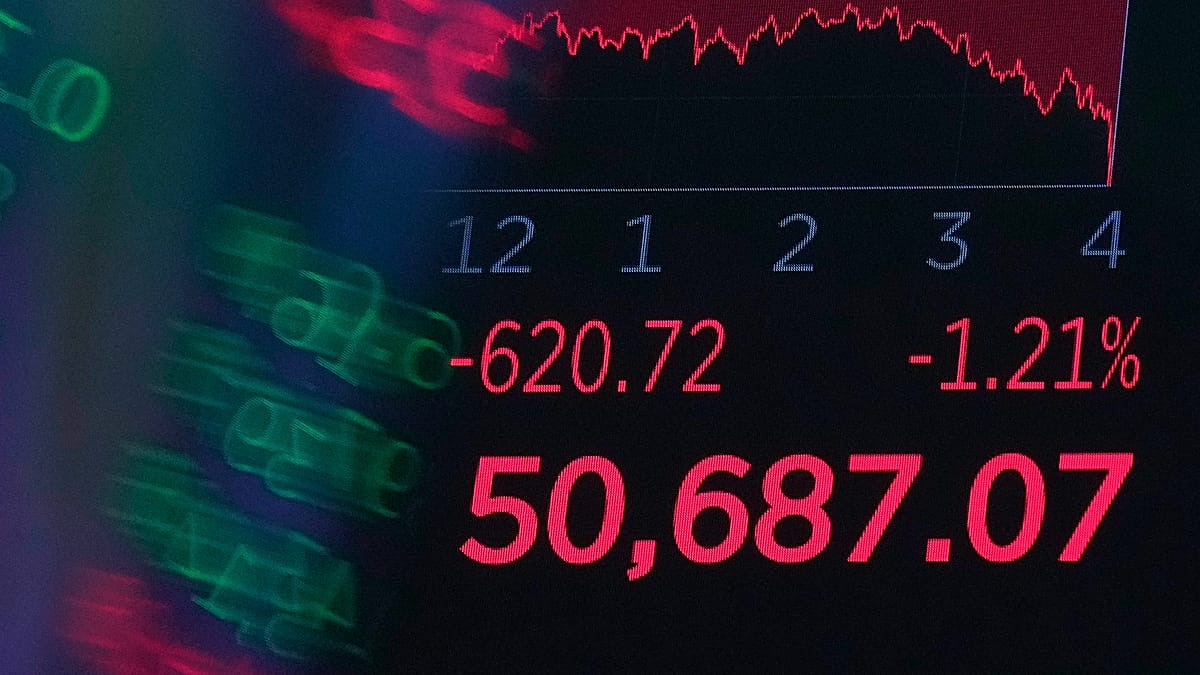
The downturn in Asia follows a sharp reversal in US AI stocks on Thursday. Broadcom's shares sank 12.6% after the chipmaker issued guidance that fell short of expectations, raising concerns about the broader technology sector. Micron Technology dropped 7.7%, and cybersecurity firm CrowdStrike Holdings fell 3.8%. Analysts have warned that AI stocks may have become overvalued after a prolonged rally, with the S&P 500 notching nine consecutive weekly gains—its longest such streak since 2023.
Despite the tech weakness, the broader US market held up. The S&P 500 climbed 0.4%, and the Dow Jones Industrial Average gained 1.7% to a record high, buoyed by banks and small-cap stocks that had lagged behind the AI frenzy. Goldman Sachs rose 5%, Fifth Third Bancorp gained 4.7%, and U.S. Bancorp added 4.4%.
European investors are now turning their attention to the latest US non-farm payrolls report, due later on Friday. The data will be closely watched for clues about the Federal Reserve's next policy move. Kathleen Brooks, research director at XTB, noted in a market commentary: "There is now a near 40% chance of a rate hike by year-end. We expect financial markets to be extremely sensitive to today's data." This will be the first such report under Fed Chairman Kevin Warsh.
In the UK, Halifax data showed house prices unexpectedly fell 0.1% month-on-month in May, though they were still up 0.5% year-on-year, missing expectations for a 1% annual increase.
Oil Markets Steady Amid Middle East Tensions
Oil prices stabilised on Friday after falling the previous day. Brent crude traded at $94.73 per barrel at 10:00 CET, slightly down, while US benchmark crude was little changed at $92.51. Prices remain under pressure as the Strait of Hormuz—a critical chokepoint for global oil and gas shipments—remains effectively closed. The war-induced energy shock continues to threaten economic growth and fuel inflation across Europe and beyond.
American and Iranian negotiators reached a tentative ceasefire extension last week, but the deal has not been finalised. Meanwhile, developments in Lebanon have cast doubt on a permanent resolution. On Thursday, the Iran-backed militant group Hezbollah rejected the latest ceasefire agreement between the Lebanese and Israeli governments. ING commodities strategists Warren Patterson and Ewa Manthey wrote: "While there are few signs of progress in US-Iran talks, the oil market continues to trade on expectations of an imminent deal that would resume flows through the Strait of Hormuz."
The broader European market outlook remains uncertain, with investors balancing the AI stock correction, geopolitical risks, and the upcoming US jobs data. The European AI infrastructure sector has seen some resilience, but the sell-off in Asia underscores the fragility of the tech rally.