Vienna is hosting the 70th edition of the Eurovision Song Contest, but the motto 'United by Music' has never felt more strained. Behind the glitter and the 127 beats per minute of this year's hits, geopolitics has become the dominant act.
With only 35 participating countries—the lowest number since 2003—the contest is grappling with the fallout from real-world conflicts. Five nations—Spain, Ireland, the Netherlands, Slovenia, and Iceland—have pulled out over Israel's inclusion. In a direct protest, Slovenia has replaced the live broadcast with a documentary series titled 'Voices of Palestine.'
Inside the Arena: Cheers and Protests
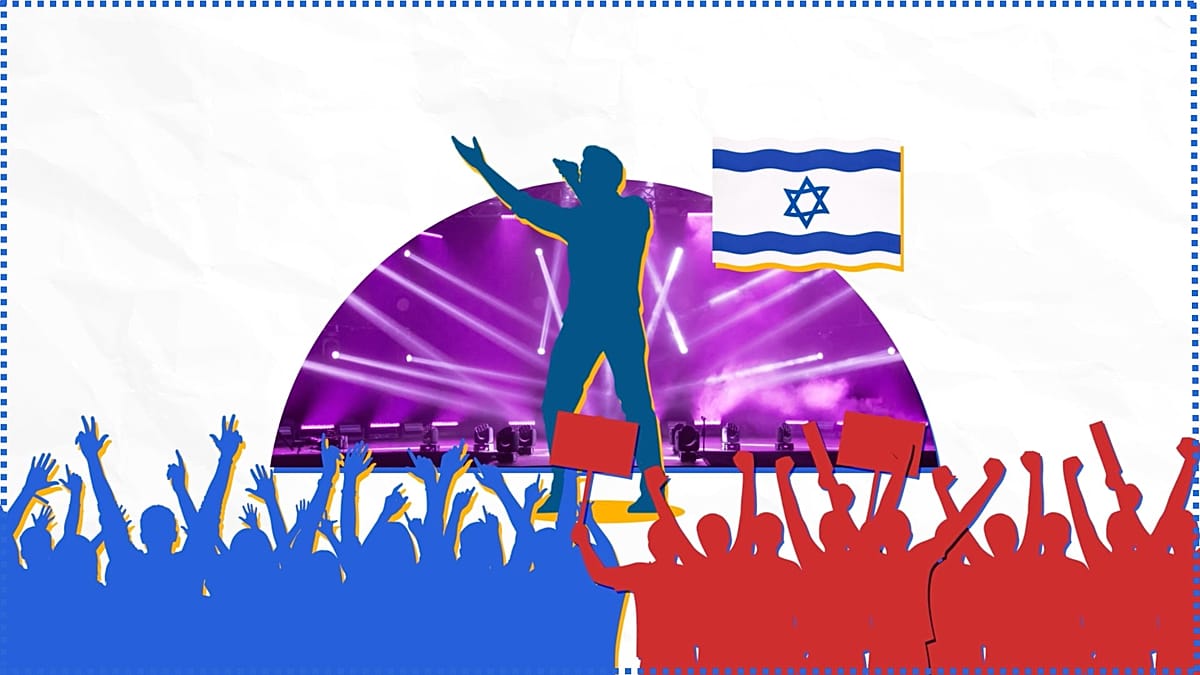
Even inside the Wiener Stadthalle, the tension is palpable. Israel's entrant, Noam Bettan, qualified for the final amidst a mix of cheers and protests. The event has become a high-stakes revenue gamble for an organization that claims over 160 million viewers worldwide last year.
Following the European Broadcasting Union's (EBU) decision last December to confirm Israel's place, President Isaac Herzog argued that the country 'deserves to be represented on every stage.' He described the move as a vital demonstration of 'solidarity, fellowship, and cooperation.'
Israeli officials have accused critics of orchestrating a wide-ranging campaign against Israel's participation. The Israeli Ministry of Diaspora Affairs said it had identified a sharp rise in antisemitic and anti-Israel tones surrounding the contest.
This year's edition also highlights broader European divisions. The boycott reflects not just solidarity with Palestinians but also domestic political pressures in countries like Spain and Ireland, where public opinion is sharply divided. The Finland and Israel Advance to Eurovision Final Amid Boycotts and Protests underscores how the contest has become a proxy for larger geopolitical debates.
Vienna itself has been transformed by the event, with the city unveiling Austria's largest mural on an office tower to mark the occasion. Yet the Vienna Unveils Austria's Largest Mural on Office Tower for Eurovision cannot mask the underlying tensions. The Russian diplomatic presence in the city, long a source of espionage concerns, adds another layer of complexity to the atmosphere. As reported in Russian Diplomatic Antennas in Vienna Raise Espionage Concerns Across Europe, the city remains a hub for intelligence activities.
The EBU faces a difficult balancing act: maintaining the contest's apolitical spirit while navigating the demands of member states. The Eurovision 2026 Final Lineup Complete After Second Semi-Final shows that the show must go on, but the question remains whether the contest can survive the grit of geopolitics.
For many viewers, the real drama is not on stage but in the political maneuvering. As one delegate put it, 'The biggest hit this year is not a melody; it's the politics.' Whether Eurovision can reclaim its role as a unifying cultural event or become a permanent stage for geopolitical conflict will define its future.