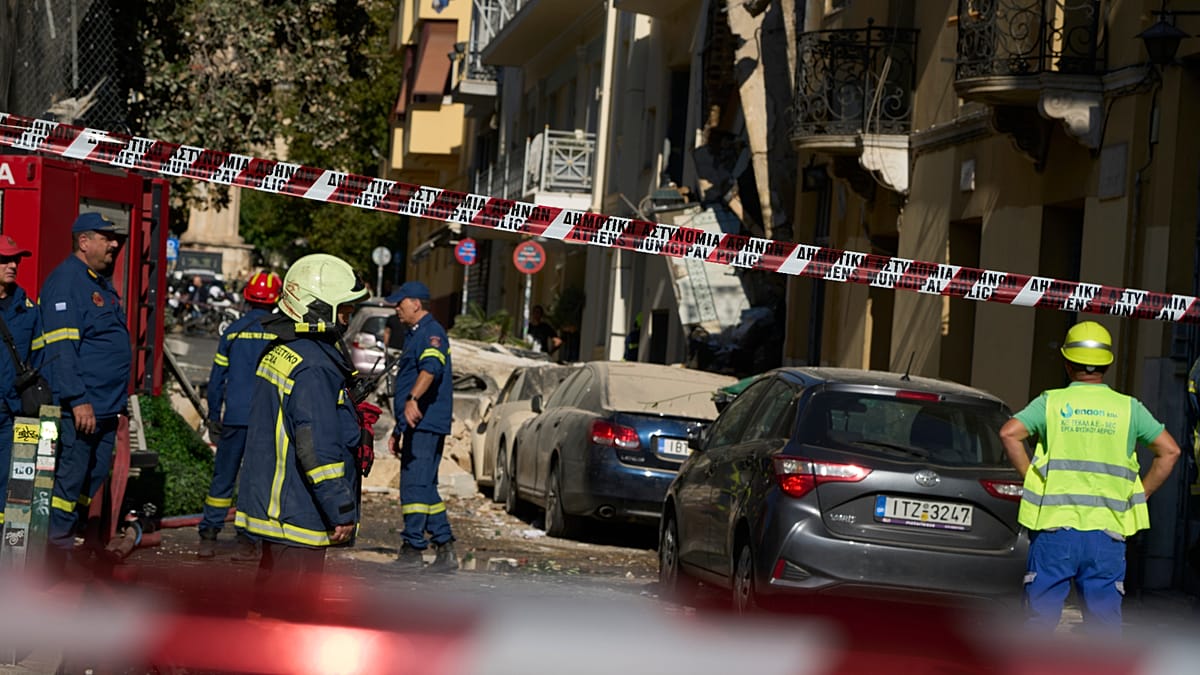
A powerful explosion rocked the historic Plaka district of Athens on Friday, collapsing a two-storey building just a short walk from the Acropolis. At least two people were injured in the blast, which sent debris into the narrow, cobbled streets that are a magnet for tourists and locals alike.
The blast occurred in the early afternoon, shaking windows and rattling nearby cafés and shops. Emergency services rushed to the scene, cordoning off the area as firefighters searched the rubble for any additional victims. Two people were pulled from the wreckage and taken to a nearby hospital; their injuries are reported to be non-life-threatening.
Investigation underway
Greek authorities have launched an investigation into the cause of the explosion. While no official conclusion has been reached, a gas leak is the leading hypothesis, according to a police spokesperson. The building, which was reportedly used for storage and occasional residential purposes, had no known history of safety violations.
The incident has raised concerns about the aging infrastructure in Athens' most visited neighbourhoods, where many buildings date back decades and are in need of renovation. The Plaka district, nestled at the foot of the Acropolis, is one of the oldest continuously inhabited areas in Europe, and its narrow streets and neoclassical architecture are a key part of the city's charm.
Local authorities have promised a thorough review of gas safety regulations in the area. "We will not rest until we understand exactly what happened here," said the mayor of Athens, Kostas Bakoyannis, in a brief statement at the scene. "The safety of residents and visitors is our absolute priority."
The blast also reignited a broader debate about housing and urban safety in the Greek capital, a topic that has been increasingly prominent in local politics. As housing and migration collide in Athens' political debate, the incident underscores the challenges of maintaining historic districts while accommodating modern pressures.
Witnesses described a loud bang followed by a plume of dust and smoke. "It felt like an earthquake," said Maria Papadopoulou, who runs a souvenir shop two blocks away. "We ran outside and saw people covered in dust, and then the building just wasn't there anymore."
Firefighters worked for hours to ensure the site was stable, using thermal cameras to check for any signs of life beneath the rubble. Two women were eventually rescued, as reported in central Athens building collapses after blast, two women rescued.
The Acropolis itself, a UNESCO World Heritage site, was not damaged, and the nearby archaeological sites remained open to visitors throughout the day. However, some streets in Plaka were closed to traffic, causing minor disruptions for tour groups and local businesses.
This is not the first time that aging infrastructure has caused problems in Athens. In recent years, there have been several incidents of building collapses and fires in the city, often linked to outdated electrical systems or gas connections. The government has pledged to invest in modernising the capital's building stock, but progress has been slow.
For now, the focus is on the injured and on determining the exact cause of the blast. As the investigation continues, residents of Plaka are left to ponder the fragility of their historic surroundings. The district, which has survived centuries of upheaval, now faces a new challenge in the form of urban decay.
In the meantime, the incident has drawn attention to the broader issue of safety in Europe's most visited heritage sites. With tourism rebounding strongly, cities like Athens are under pressure to balance preservation with modern safety standards. The coming days will likely bring more clarity, but the scars of this explosion will remain for some time.