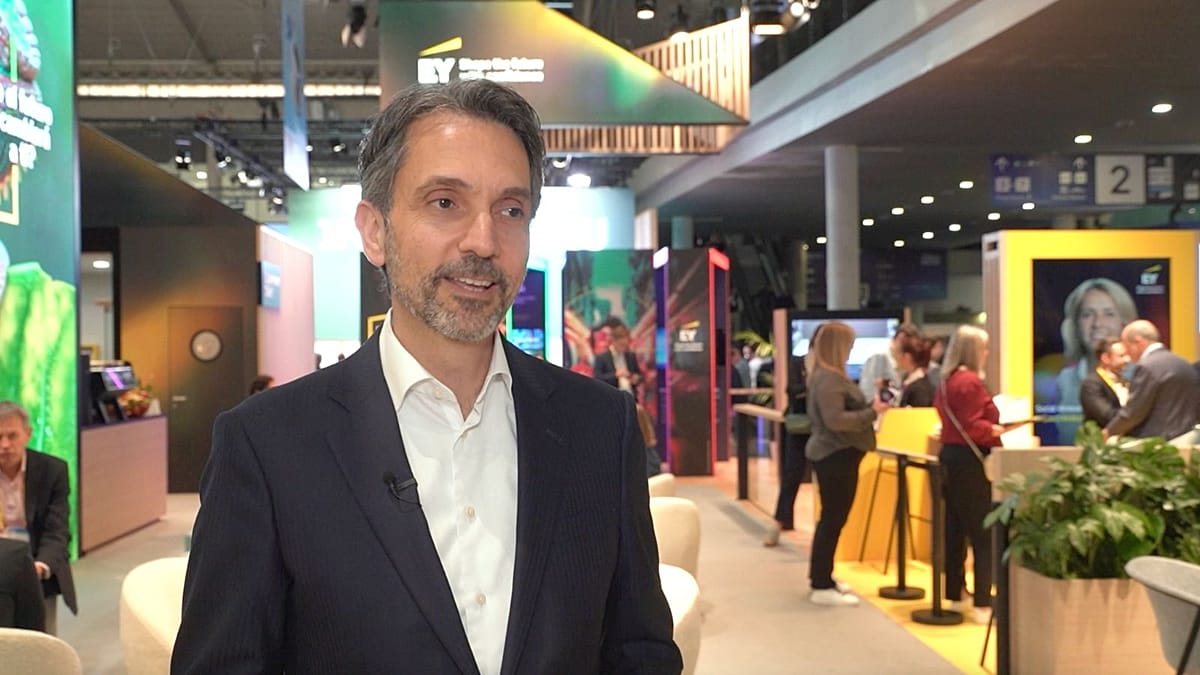
As artificial intelligence reshapes industries across Europe, from manufacturing in Stuttgart to fintech hubs in London and Stockholm, business leaders face a critical challenge: integrating these powerful tools without sidelining the human workforce. According to Jad Shimaly, Global Managing Partner at professional services giant EY, the future of AI-integrated work depends not on automation alone, but on a deliberate strategy of collaboration, training, and ethical governance.
The Human Element in the AI Ecosystem
Speaking at the Mobile World Congress in Barcelona, Shimaly emphasised that the workforce must be prepared to embrace AI. "Training, making sure that the workforce is well-equipped to leverage the benefits of AI, and embarking on the change process that AI brings forward, is a big part of what companies that are getting the most out of their AI initiatives are tackling head-on," he told European Pulse. This transition requires building an entire "AI ecosystem," which for EY includes alliances with tech firms like Boomi, to ensure smoother deployment and prevent employee overwhelm.
Shimaly warned that companies attempting to implement AI in isolation are likely to fail. "Companies are realising that they cannot tackle AI initiatives on their own. Bringing in partners, bringing in alliance partners, and doing joint ventures—that new set of workforce is critical for them to land on the true benefits of AI." This collaborative approach is particularly relevant for Europe's diverse business landscape, where small and medium-sized enterprises in cities like Milan or Prague may lack the in-house expertise of larger corporations in Frankfurt or Paris.
"Employees cannot just be given a set of innovations or a technology. They need to be part of the solution as well. And when they become part of a solution, by default, they embrace the solution better."
Augmenting Creativity, Preventing Burnout
One of the most significant hurdles is managing the tension between innovation and employee wellbeing. EY data indicates that organisations can lose up to 40% of AI's potential productivity gains due to poor integration, often stemming from employee fear, burnout, or a lack of understanding. Workers tasked with managing new AI-driven responsibilities on top of existing roles can quickly become overwhelmed.
The solution, Shimaly argues, lies in framing AI as a complement to human capability. "If you want innovation and wellbeing to be complementary to each other, and to be improving in tandem, then we need to have the right change management programmes," he explained. When employees are part of designing the solution, they understand its impact on their daily work, leading to greater readiness and creativity. Shimaly noted that in scenarios where workforces are effectively augmented by AI, creativity can triple. "In many cases, when AI is left on its own, it becomes very structured, very redundant, without driving up the level of creativity in the organisation."
This perspective aligns with broader European discussions on the future of work, where the focus is shifting from job replacement to job transformation.
The Imperative of Responsible AI Governance
Beyond training, a major challenge for CEOs across the continent is establishing ethical guardrails for AI use. With EU regulatory frameworks like the AI Act still being implemented, the responsibility for accountable deployment currently falls heavily on business leaders. Shimaly defines responsible AI as "ensuring that you have the right governance, the right ethical standards, the right accountability framework for the AI lifecycle from beginning to end."
He outlines a three-step process: first, defining responsible AI standards; second, communicating these standards throughout the organisation; and third, instituting ongoing oversight to ensure practices remain current. Companies that establish these frameworks are better positioned to measure success and progress steadily. "It's enabling them to start cutting and start progressing, versus the ones who do not have the right standards in place and are taking two steps forward and then, in many cases, two or three backwards," Shimaly said.
This need for stability and clear rules extends beyond corporate boardrooms. Just as businesses seek reliable frameworks for AI, European policymakers are grappling with the need for stable decision-making processes in other volatile domains, such as energy security amid global conflict.
The message from Barcelona is clear: for European businesses to thrive in an AI-augmented future, the technology must be implemented with a human-centric focus. Success depends on investing in people, fostering collaboration, and building ethical frameworks from the outset. The companies that will lead are those that view AI not as a standalone solution, but as a tool to unlock the full creative and innovative potential of their human workforce.