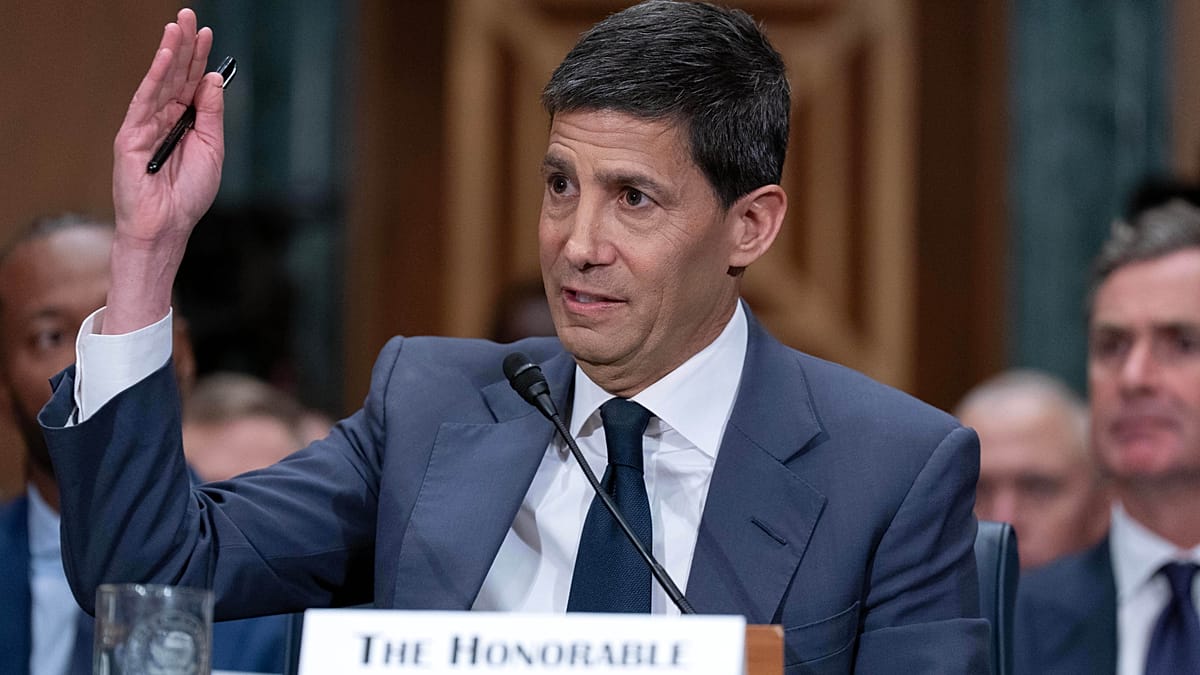
Kevin Warsh, the nominee to chair the US Federal Reserve, forcefully rejected accusations that he would act as a political instrument for former President Donald Trump during a contentious Senate Banking Committee hearing on Tuesday. Warsh insisted he had made no private agreements on monetary policy with the White House, stating his commitment to the central bank's independence as "essential" for economic stability.
His declaration came in direct response to pointed questioning from Republican Senator John Kennedy, who asked if Warsh would become Trump's "human sock puppet." "Absolutely not," Warsh replied. This exchange underscored the central tension of the proceedings: whether Warsh, if confirmed, would resist public pressure from Trump, who stated in a CNBC interview just hours before the hearing that he would be "disappointed" if Warsh did not implement immediate interest rate cuts.
Political Hurdles and Partisan Divisions
The hearing revealed deep political fractures that jeopardise Warsh's path to confirmation. Democratic senators were sharply critical, with Senator Elizabeth Warren echoing the 'sock puppet' label and suggesting his installation would enable an "illegal takeover" of the Fed. Critics accused Warsh of shifting his economic views to align with the political party in power, alleging a history of hawkishness during Democratic administrations and a more dovish stance under Republican leadership.
Despite Trump's endorsement, Warsh also faces a critical roadblock from within the Republican Party. Senator Thom Tillis of North Carolina reiterated his refusal to support any nominee while a Department of Justice investigation into the current Chair, Jerome Powell, remains active. The probe, led by Assistant US Attorney Jeannine Pirro, is examining whether Powell committed perjury regarding a Federal Reserve building renovation budget. Tillis and other Republicans have called the investigation meritless, but his stance effectively freezes the nomination in a closely divided committee.
Compounding the uncertainty is Powell's unique position. Unlike most departing Chairs, he has indicated he will remain on the Fed's governing board until his separate term ends in 2028, or until the perjury case concludes. This sets the stage for a potentially awkward power dynamic where a former Chair would sit alongside his successor, a scenario not seen in Washington since the late 1940s.
European Implications of Fed Turmoil
While a domestic US political story, the leadership and policy direction of the Federal Reserve carries significant implications for Europe. The Fed's decisions on interest rates directly influence global capital flows, exchange rates, and borrowing costs worldwide. A perceived loss of Fed independence or a shift towards politically motivated monetary easing could trigger market volatility that would swiftly impact European financial centres like Frankfurt, London, and Paris. Furthermore, the EU Energy Chief has already warned of prolonged price hikes from Middle East conflict; additional instability from US monetary policy could complicate the European Central Bank's own efforts to manage inflation and economic growth across the Eurozone.
The hearing also delved into ethical questions surrounding Warsh's personal finances. Senator Warren highlighted his investments in private entities like SpaceX and Polymarket, noting the specific size of these holdings had not been fully publicised. Warsh defended himself by stating the Office of Government Ethics had approved his plan to divest all assets within 90 days of confirmation.
Warsh's nomination process highlights the intense political pressures facing independent institutions in major economies, a theme with parallels in Europe. Just as the Fed guards its autonomy, the European Central Bank's independence from political influence is a cornerstone of the EU's economic architecture. Scrutiny of appointments to powerful financial posts is not unique to Washington, as seen in recent EU processes. This transatlantic focus on institutional integrity comes amid other global governance challenges, such as the Central Asian summit advancing a proposal for a UN Water Agency to manage shared resources.
The current friction suggests the White House may struggle to secure the necessary votes to confirm Warsh before Powell's term as Chair expires on 15 May. With Democratic opposition solidified and key Republican support withheld, the future leadership of the world's most influential central bank remains deeply uncertain, a situation that global markets and European policymakers will watch with acute concern.