Europe has claimed a dominant position in the latest global sustainability rankings, with 15 of the top 20 spots going to European nations. The 2026 Environmental Performance Index (EPI), produced biennially by researchers at Yale and Columbia University, evaluates countries across 47 indicators including climate change mitigation, air quality, forests, water resources, waste management, and biodiversity.
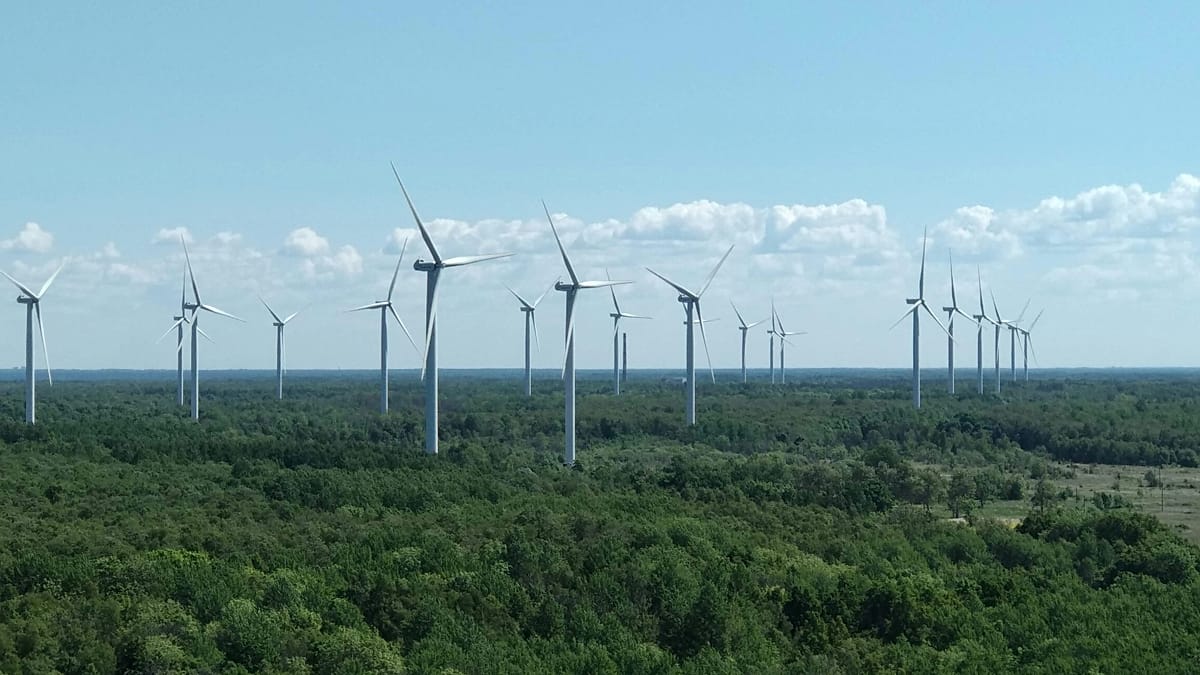
Estonia leads the ranking with 75 points out of a possible 100, largely due to a substantial reduction in greenhouse gas emissions from its power sector over the past decade. The Baltic nation has been steadily decreasing its reliance on electricity generated from domestic oil shale, an energy-rich sedimentary rock that remains its primary energy source. A boom in solar power is helping Estonia transition away from fossil fuels, and the country aims to cover 100 percent of its annual electricity needs with renewables by 2030, as part of a broader target to achieve climate neutrality by 2050.
Estonia also scores highly on biodiversity and ecosystem protection. More than half of its land area is covered by forests and protected wetlands, providing habitat for over 300 bird species. At a conference in New York hosted by the United Nations University Centre for Policy Research, Estonia’s Minister of Energy and the Environment, Andres Sutt, expressed pride in the recognition of the country’s sustainability efforts.
However, even the top-ranked nation falls well short of where it needs to be. “If countries aim to maintain a trajectory toward net-zero emissions by 2050, they will need to continually achieve large emissions reductions which will require additional policies in the future,” said Zach Wendling, lead author of the report.
Europe’s Strong Showing, but Gaps Remain
Luxembourg ranks second with 74 points, followed by the United Kingdom (72), Finland (71), and the Netherlands (71). Germany and France each score 70, while Norway, Sweden, Austria, Denmark, Spain, Greece, Slovenia, and Switzerland also feature in the top 20. The only non-European nation in that group is Japan, at 63 points.
Despite the strong performance, many EU countries score poorly in agricultural sustainability, and experts warn that all nations are “still far from critical goals” to tackle climate change. The index uses data up to 2024, meaning it reflects the final year of Joe Biden’s presidency rather than the current administration under Donald Trump, who has rolled back climate policies, boosted coal, halted offshore wind expansion, and withdrawn the US from key UN climate targets. The United States ranks 27th, behind Australia (25th) but ahead of Canada (29th).
China, the world’s largest greenhouse gas emitter, comes in at 129th, hampered by poor climate outcomes despite improvements in indoor air pollution, water sanitation, and solid waste management. At the bottom of the rankings are Laos, India, Bangladesh, Mali, and Vietnam, all facing “serious environmental degradation that represents a direct threat to human health and critical ecosystems,” according to the report. India ranks second-to-last, struggling with ambient particulate matter from fuel combustion, construction, and dust.
The EPI also highlights a broader structural issue: wealthier nations tend to have more capital to invest in green energy and environmental improvements, while low-income countries contribute less to climate change but suffer greater consequences. Many wealthy nations also offshore manufacturing and waste, skewing their true environmental impact. In 2022, for instance, the EU exported 12.4 million tonnes of waste to Türkiye and 3.5 million tonnes to India.
As Europe celebrates its top rankings, the report serves as a reminder that even the leaders have a long way to go. For more on how climate narratives are evolving, see our piece on Climate Disinformation Shifts from Denial to Attacking Green Policies. Meanwhile, positive environmental developments, such as carbon-sucking fungi and crackdowns on forever chemicals, offer some hope — read about them in Carbon-Sucking Fungi and Forever Chemical Crackdowns: Positive Environmental Stories from 2026. And as Brussels shifts its focus to climate adaptation after a deadly heatwave, the continent is learning to prepare for the impacts already underway, as detailed in Brussels Shifts Focus to Climate Adaptation After Deadly Heatwave.