Finland has finished building a 200-kilometre security fence along its frontier with Russia, a project that underscores the dramatic shift in European security since Moscow's full-scale invasion of Ukraine. The barrier strengthens what is now NATO's longest land border with Russia, spanning 1,340 kilometres from the Gulf of Finland to the Arctic.
The decision to build the fence came after Finland abandoned decades of military non-alignment and joined the Atlantic alliance in April 2023. Later that year, more than 1,300 migrants without valid visas arrived at Finland's eastern border. Helsinki accused Moscow of orchestrating the movement of third-country nationals as a form of "hybrid warfare" — a charge the Kremlin denied. Finland shut its land border with Russia in late 2023, and apart from a brief reopening of two crossings that December, the frontier has remained closed ever since.
A calm but tense frontier
At a media event near the Nuijamaa border crossing in south-eastern Finland, Interior Minister Mari Rantanen described the current situation as "calm but tense," adding that "we really don't know about tomorrow." She stressed that the situation "can change really rapidly and that is why we need to be very prepared."
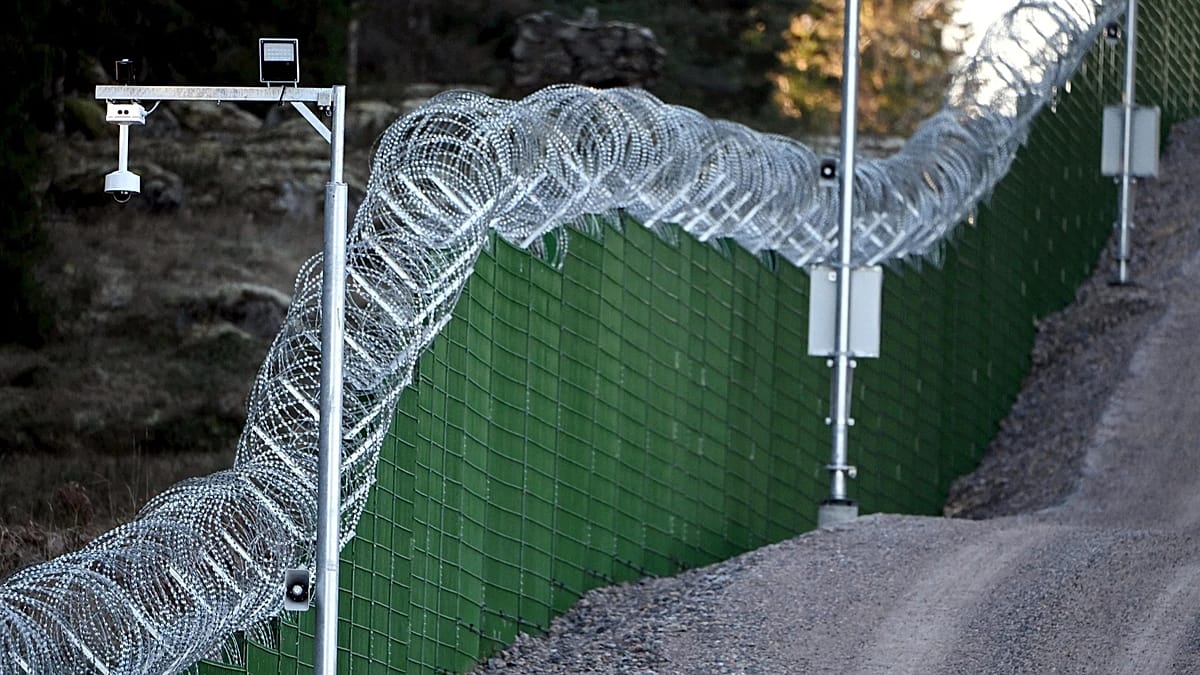
The 4.5-metre-high fence is built in sections and equipped with cameras and sensors. It covers 200 kilometres of the border, with most of the barrier concentrated in the southeast. "This is one part of our border security and it is helping us for surveillance, but also keeping people out of Finnish territory if needed," Rantanen said.
The project cost €356 million, with estimated annual maintenance costs of €2-3 million, according to Finnish border authorities. Despite rapid advances in drone technology, a physical barrier was still "viewed as the best solution for crowd control," said Border Guard project manager Erkki Matilainen.
Rantanen indicated that the fence could be extended further and called for greater EU financial support for countries along the bloc's eastern frontier. "What we particularly need is EU funding for eastern member states so that projects like this can be financed," she said. This echoes concerns raised elsewhere in Europe, such as the Ceuta border surge, which some officials have described as a hybrid attack to destabilise the EU.
Last week, Helsinki proposed extending its Border Security Act until the end of 2028. The legislation allows Finland, under exceptional circumstances, to restrict the reception of asylum applications in limited areas of the border when its sovereignty or national security is deemed to be under threat. The law has proved controversial, with legal experts warning that it risks breaching Finland's international human rights obligations and EU law.
The completion of the fence comes as the EU debates how to strengthen its external borders. The EU border system faces renewed scrutiny as emergency measures lapse, and Finland's approach may serve as a model for other member states facing similar pressures. The country's experience also highlights the broader challenge of defence initiatives that require consensus among EU capitals.
Finland's border fence is a tangible response to the changing security landscape in Europe, where hybrid tactics — including the weaponisation of migration — have become a growing concern. As Rantanen noted, the situation can change rapidly, and Finland is determined to be ready.