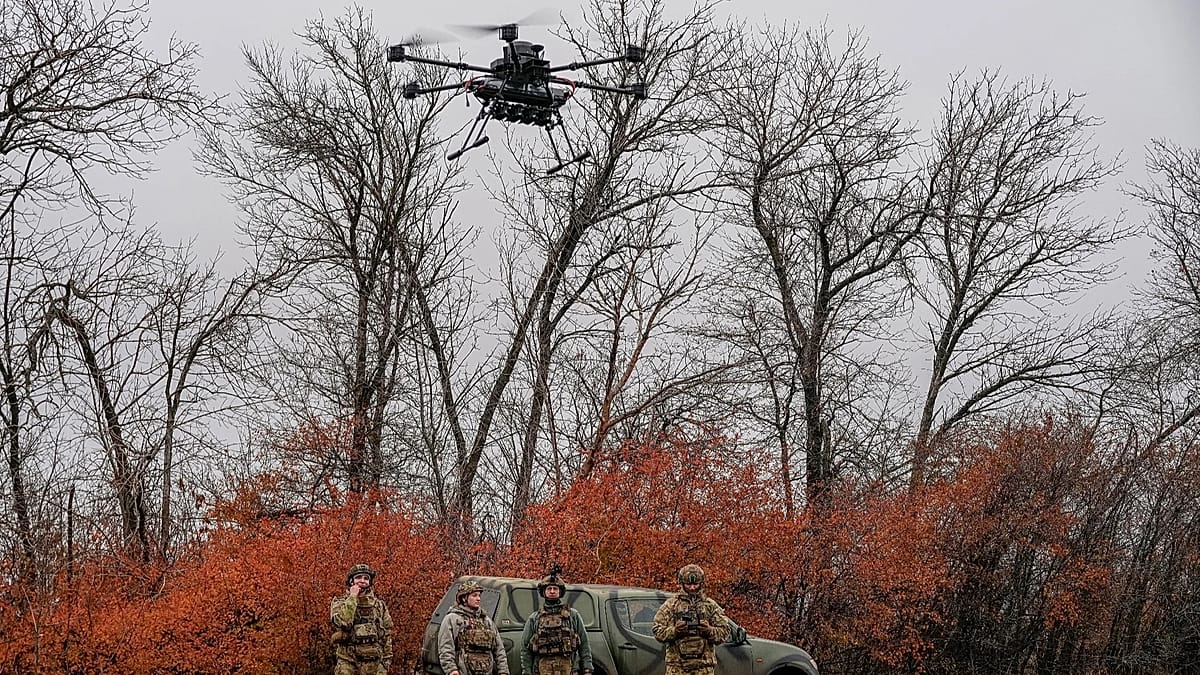
A large fire has broken out at the Novokuibyshevsk oil refinery in Russia's Samara region, according to Russian Telegram channels, following reports of a drone warning and a series of explosions. Social media footage shows towering columns of black smoke rising over the facility, which is operated by state-controlled Rosneft.
The incident comes at a delicate moment in the conflict, as The Wall Street Journal reported on Thursday that Ukraine had agreed to pause strikes on Russian refineries under pressure from Washington. The pause was expected to last until after the US midterm elections on 3 November, according to the report.
Strategic target
The Novokuibyshevsk refinery is a key asset in Russia's energy infrastructure. According to Rosneft, the facility can process around 8.8 million tonnes of crude oil per year and produces jet fuel, among other products. Rosneft has owned the site since 2007.
Ukrainian forces previously struck the same refinery in August, as Kyiv escalated its campaign against Russia's energy sector. President Volodymyr Zelenskyy announced the attack on 22 August, writing on social media: "Over the past 24 hours, our forces struck the Novokuibyshevsk refinery - 1,000 kilometers from the front line - depriving the Russian war machine of millions of dollars in export revenues."
The latest fire raises questions about whether the reported pause is holding. US President Donald Trump has repeatedly urged Ukraine to halt strikes on Russian refineries, arguing that they contribute to rising global fuel prices. Trump has sought to deflect blame for high prices onto the US conflict with Iran, and earlier this month announced a controversial diesel deal with Moscow to address fuel costs.
For European observers, the incident underscores the fragility of energy supply chains and the broader economic fallout of the war. The call for global refinery expansion to shield Europe from fuel shocks has gained traction as such attacks disrupt markets.
Russia's refining capacity has been a repeated target for Ukrainian long-range drones, with facilities across the country hit in recent months. The Novokuibyshevsk plant is located roughly 1,000 kilometers from the front line, demonstrating the reach of Kyiv's strike capabilities.
The fire at the refinery also highlights the ongoing vulnerability of Russian energy infrastructure, even as Moscow attempts to project stability. The Samara region, a major oil-producing area, has seen several such incidents since the start of the full-scale invasion.
No official confirmation of the cause of the fire has been provided by Russian authorities, and independent verification is difficult due to restricted access. The incident is likely to further strain relations between Moscow and Washington, as the US seeks to balance pressure on Russia with concerns over global energy prices.
For Europe, the disruption at Novokuibyshevsk serves as a reminder of the continent's dependence on stable energy markets, even as it diversifies away from Russian supplies. The ongoing drone warfare on both sides continues to have ripple effects across the region.