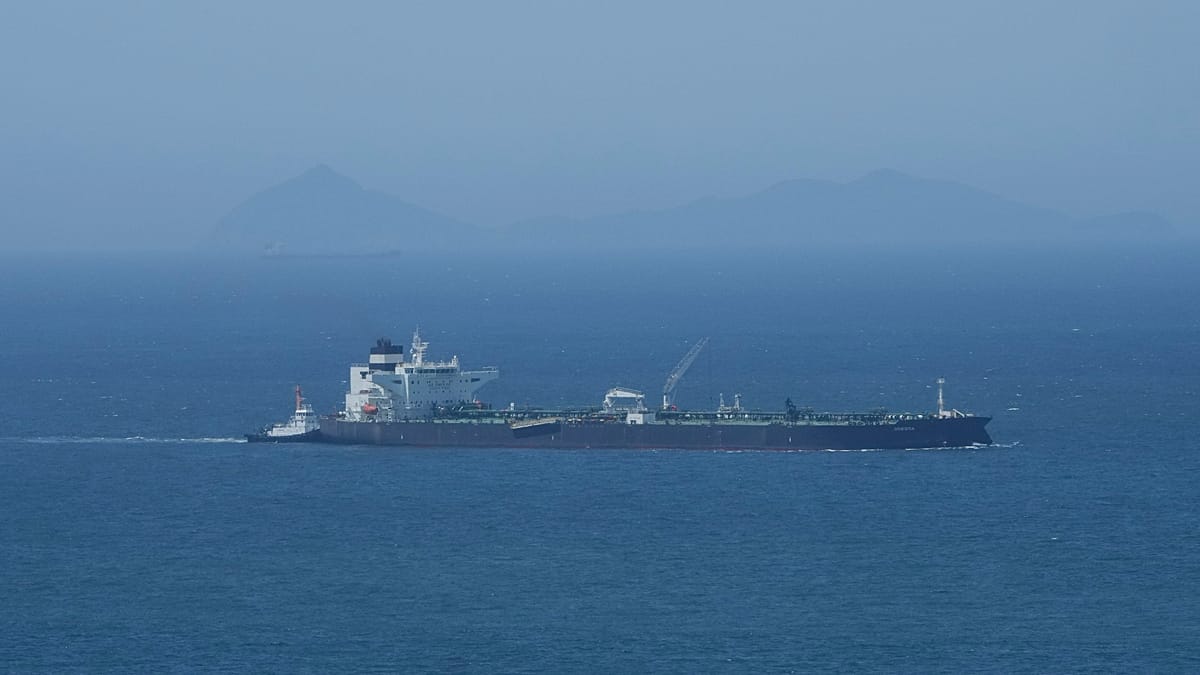
A Malta-flagged tanker carrying Russian diesel is currently en route to New York, according to maritime tracking data from Kpler. The vessel, named Agioi Fanendes, was spotted off Helsinki on Friday, transmitting its destination as New York via its AIS transponder.
The ship loaded roughly 300,000 barrels of diesel at the Russian port of Primorsk, located on the Gulf of Finland. Separate data from LSEG puts the cargo at 40,000 tonnes of ultra-low-sulphur diesel. It departed Primorsk overnight on 22–23 October and is expected to reach the US East Coast around 7 November, just four days after the US midterm elections.
This shipment marks the first US import of Russian oil or petroleum products since the ban imposed by former President Joe Biden in 2022, according to Reuters. The identities of the buyer and seller have not been disclosed.
Deal struck in early October
On 9 October, President Donald Trump announced an agreement with Moscow that temporarily eased US sanctions on Russian diesel, allowing deliveries to the US and global markets. In return, Russia agreed to lift its own ban on diesel exports. Trump stated that Russia would immediately supply 300,000 tonnes, followed by 500,000 tonnes in November and 1 million tonnes “immediately thereafter”.
Russian Deputy Prime Minister Alexander Novak, who oversees energy policy, told Russian news agencies on Wednesday that the first shipment would depart the following day. He added that more shipments would follow as Russian and US companies finalize contracts.
The move is widely seen as an attempt to lower fuel prices for American consumers ahead of the midterm elections. However, it has drawn sharp criticism from Ukraine and its European allies, including members of Trump's own Republican Party. The decision has also raised concerns in European capitals, where Trump's embrace of Putin is viewed with alarm.
European leaders have long sought to reduce dependence on Russian energy, and this deal undermines those efforts. The European Union has implemented multiple sanctions packages targeting Russian oil and gas, and the bloc's energy ministers have repeatedly stressed the need for solidarity with Ukraine. The resumption of Russian diesel exports to the US could complicate these efforts, as it signals a potential rift in the transatlantic consensus on isolating Moscow.
For Finland, which shares a border with Russia and has been a vocal advocate for strong sanctions, the sight of a tanker loading at Primorsk and sailing past Helsinki is a stark reminder of the ongoing energy trade. The port of Primorsk is a key export hub for Russian oil products, and its proximity to EU territory makes the trade particularly visible.
The deal also comes at a time when Russian strikes continue to kill civilians across Ukraine, further inflaming tensions. Ukrainian officials have condemned the agreement, arguing that it rewards Russian aggression and undermines the international community's efforts to hold Moscow accountable.
Analysts note that the volume of diesel involved is relatively small compared to overall US consumption, but the symbolic impact is significant. It represents a direct reversal of the previous administration's policy and a tangible outcome of the Trump-Putin relationship.
The tanker's journey from the Baltic to the US East Coast will take about two weeks, passing through the North Sea and the Atlantic. Its arrival will be closely watched by traders, policymakers, and environmental groups alike.
While the immediate focus is on the US midterm elections, the long-term implications for European energy security and transatlantic unity remain uncertain. The European Union has pledged to phase out Russian fossil fuels by 2027, but this deal shows that global energy markets remain interconnected and that political decisions can quickly alter the landscape.