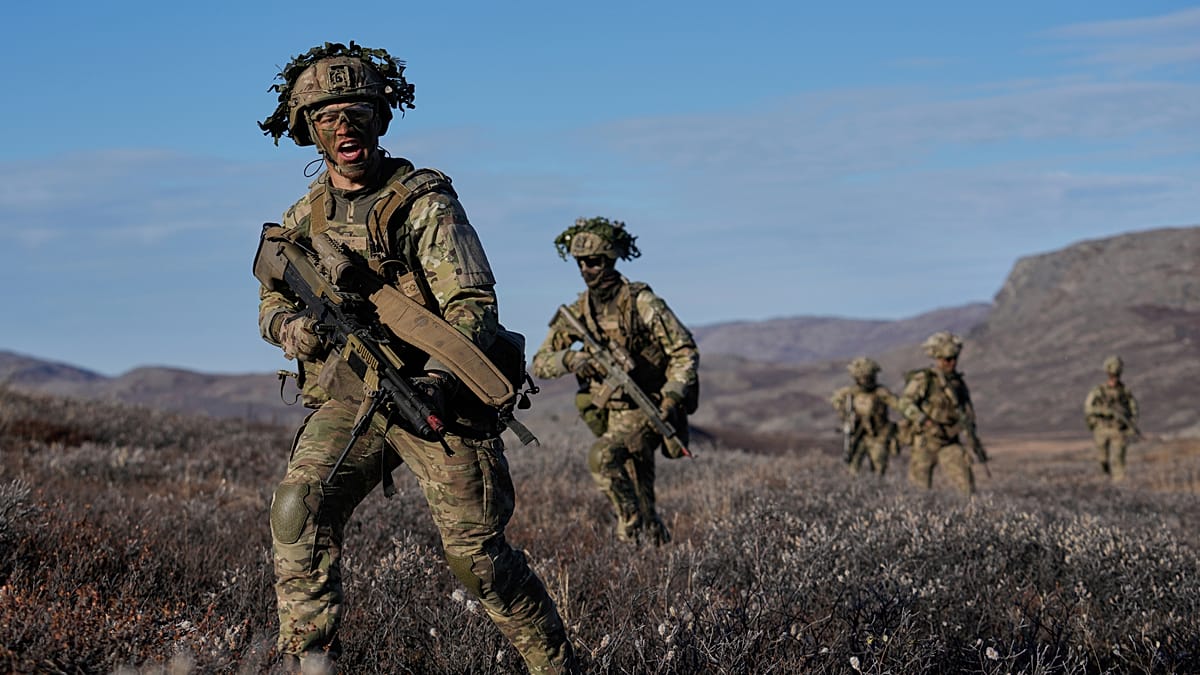
After decades of treating military budgets as an afterthought, Europe is now writing cheques of unprecedented size. The shift, accelerated by Russia's full-scale invasion of Ukraine in 2022, has transformed defence from a political liability into a strategic priority. EU defence spending rose from €218 billion in 2021 to an estimated €381 billion in 2025, a 75% increase in just four years, according to the European Defence Agency. Global military spending hit a record $2.9 trillion in 2025, with Europe as the main driver—up 14% to $864 billion (€742 billion), per the Stockholm International Peace Research Institute (SIPRI). Germany, for the first time since 1990, exceeded NATO's 2% of GDP target, reaching 2.3%.
The political machinery to make this permanent is now in place. The EU's ReArm Europe Plan, formally Readiness 2030, aims to unlock €800 billion in defence investment, with the European Commission raising up to €150 billion on capital markets through a new instrument called SAFE (Security Action for Europe). An escape clause in the Stability and Growth Pact allows member states to increase defence spending outside normal fiscal rules. The Commission estimates that a 1.5% GDP increase in defence budgets could create nearly €650 billion in fiscal space over four years. As top EU members revive lagging military production, a handful of industries are reaping the rewards.
1. Defence-Adjacent Manufacturing
Europe's traditional defence contractors—Rheinmetall, Leonardo, Saab, and their peers—are enjoying a moment that seemed implausible a decade ago, when defence stocks were considered politically awkward investments. EU ammunition production capacity alone rose from around 300,000 rounds per year in 2022 to an estimated 2 million by the end of 2025, a pace of industrial expansion that, according to the Financial Times and the European Parliament Think Tank, exceeds peacetime growth rates by a factor of three. In Germany, domestic orders linked to defence industries rose by more than 50% in late 2025 compared with already-elevated post-invasion levels.
The European Commission is now channelling funds specifically toward expanding production lines at major contractors and reducing delivery lead times, which currently stretch to several years for some air defence systems. However, the structural problem remains: Europe's defence market was never properly integrated. According to the Munich Security Conference, only 9% of tendered contracts have historically been awarded to suppliers from other EU member states, with domestic firms winning more than three-quarters of the total. The new spending wave aims to fix this inefficiency, with limited success so far.
2. Drones
If one technology has burned itself into European military thinking, it is the drone. Cheap, expendable, lethal—and produced at scale by Russia at a pace Europe's own industry cannot yet match. The response has been swift and expensive. France has committed €8.5 billion to expand its ammunition and drone stockpiles under its updated military planning law, including a 400% increase in explosive drone stocks before 2030. In April 2026, Germany and Ukraine signed a €4 billion defence package that included agreements on joint drone production, part of a broader push to scale up European autonomous systems manufacturing.
The EU launched the European Drone Defence Initiative (EDDI) in early 2026, aiming to build a multi-layered, 360-degree counter-drone shield across member states by 2027. German firm Quantum Systems, whose Vector drone was battle-tested in Ukraine, has emerged as one of Europe's most prominent ISR manufacturers, with revenue streams compounding across both military and commercial segments. The drone boom is also reshaping alliances; for instance, Airbus and BMW have partnered with French AI startup Mistral for defence and safety systems, highlighting the cross-sector nature of this growth.
3. Cybersecurity
Cyberspace is now a recognised domain of warfare, and Europe's governments are spending accordingly—though the focus has shifted from 'IT security' to the protection of critical infrastructure. In 2025, the EU allocated €145.5 million to strengthen cybersecurity across SMEs, public administrations, and healthcare providers. On 20 January 2026, the European Commission proposed a new cybersecurity package including amendments to the NIS2 directive, aimed at simplifying compliance and strengthening the EU's ICT supply chain against third-country risks.
The European Investment Bank lists cybersecurity explicitly among its defence and security financing priorities. European cybersecurity revenues rose 10% year-on-year in April 2026, according to CONTEXT's Panel Europe figures, with Identity and Access Management—the segment most directly tied to protecting sensitive government and military systems—growing at 18%. The dual-use nature of cybersecurity investment means defence spending is pulling commercial security spending upward, creating a virtuous cycle for the industry.
4. Advanced Materials and Electronics
The demand for lighter, stronger, and more resilient materials is surging as Europe modernises its armed forces. Advanced composites, specialised alloys, and next-generation electronics are critical for everything from armoured vehicles to missile guidance systems. Companies like Thales and BAE Systems are investing heavily in R&D for radar-absorbent materials and electronic warfare components. The EU's €800 billion Readiness 2030 plan includes significant allocations for research into dual-use technologies, benefiting firms in Germany, France, and Italy that supply these components.
This sector also intersects with broader geopolitical shifts. As German trust in the US as a NATO ally plummets, European governments are prioritising domestic supply chains for critical materials, reducing reliance on non-European sources. The result is a boom for European electronics manufacturers, who are scaling up production of semiconductors and sensors tailored for military applications.
5. Logistics and Infrastructure
Behind every tank and drone is a vast logistics network. Europe's defence spending boom is pouring money into upgrading military bases, transport corridors, and supply chains. The EU's Military Mobility project, part of the Permanent Structured Cooperation (PESCO), aims to streamline the movement of troops and equipment across member states, requiring investments in rail, road, and port infrastructure. In Poland, a key hub for NATO's eastern flank, spending on military logistics has doubled since 2022, with new depots and maintenance facilities under construction.
The UK, though outside the EU, is also deepening ties. The UK and Poland signed a major defence treaty in early 2026, further integrating logistics and procurement. This sector benefits from the dual-use nature of infrastructure investments—roads built for tanks also serve civilian traffic—making it politically palatable. However, the challenge remains coordination: Europe's fragmented defence market means logistics often still rely on national systems, slowing the pace of integration.
As Europe continues to write large defence cheques, these five industries are positioned to grow further. Yet the underlying inefficiencies—fragmented procurement, long lead times, and a lack of cross-border cooperation—remain hurdles. The next few years will test whether Europe can turn its spending surge into a genuinely integrated defence industrial base.