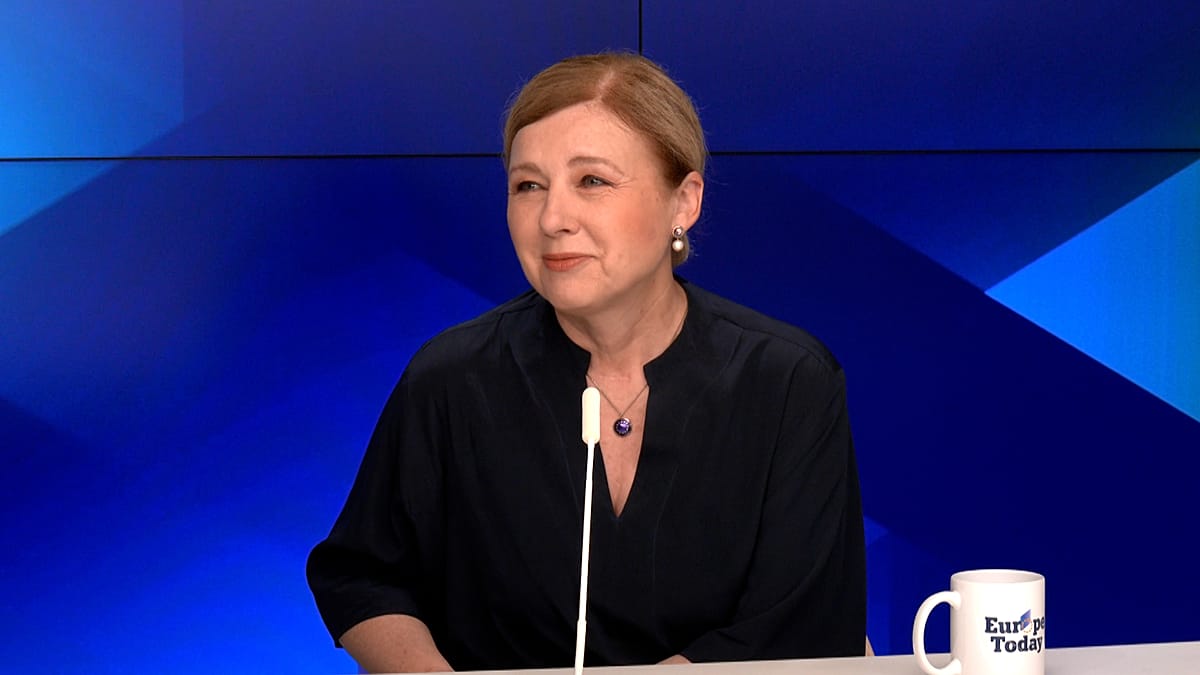
Vera Jourová, who served as European Commission vice-president for values and transparency until 2024, has expressed greater alarm over the direction of the United States than over the challenges posed by Russia or China. In an interview with Euronews’ Europe Today, the Czech politician said: “In foreign policy, honestly, it's the United States which scares me.”
Her remarks come amid growing unease in European capitals about the unpredictability of Washington’s foreign policy under the current administration, which has at times questioned NATO commitments and imposed tariffs on European goods. Jourová’s assessment reflects a broader sentiment among some EU officials that the transatlantic relationship is under unprecedented strain.
Hungary’s Democratic Test
Turning to internal EU affairs, Jourová expressed satisfaction with the outcome of Hungary’s recent parliamentary elections, which saw the end of Viktor Orbán’s 14-year rule. “Not only that Viktor Orbán is leaving after so many years and after what he has done to Hungarians, but also that the democratic system worked. A changing of the guard happened in Budapest,” she said.
Last Friday, Hungary’s new government reached an agreement with Brussels to unlock billions of euros in EU funds that had been frozen due to concerns over corruption and rule-of-law violations. However, the deal comes with stringent conditions and a tight deadline. “He has a long list of things to do in a very short time,” Jourová noted. “Most of the money should be used, committed and invested by August this year. This is a very short deadline.”
She stressed that the conditions should not come as a surprise to Hungary’s new leadership. “European taxpayers were urging us in the Commission to do more to protect the money going to Hungary, not to pay gifts for Viktor Orbán's family and friends,” she said. The reforms required include strengthening judicial independence and rebalancing powers within Hungary’s justice system, as well as changes to media regulation. For more on the ongoing judicial standoff, see Hungarian President Sulyok Defies Resignation Deadline, Awaits Venice Commission.
Enlargement: A Strategic Imperative
Beyond Hungary, Jourová called for renewed momentum on EU enlargement, particularly in the Western Balkans, as European Council President António Costa begins a regional tour aimed at advancing accession talks. “I meet many Western Balkan people and they are fed up with being in the waiting room for 20 years,” she said. “There must be some movement.”
She argued that Europe’s strategic interests increasingly favour enlargement. “Over time, I see that more and more we need them to join than they need Europe,” she said. “We need to have the courage to grow politically and geographically. We are under great pressure from outside.” This view aligns with recent calls from EU Commissioner Michael McGrath, who has emphasised that Hungary must reform for its people, not Brussels.
Jourová’s comments underscore a growing consensus in Brussels that the EU must accelerate its enlargement process to counter external pressures and stabilise its neighbourhood. The Western Balkans, including countries like Serbia, Montenegro, and Albania, have been in various stages of accession negotiations for years, with little tangible progress.
Her warnings about the United States also highlight a shift in European strategic thinking. While Russia and China remain significant challenges, the unpredictability of Washington’s policies—from trade to security—is now seen as a more immediate concern by some EU officials. This sentiment is likely to influence debates at upcoming EU summits on defence and foreign policy coordination.
As the EU navigates these complex geopolitical currents, Jourová’s perspective serves as a reminder that the bloc’s greatest challenges may not always come from its traditional adversaries. The need for internal cohesion and a clear strategic vision has never been more pressing.