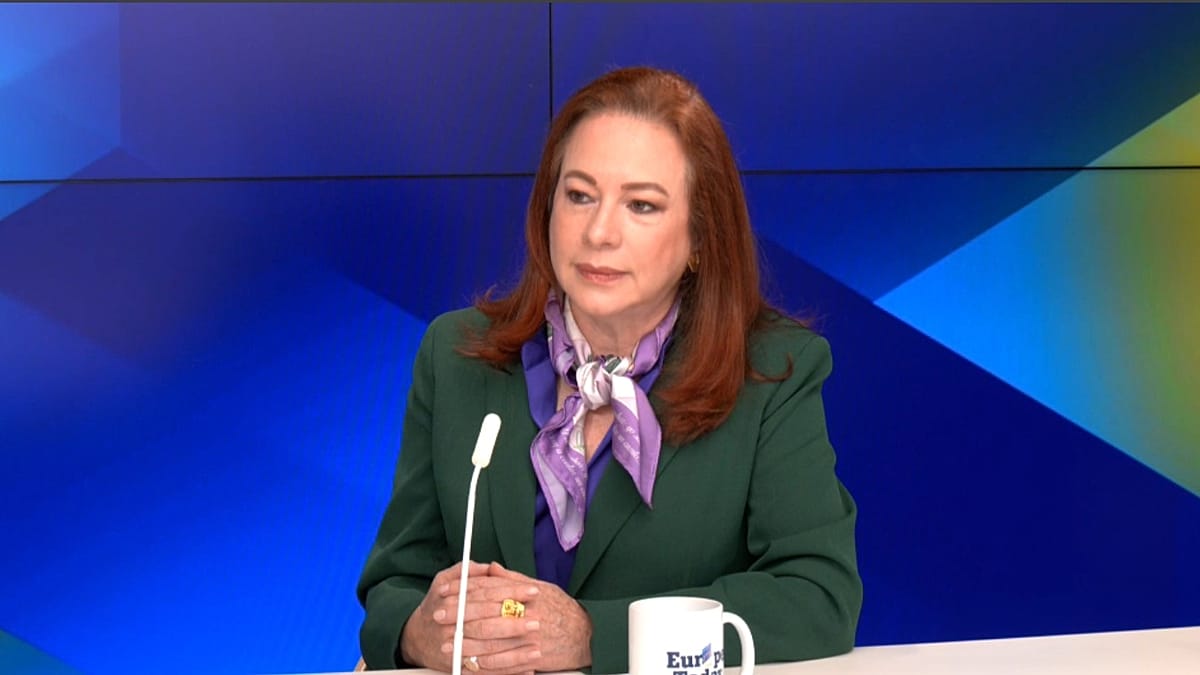
María Fernanda Espinosa, the former president of the UN General Assembly and a rumoured candidate to succeed Secretary-General António Guterres, has issued a stark warning: the United Nations must either reform, transform, or face irrelevance. Speaking ahead of the Cities Alliance Assembly in Brussels, Espinosa acknowledged the institution is in crisis but argued that the world cannot do without it.
“The UN will survive. The big question is how the organisation will survive,” Espinosa said. “And I think the short-hand for that is: reform, transform, or die.”
Her comments come as the UN confronts its most turbulent period in decades. The United States, under President Donald Trump, has slashed funding to several UN agencies, pledging just $2 billion (€1.7 billion) to humanitarian programmes last December—a fraction of the $17 billion (€14 billion) it contributed in previous years. In response, the UN has cut its 2026 budget by 15% and launched the UN80 initiative, a cost-cutting and reform plan timed for the organisation’s 80th anniversary.
A crisis of legitimacy
Beyond financial strains, the UN faces a crisis of legitimacy. Trump recently established the Board of Peace, a body originally conceived to oversee Gaza’s post-war reconstruction but later given a broader mandate. Several governments, including EU member states France and Spain, have criticised the board as encroaching on the UN’s prerogatives.
Espinosa stressed that no other organisation can replace the UN’s humanitarian work. “There are challenges in the world (where the UN) cannot be replaced by another organisation,” she said. “But it can work in a more collaborative way with regional organisations, with cities, with other actors that are out there and that did not exist 80 years ago.”
This call for collaboration echoes broader debates about the future of multilateralism. As the EU's AccelerateEU Plan shows, European institutions are also grappling with the need to shift from crisis response to structural reform.
Europe’s vital role
Espinosa emphasised that Europe has a “vital role to play in the whole multilateral architecture” and should act as a “bridge-builder.” She noted that Europe has historically helped plug financing gaps and must continue to do so. “It (Europe) has had an important role. It has to continue having an important role as well,” she said.
Her remarks come at a time when transatlantic ties are under strain. As former NATO chief urges Europe to cut ties with US defense, the continent’s ability to shape global governance is more critical than ever.
Urban crises and investment gaps
Espinosa also highlighted the growing pressure on cities, which she described as the microcosms where global crises—conflicts, climate shocks, displacement, and poverty—play out in real time. “If you look at Lebanon or Ukraine or Sudan, you see that where crises hit the most, especially in conflict situations, is urban settings. And yet investments are not enough to serve the needs of people in urban areas,” she explained.
The Cities Alliance Assembly in Brussels, where Espinosa spoke, focuses on urban development amid a fraught geopolitical context. The gathering underscores how local governments are increasingly stepping in where national and international bodies fall short.
For the UN to remain relevant, Espinosa argued, it must embrace partnerships with these new actors—cities, regional organisations, and civil society—while fundamentally rethinking its own structures. “We really need to rethink and revitalise the organisation,” she said.