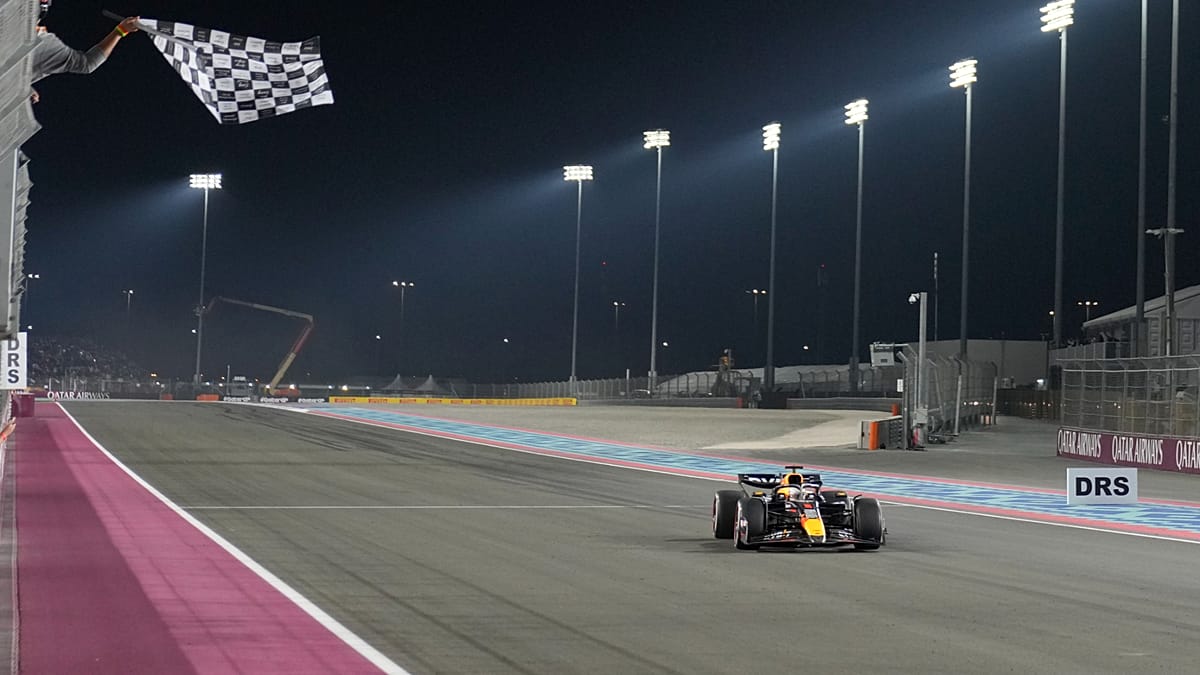
Formula 1 has confirmed that the Qatar Grand Prix on 29 November and the Abu Dhabi Grand Prix on 6 December will go ahead as planned for the 2026 season, but the sport's leadership is preparing a European contingency should the ongoing conflict in the Middle East force a last-minute change. Speaking to reporters after the Hungarian Grand Prix in Budapest, Formula 1 President and CEO Stefano Domenicali said no final decision would be taken before mid-September, allowing organisers to monitor the situation closely.
"For us today, the races in Qatar and Abu Dhabi are confirmed," Domenicali stated. "But of course, if the situation will not be cleared the way that we believe it should be, before the middle of September, we will take the decision. If this will not be possible, the end of the season would be in Europe."
Europe on standby
The announcement comes after Formula 1 already revised its 2026 calendar earlier this year, moving the Bahrain Grand Prix to Malaysia and cancelling the Saudi Arabian Grand Prix due to the regional instability. The championship has not specified which European circuits could serve as replacements, but options may include traditional venues such as Silverstone in the United Kingdom, the Red Bull Ring in Spielberg, Austria, or the Circuit de Barcelona-Catalunya in Spain. Domenicali emphasised that the sport intends to wait as long as possible before making any changes, underscoring a commitment to staging a full 24-race season.
"We have contingency plans in place," he added, without elaborating on the specific venues under consideration. The decision to keep the Middle Eastern races on the calendar reflects the commercial importance of the region for Formula 1, which has expanded its presence there in recent years through lucrative deals with state-backed promoters. However, the war has already disrupted other motorsport events: the FIA World Endurance Championship (WEC) recently withdrew the Qatar 1812 KM from its 2026 calendar, though organisers said the race at Lusail International Circuit would return in the future and reaffirmed their long-term commitment to Qatar.
For European fans and stakeholders, the prospect of a season finale on the continent could be a welcome shift. The last time Formula 1 concluded its championship in Europe was in 2021, when the season ended in Abu Dhabi after a controversial race that decided the drivers' title. A European finale would likely boost attendance and local economies, particularly if held at a venue like the Yas Marina Circuit's European counterpart—though no specific venue has been named. The uncertainty also highlights the broader geopolitical risks facing global sports, as conflicts in the Middle East continue to reshape calendars and logistics.
Domenicali's remarks come amid a period of strong financial performance for Formula 1, with parent company Liberty Media reporting increased revenues from race promotion fees and broadcasting rights. The sport's resilience in adapting to disruptions has been tested before, notably during the COVID-19 pandemic, when it staged a condensed season with multiple races at the same circuits. The current situation, however, is more complex due to the volatile security environment in the Gulf region.
As the mid-September review approaches, the motorsport world will be watching closely. For now, the message from Formula 1 is clear: the races in Qatar and Abu Dhabi are on, but Europe stands ready to step in if needed.