An Iraqi court on Tuesday sentenced seven French nationals to prison terms for membership in the Islamic State group, a case that underscores the ongoing legal reckoning for European citizens who joined the jihadist organisation during its rise and fall.
The Supreme Judicial Council in Baghdad handed life sentences—equivalent to 20 years under Iraqi law—to Lakhdar Sebouai, Adel Bou Aoun, Anas Abdul Rahman, Ziad Ahmad, Mehdi Sida, and Benjamin Van Han. A seventh defendant, Amza Benabed, 24, received a 15-year term. All have 30 days to appeal, and the Court of Cassation will automatically review the verdicts, as is standard in Iraqi criminal proceedings.
The court described the men as “particularly dangerous because of their role in threatening Iraq's national security, destabilising Iraq and Syria, and their involvement in inciting terrorist operations in other countries,” according to a statement. Defence lawyers and representatives of the French embassy were present during the hearing.
The seven were part of a group of 47 French citizens suspected of links to IS who had been held in Syria until last year, when they were transferred to Iraq to stand trial. Their cases highlight the complex legal and diplomatic challenges facing European governments as they deal with citizens who travelled to the conflict zone.
From the caliphate to Iraqi courts
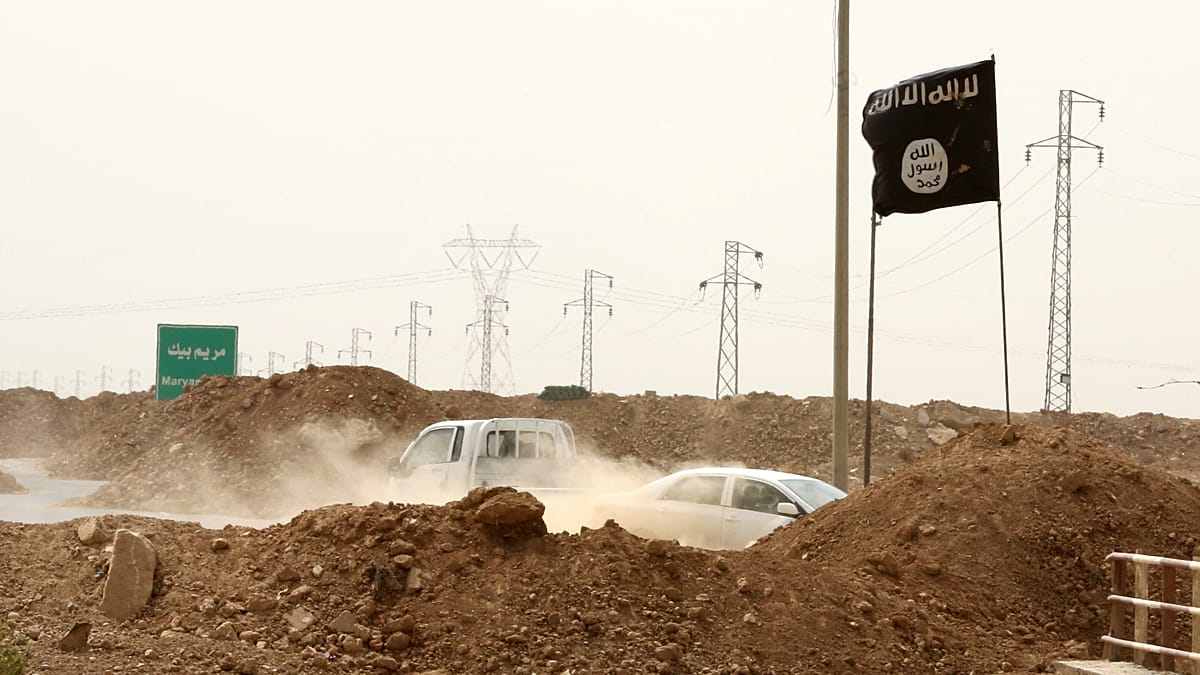
The Islamic State group swept across Iraq in 2014, seizing vast territories in the west of the country and in neighbouring Syria, where it established the seat of its self-proclaimed caliphate. Although the group lost control of these areas years ago, it still maintains active cells that periodically carry out attacks in both countries.
Iraq is currently holding thousands of people suspected of IS membership, including more than 5,700 detainees transferred from north-eastern Syria after clashes broke out in January between Syrian government forces and the Kurdish-led Syrian Democratic Forces (SDF). The SDF had long guarded detention centres holding jihadist fighters and their families following the fall of the caliphate.
Some detainees linked to IS managed to escape during the January clashes, fuelling fears of larger-scale breakouts and prompting the transfer of remaining prisoners to Iraq. Iraq's national security adviser, Qasim al-Aboudi, said earlier this month that Syria had requested the transfer of around 4,000 Syrian IS suspects to Damascus for trial, but Baghdad rejected the request.
Al-Aboudi indicated that once trials in Iraq conclude, some detainees could be sent back to their countries of origin to serve their sentences. It remains unclear whether the convicted French nationals might be repatriated. In the past, Iraq has frequently executed people convicted of terrorism, drawing criticism from human rights organisations. However, the country does not apply the death penalty to foreign nationals whose home countries do not provide for capital punishment.
The verdicts come as France grapples with the broader legacy of its citizens' involvement in the Syrian conflict. The issue has been a sensitive one in Paris, with debates over repatriation and prosecution. While some French nationals have been returned to face justice at home, others have been tried in Iraq, a practice that has raised concerns among legal experts about due process and the conditions of detention.
The case also highlights the wider European dimension of the fight against IS, as several EU member states have had to deal with returning foreign fighters and their families. The European Union has urged member states to take responsibility for their nationals, but the approach has varied widely, with some countries more willing to repatriate than others.
For the seven men, the sentences mark the latest chapter in a journey that began with their departure from France to join the caliphate and now ends in an Iraqi prison. Their appeals will be watched closely, both by their families and by governments across Europe seeking to close the book on one of the most turbulent episodes in recent Middle Eastern history.