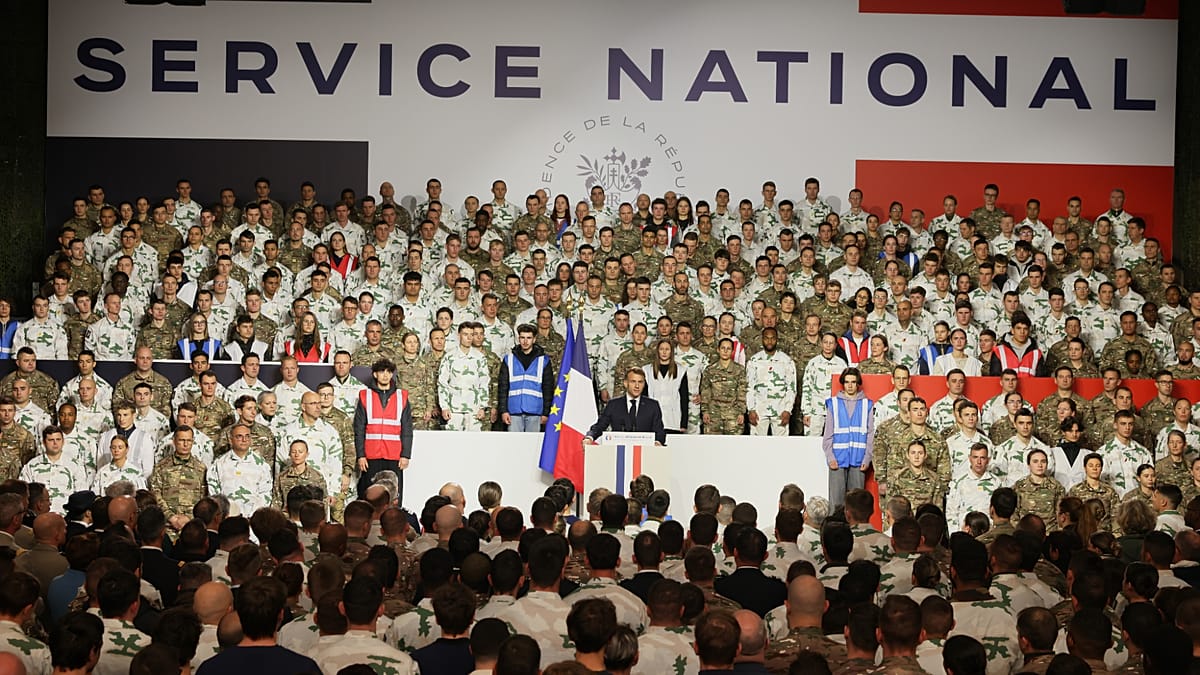
France has officially launched its new voluntary national service programme, a scheme designed to give young people a taste of military life while building a potential recruitment pool for the armed forces. The first cohort of volunteers has begun a 10-month stint that includes five weeks of basic military training, followed by assignments in the army, air force, or navy.
Participants, who were selected based on their applications and motivation rather than academic qualifications, will learn discipline, drill, military songs, and weapons handling. In return, they receive accommodation, food, clothing, and a monthly stipend of €800.
Expansion plans and recruitment goals
The government's initial aim is to grow the programme to 10,000 volunteers a year, with a long-term goal of up to 50,000 per year by 2035. For the armed forces, the initiative is seen as a way to build a pool of potential recruits who could later join the military or the reserves.
For now, all assignments are set to take place within France, and the programme remains voluntary. Despite some political debate, it is unlikely to become a steppingstone towards compulsory national service. The French armed forces currently have around 200,000 personnel and lack the capacity to absorb an entire age group, which could be as large as 700,000 people annually.
France's strained public finances further reduce the likelihood of mandatory service. The cost of the voluntary programme is expected to reach around €1 billion by 2030, based on an annual intake of 10,000 young people.
The launch comes as France's political season resumes, with budget negotiations and jostling ahead of 2027 already dominating headlines. The programme's financial implications are likely to be scrutinised as part of broader discussions on public spending.
Observers note that the initiative could also have wider European implications, as several countries grapple with recruitment challenges and consider new ways to engage young citizens. While France's approach remains voluntary, it may serve as a model for other nations exploring similar schemes.
For the first cohort, the experience is both a personal challenge and an opportunity. As one volunteer put it, "This is a chance to test myself, learn new skills, and see if a military career might be for me."
The programme's success will depend on whether it can attract enough motivated young people and whether the armed forces can integrate them effectively. With a target of 10,000 volunteers annually, the scheme is still a small fraction of the youth population, but it represents a significant step in France's efforts to modernise its military recruitment.
As the programme evolves, it will be interesting to see whether it influences other European countries' policies on national service and youth engagement. For now, France is taking a cautious, voluntary approach, balancing ambition with fiscal reality.