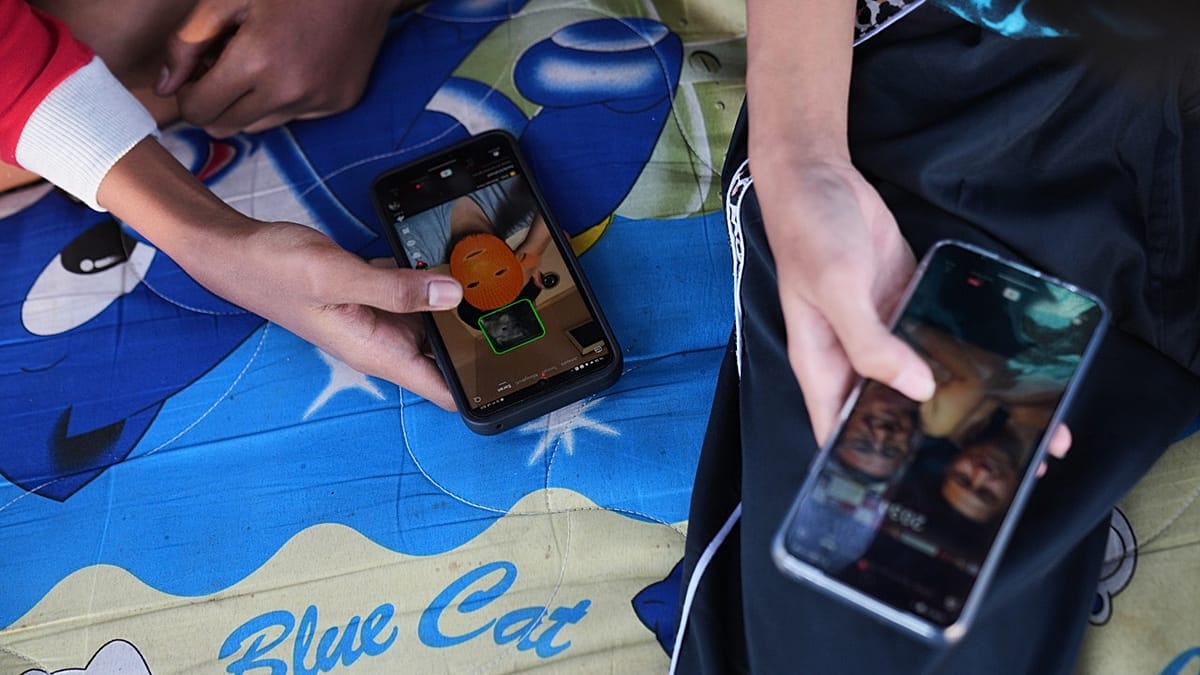
The French government has submitted a revised draft law to restrict social media access for children under 15, following the rejection of an earlier version by the Constitutional Council in August. President Emmanuel Macron announced the move on Monday, saying the new text had been sent to the European Commission for review—a necessary step to ensure compliance with EU law.
The previous legislation was struck down because the Council found that parts of it imposed an unjustified restriction on the freedom of expression of minors. The new proposal aims to address those concerns by focusing on specific design features deemed harmful or addictive, rather than imposing a blanket ban.
Targeting addictive design
According to a French government source, the revised text lists around ten features that are considered problematic for younger users. These include the automatic playback of videos, notification feeds that operate at night, and the ability to communicate with unknown accounts. By targeting these elements, the government hopes to create a more legally robust framework that can withstand constitutional scrutiny.
Macron has made the protection of children online a priority of his presidency, and he has expressed hope that the measure will be in force before he leaves office next year. He has also called for similar legislation across the European Union, arguing that a coordinated approach is necessary to protect all European children.
EU Commission President Ursula von der Leyen is expected to address the possibility of a bloc-wide social media ban for children in a speech in Brussels this week. The Netherlands and Spain have already urged the EU to adopt a common age limit, reflecting a growing consensus among member states.
Several European countries have taken steps to restrict social media access in recent months, driven by mounting evidence of the harmful effects on young people's mental health and development. Austria, for instance, has implemented a ban on headscarves for girls under 14, a measure that has sparked debate about the limits of state intervention in family life.
Macron's ambition is for the French text to become "the standard for all European children," as he wrote on X. The notification to the European Commission is a key procedural step, as it allows the EU executive to assess whether the draft complies with the bloc's digital rules, including the Digital Services Act.
The French proposal is part of a broader European conversation about the regulation of online platforms. While some argue that age-based restrictions are necessary to protect minors, others warn of the risks of over-regulation and the potential for unintended consequences. The debate is likely to intensify as the EU considers a unified approach.
For now, France is moving forward with its own national legislation, hoping to set an example for the rest of Europe. The coming months will be crucial in determining whether the revised text can survive legal challenges and gain the support needed for a bloc-wide initiative.