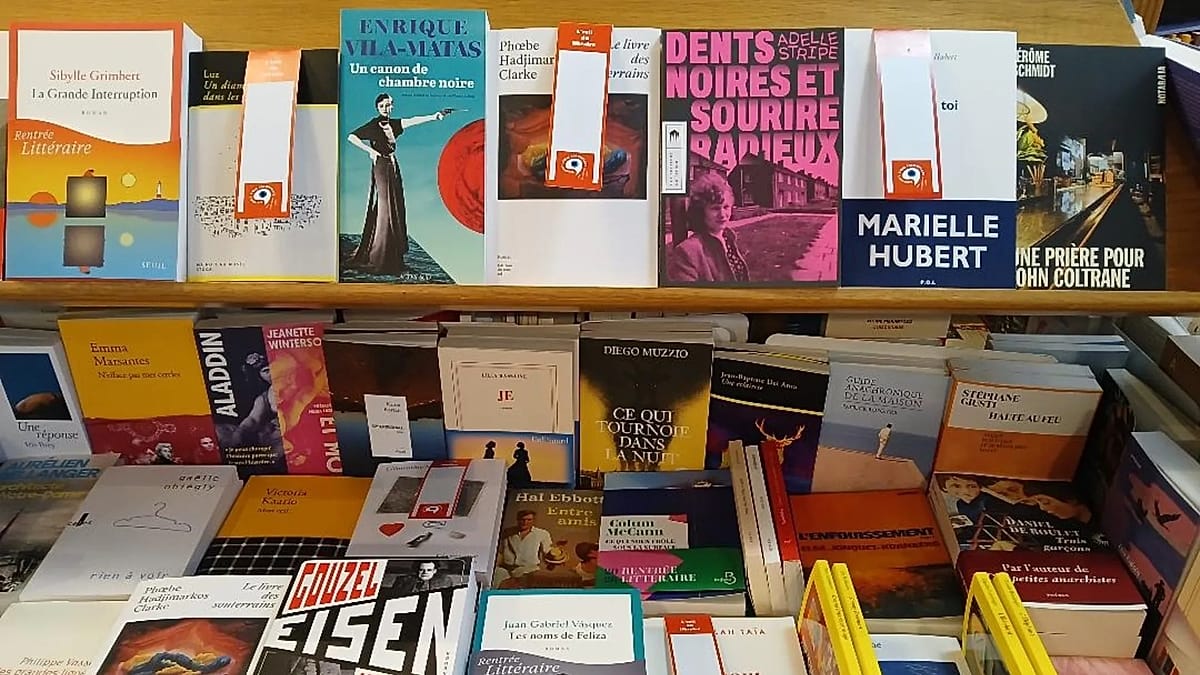
Every September, French bookshops brace for a deluge. This year, 461 novels—including 344 French titles—are hitting the shelves as part of the rentrée littéraire, the country's annual autumn publishing rush. The number is slightly down from last year's 484, but the ritual remains a defining feature of French cultural life.
For publishers and booksellers, this period is crucial, especially as reading habits shift. According to the Centre national du Livre (CNL), the share of French people who call themselves regular readers has dropped by five points since 2023. Only 63% say they read at least five books a year, and daily reading has hit a ten-year low. Régine Hatchondo, president of the CNL, calls reading "a vital time, time for oneself, that absolutely must be protected."
The decline is sharpest among young people, who spend over three hours a day on screens but just 18 minutes reading books. The CNL's 2026 study on youth reading notes that "regular reading is declining and young people very often do something else at the same time as they read."
A European patchwork of literary seasons
While France's rentrée is uniquely intense, other European countries have their own versions—each shaped by local market dynamics and cultural habits.
In Switzerland, the phenomenon is far more muted. "There is far less media hype and fewer prizes at that time of year," says Nicolas Julliard, a literary journalist at RTS. "It is not the same phenomenon." Yet Swiss publishers are increasingly syncing their calendars with France's, hoping to gain visibility across the border. "Quite a few books are exported and are even starting to appear in certain prize lists," he notes, making the season "increasingly a key date for publishers, particularly for the newer publishing houses."
Belgium presents a paradox. "Driven by the pull of the French literary season, there is intense media and public attention on books," explains Nausicaa Dewez, editor-in-chief of Le Carnet et les Instants. But the market is saturated by French titles, and Belgian publishers "know that commercially they cannot compete with much larger and more powerful structures." Instead, their big moment comes in March, at the Brussels Book Fair.
Spain calls its autumn wave the temporada editorial de otoño. While it doesn't match France's scale, publishers still release major titles in early September, and cultural events fill the calendar, says journalist Pepa Blanes of Cadena SER.
Germany's Bücherherbst (book autumn) is a quieter affair, but it leads directly into the Frankfurt Book Fair in October, where the Deutscher Buchpreis is awarded—a prize modeled on the Prix Goncourt, as Deutsche Welle notes.
Italy has shifted its approach. "Autumn is when some of the year's most important books are concentrated," says Paolo Ambrosini, president of the Italian booksellers' association, "but in recent years publishers have started to spread their output more evenly over the rest of the year" to avoid an overload.
The closest parallel to France's frenzy may be the UK's "Super Thursday," when hundreds of titles land in bookshops on the same day, usually in early October. Kate Skipper, chief operating officer at Waterstones, describes it as "an exciting day for booksellers," with a "real buzz when you unpack so many big titles for Christmas all at once." In 2024, over 1,900 books were published on that single day.
So while the rentrée littéraire remains a distinctly French institution, its echoes across Europe show how the continent's literary markets are both interconnected and stubbornly local. As France's own reading rates falter, the season's survival may depend on whether it can adapt to a changing cultural landscape.