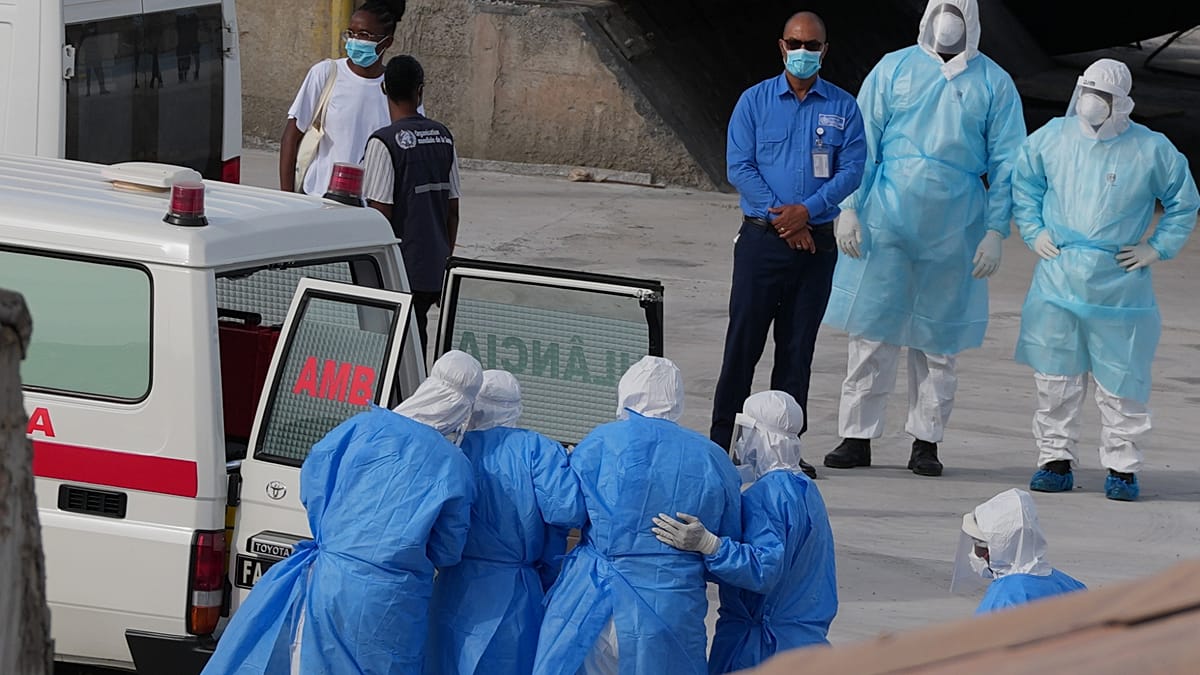
A worker at Frankfurt Airport has died after contracting malaria, operator Fraport confirmed on Wednesday. Five other employees at Germany's busiest aviation hub have also been infected and are undergoing treatment.
The infections are believed to have originated from a mosquito that travelled to Germany aboard an aircraft from a malaria-endemic region, likely in July. The insects can survive the journey in wheel bays, cargo holds, or cabin crevices, and then bite airport staff on the tarmac or in terminals.
Rare but documented phenomenon
Health authorities stress that such cases are exceptional. The Robert Koch Institute (RKI), Germany's federal disease control agency, describes them as "very rare." Malaria is normally transmitted through the bite of an infected Anopheles mosquito, and while some species of this genus exist in Germany, the conditions for local transmission are seldom met.
Frankfurt's health department refers to the incident as "airport malaria," a term used when the disease is contracted outside endemic areas. Human-to-human transmission plays no role in these cases, a spokesperson explained.
A Europe-wide study covering 1969 to 2024 identified 145 cases of airport or baggage-borne malaria, of which nine occurred in Germany. The new cluster at Frankfurt would add to that tally.
Fraport responds with traps and advice
Fraport says its immediate priority is information and prevention. Employees are being urged to consult a doctor if they develop malaria-like symptoms—fever, headaches, breathing difficulties, or seizures—and to mention that they work at the airport. Mosquito traps have been installed across the facility, with captured insects sent to laboratories for analysis.
The incident comes as European airports face a range of operational challenges, from longer queues due to biometric checks to security concerns such as the recent drone sightings near Leipzig/Halle. While those issues affect passenger flow, the malaria case highlights a less visible health risk for ground crews.
Malaria can be life-threatening. According to the World Health Organisation, symptoms may escalate to coma and death, particularly among vulnerable groups. Germany's Foreign Office warns that the disease can be fatal, especially for those without prior immunity.
For now, Fraport is cooperating with local health authorities to monitor the situation. The airport, which handled over 60 million passengers last year, remains fully operational.