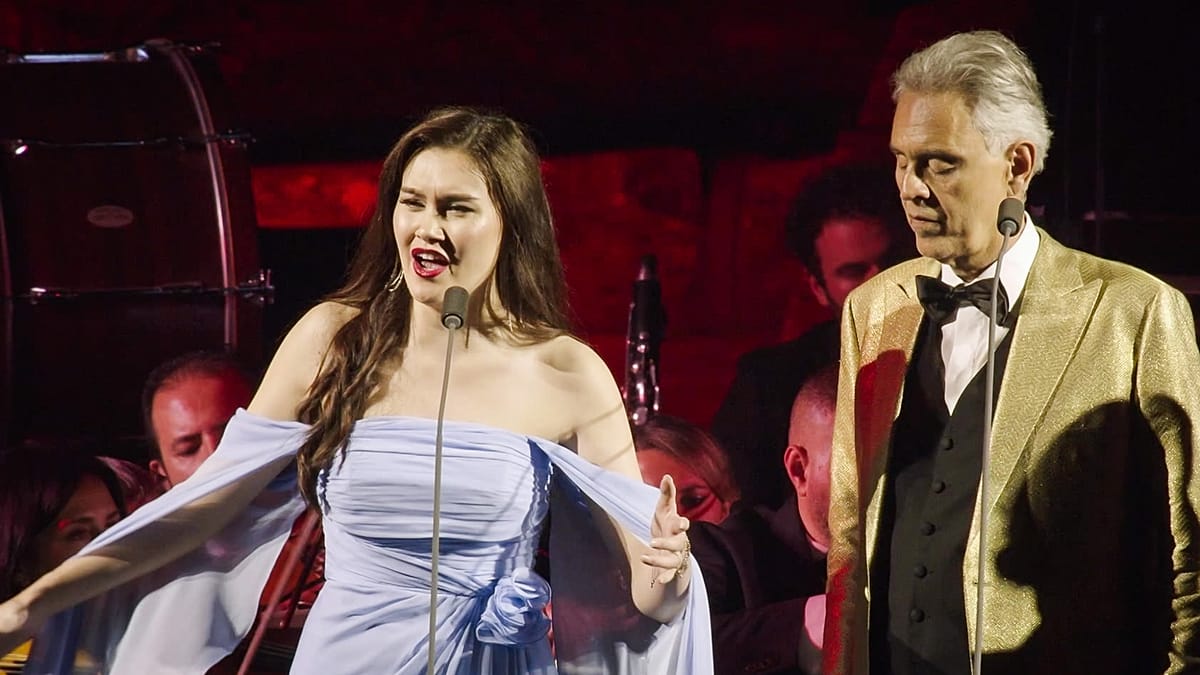
In the vast steppes of central Kazakhstan, near the Baikonur cosmodrome that launched Yuri Gagarin into space, a different kind of trajectory has unfolded. Aigerim Altynbek, a 28-year-old soprano from the village of Akay in the Kyzylorda Region, has risen from provincial music schools to the stage of Milan's Teatro alla Scala — the first Kazakh singer to perform there.
Last year, Altynbek won the prestigious CLIP competition in Italy, taking home not only first prize but also the audience award, best female voice award, and a special music critics' prize. The victory secured her a contract with La Scala, a milestone she describes as surreal. “For me, the feeling of entering La Scala Theatre for the very first time was truly special, because a little girl named Aigerim saw her dream come true,” she told Euronews.
From Akay to Milan
Altynbek's journey began in Akay, where her mother taught her to sing at age five. She spent four years at a music school in Baikonur, a city synonymous with space exploration. In college, teacher Firuza Argynbaeva recognized her operatic potential and accompanied her to her first international competition in St. Petersburg, where she won a prize at 16 — still the only Kazakh winner in that contest's history.
Since then, she has competed across Russia, Europe, and Kazakhstan. In 2025 alone, she claimed first place at an opera competition commemorating the 100th anniversary of Giacomo Puccini's birth in Italy, third place at the Nikolai Ghiaurov International Opera Competition in Modena, and a special prize at the Mirella Freni Competition. The CLIP contest, however, was the crown jewel: an annual event in Italy requiring contestants to perform arias in Italian, French, Spanish, and English over three rounds. Altynbek prepared for six months, several hours daily.
Hard work is second nature to her, especially given the exacting standards of European audiences. “You must always stay in top form. You must always be prepared and must always feel the energy of the stage,” she says. European opera connoisseurs, she notes, know every libretto by heart, along with the history of each opera, its previous performers, and its author.
Promoting Kazakh Culture on European Stages
While immersed in European culture and history through opera, Altynbek remains deeply connected to her homeland. She always includes at least one Kazakh folk song in her concert programmes. “People should hear our Kazakh language and experience our culture,” she explains. This cultural diplomacy resonates with audiences and officials alike. Kazakhstan's President personally congratulated her after the CLIP win, and the Ministry of Culture and Information, led by Minister Aida Balayeva, has supported her career.
Altynbek's success also carries a sense of responsibility. “For many people, seeing a Kazakh girl perform on a European stage is something truly remarkable,” she says. The support from her country's leadership, including a personal letter from the President, inspires her. “I was deeply touched because I never expected it.”
Her story echoes broader trends in European cultural exchange, where artists from beyond the continent bring fresh perspectives. Unlike the Kremlin-backed singer Shaman, who uses AI deepfakes to mock exiled Russians, Altynbek's approach is one of genuine cultural bridge-building.
For Altynbek, the stage is transformative. “On stage, I feel like a bird spreading its wings wide. The stage is my home, my life,” she says. Away from the spotlight, she sees herself simply as a daughter, friend, and student. But when performing, she aims to give the audience the music that lives in her heart, forgetting everything else except the desire to touch their emotions.
As she prepares for major concerts ahead, Altynbek remains grounded. “I do not think much about the strain and responsibility. Opera is something that inspires me and awakens my spirit,” she says. Her journey from Baikonur to La Scala is a testament to talent, perseverance, and the power of cultural exchange — a reminder that Europe's stages are enriched by voices from across the continent and beyond.