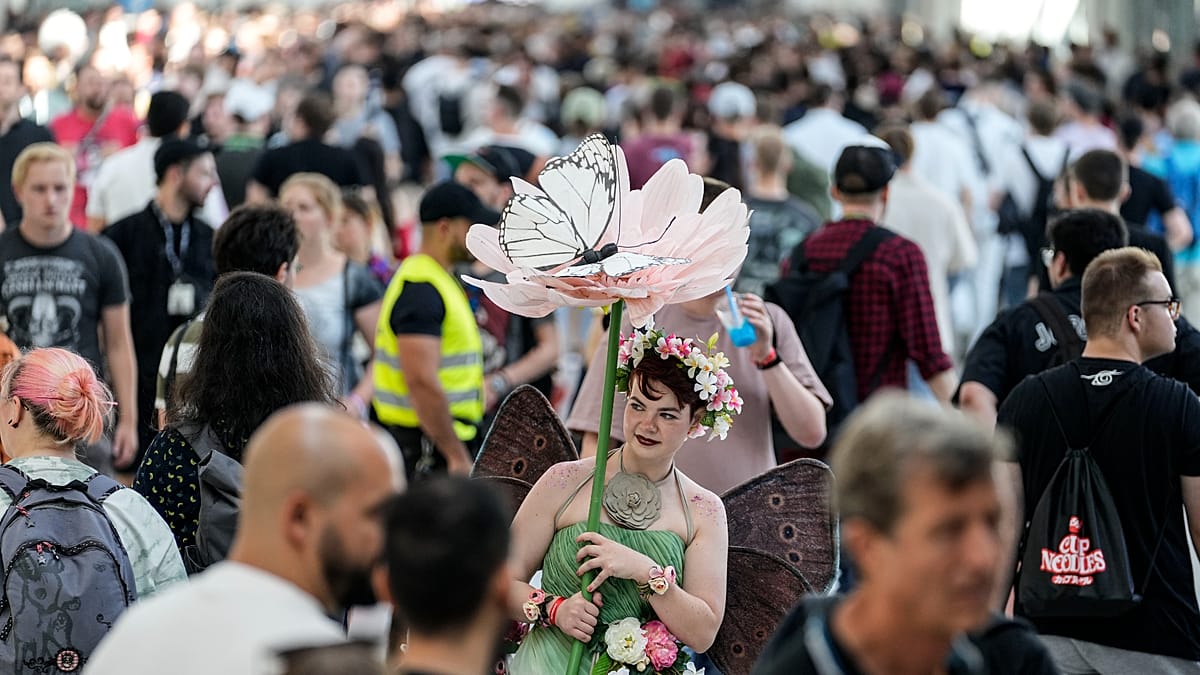
The exhibition halls in Cologne are packed once again as Gamescom, the world's largest computer and video game fair, opens its doors. This year's event, expected to draw more than 350,000 visitors, underscores a profound shift in German leisure habits over the past decade. According to the latest Leisure Monitor survey, 33 percent of Germans now play video games at least once a week, a figure that has grown faster than almost any other pastime except smartphone use and listening to music.
Record attendance and high-level political presence
Gamescom 2026, held under the slogan “Games whet the appetite for the future,” has attracted a record number of exhibitors. Among the dignitaries attending are Henna Virkkunen, Vice-President of the European Commission responsible for digital technologies, who will discuss the EU's strategy on games. She is set to meet Vice-Chancellor Lars Klingbeil, Research Minister Dorothee Bar, and Hendrik Wüst, the state premier of North Rhine-Westphalia.
In a historic first, German President Frank-Walter Steinmeier will visit the fair and open the Gamescom congress, signaling the growing political recognition of the industry's importance.
Germany's gaming market: a European leader
According to the 2026 annual report on Germany's games industry, revenue from games, hardware, and online services reached approximately €9.4 billion in 2025, a 4 percent increase from the previous year. This makes Germany the largest gaming market in Europe and the fifth-largest worldwide, ahead of major competitors like France and the UK.
Industry representatives are buoyant. Felix Falk, managing director of the German games industry association Game, said: “As the world’s biggest games event, Gamescom is once again making one thing abundantly clear this year: we need to make far better use of the unique potential of games and their cultural, economic and technological power. It must be Germany’s and Europe’s ambition to play a leading role as a production hub for games.” He added that achieving this requires “more ambition, reliable political framework conditions, proportionate regulation, and to tap much more into the unique potential of games for our society.”
Hardware headwinds and AI-driven costs
Despite the overall growth, the first half of 2026 saw a 3 percent decline in industry revenue to €4.2 billion, largely due to an 8 percent drop in hardware sales. Consoles from Nintendo, Microsoft, and Sony have become pricier as memory and hard drive costs soar, driven by the explosive demand for chips from AI data centers. This has prompted Europe to accelerate its own chip production efforts to reduce dependence on Asian suppliers.
Canadian gaming expert and host Geoff Keighley described the industry's current state as “exciting on the one hand and alarming on the other,” noting that AI's appetite for chips is squeezing supply and inflating the cost of gaming technology.
New releases and German success stories
This year's lineup includes action titles like “Nodus Fall,” where a hero battles dragons, “Rainbow Six: Tactics,” a military strategy game, the latest installment in Dmitry Glukhovsky's post-apocalyptic series “Metro 2039,” and the fantasy epic “Game of Thrones: War for Westeros.”
One of Germany's most prominent gaming companies, Giants Software, is celebrating a milestone: five million copies sold of “Farming Simulator 25,” a farming simulation released in late 2024. At Gamescom, the company is presenting the interactive premiere of its expansion, “Farming Simulator 25: Beans & Alpacas,” due out in October.
The event also highlights broader European ambitions. As the EU pushes for digital sovereignty, the games industry is seen as a strategic sector. The presence of EU Commissioner Virkkunen underscores Brussels' interest in fostering a competitive European gaming ecosystem, which could also benefit related fields like simulation and serious games.
With its record attendance and political backing, Gamescom 2026 reinforces Germany's position as the continent's gaming hub. Yet industry leaders warn that sustained growth will require more than just a successful trade fair—it demands a coherent European strategy to nurture talent, support studios, and secure supply chains. As Felix Falk put it, the potential is there, but so is the need for action.