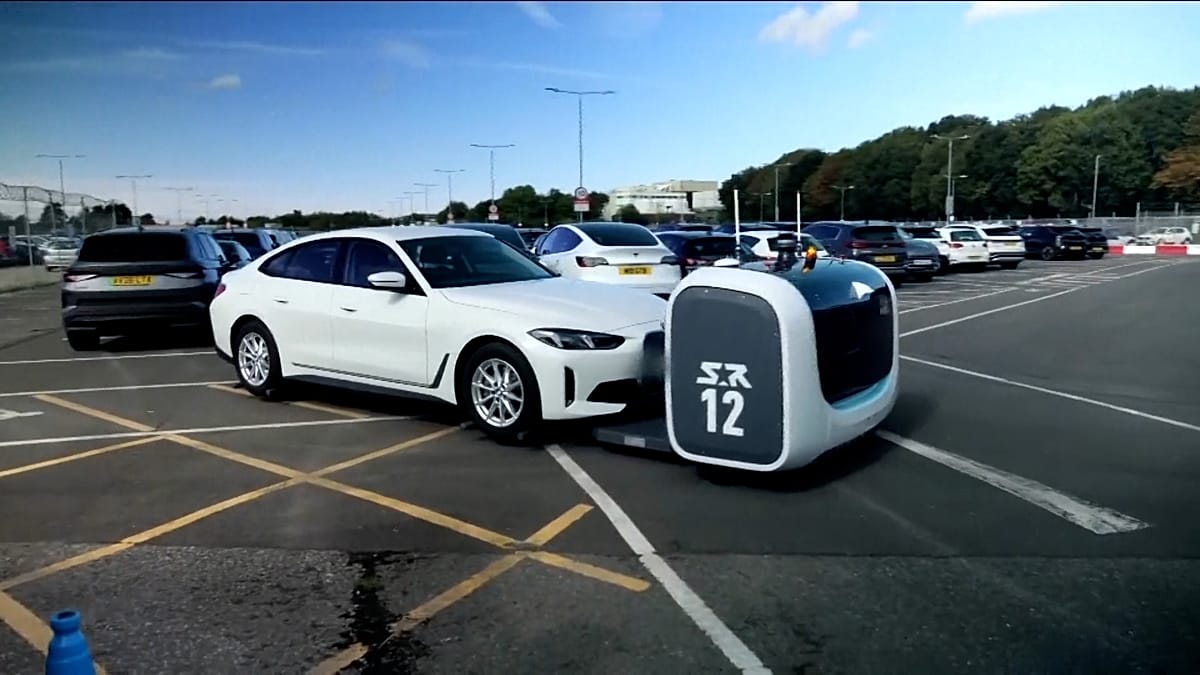
London Gatwick Airport has started testing an automated valet parking system that uses robots to move and store cars in its long-stay lots. The trial, which began this month, is designed to offer passengers a safer and more efficient alternative to traditional self-parking, while also making better use of the airport's existing parking capacity.
The system works by having drivers drop off their vehicles at a designated bay, where a robotic platform lifts the car and transports it to a secure parking spot. The robots are equipped with sensors and software that allow them to navigate the parking facility without human intervention, reducing the risk of accidental bumps or scrapes that can occur in crowded lots.
How the robot valet works
Passengers using the service simply park in a designated area, lock their car, and confirm the drop-off on a touchscreen. The robot then takes over, lifting the vehicle and moving it to an allocated space. When the driver returns, they request their car via a mobile app or kiosk, and the robot retrieves it within minutes.
The trial is being run in partnership with a robotics company that has previously deployed similar systems in other European airports. Gatwick is one of the busiest airports in the UK, handling over 40 million passengers a year, and the airport's management sees this as a way to streamline operations and improve the customer experience.
According to Gatwick's head of parking, the system is particularly beneficial for long-stay customers, who often leave their vehicles for a week or more. "The robots ensure that cars are stored in a controlled environment, minimising the chance of damage and freeing up space for more vehicles," he said. The service is available for most standard cars, though vehicles with very low ground clearance or unusual dimensions may not be eligible.
The trial comes at a time when European airports are increasingly looking to technology to improve passenger services. A recent ranking of global airports placed several European hubs at the top for passenger experience, and innovations like this could help maintain that lead.
Gatwick's move also reflects a broader trend in the region. In Brussels, for example, the airport has recently rejoined Europe's high-speed rail network, offering passengers a more sustainable way to reach the terminal. While the robot valet is not directly linked to environmental goals, it does reduce the need for passengers to drive around looking for spaces, which can cut emissions.
The trial is expected to run for several months, and if successful, the system could be rolled out permanently. Gatwick has not yet announced pricing, but the service is likely to cost a small premium over standard long-stay rates. The airport says the extra fee will be offset by the convenience and peace of mind it offers.
Not all airports have embraced such automation. Some have faced challenges with integrating robots into existing infrastructure, and there are questions about how the technology copes with extreme weather or high volumes of traffic. However, Gatwick's trial is being closely watched by other UK and European airports, which could follow suit if it proves reliable.
For now, passengers at Gatwick can try the service and judge for themselves. The airport is keen to stress that the robots are not replacing human staff but rather assisting them, and that all vehicles are covered by the same security measures as traditional parking.
As the trial progresses, Gatwick will gather data on efficiency, customer satisfaction, and any technical issues. The results could shape the future of airport parking not just in the UK, but across Europe, where similar systems are already being tested in cities like Paris and Frankfurt.