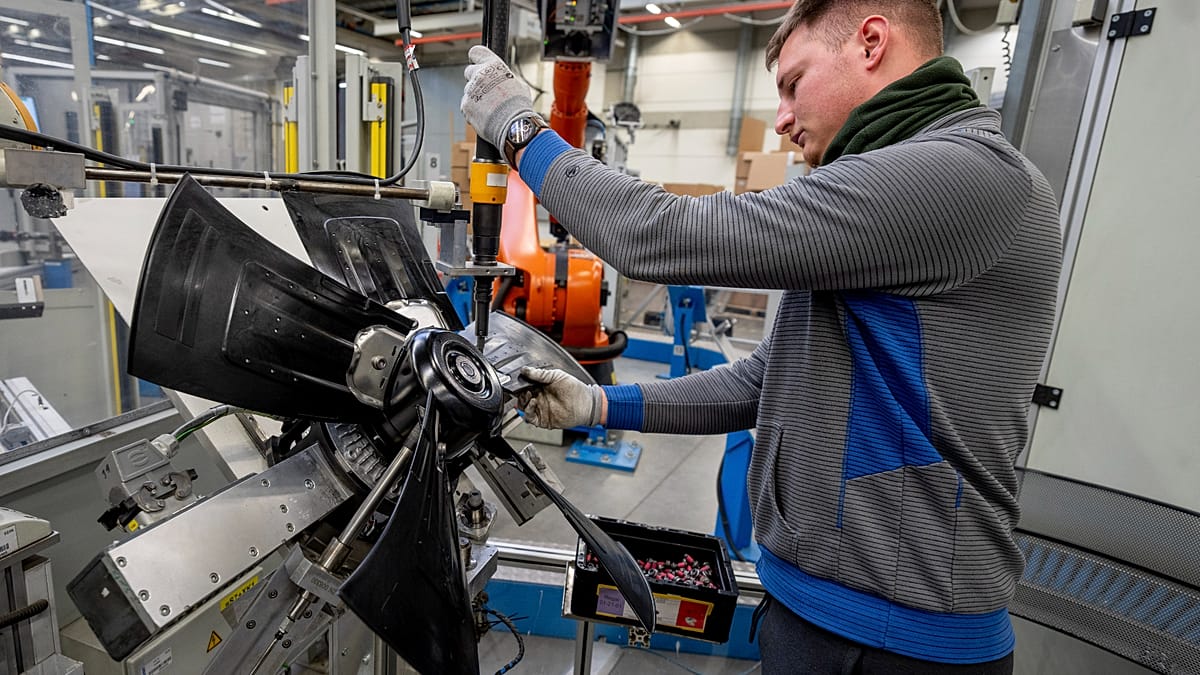
Germany's economy expanded more than initially reported in the second quarter, as a rebound in exports helped offset the fallout from the Iran war and the closure of the Strait of Hormuz. Revised data from the Federal Statistical Office (Destatis) show gross domestic product rose by 0.3% between April and June compared with the previous three months, up from the 0.2% first estimated in July.
On an annual basis, GDP grew by 1.0%, revised upward from a preliminary 0.9% and accelerating from 0.8% in the first quarter. The upward revision suggests Europe's largest economy is weathering the energy shock better than many had feared.
“The German economy is maintaining the growth momentum seen at the start of the year,” said Ruth Brand, president of the Federal Statistical Office. “As in the first quarter, growth was primarily driven by the positive development of exports,” she added.
Exports lead, domestic demand lags
Exports rose by 2.0% in the second quarter, while imports increased by 1.5%. Household and government consumption were both subdued, each edging up just 0.1% from the previous quarter. This pattern underscores the continued reliance on foreign demand, even as domestic spending remains cautious amid high energy prices and uncertainty.
Manufacturing output increased by 0.9%, supported by strength in the chemicals and electrical-equipment industries. Most service sectors also recorded growth, while construction was broadly flat. The main exception was financial and insurance services, which contracted by 0.7%. Investment slipped slightly, dragged down by a 1.4% decline in spending on machinery and equipment.
Separately, the Ifo Business Climate Index rose to 88.8 in August from 86.7 in July, comfortably beating economists' forecast of 87.2. The improvement was broad-based, with sentiment brightening across every major sector. Together, the GDP revision and the Ifo reading offer stronger evidence that the recovery is gaining traction.
Still, risks remain. Energy prices are still elevated, and domestic demand is fragile. Germany's economy has struggled to grow in recent years, weighed down by high energy costs, intensifying competition from China, and US tariffs. There had been hopes of a more robust rebound this year, supported by Chancellor Friedrich Merz's plans to boost spending on defence and infrastructure.
The resilience of exports is particularly notable given the disruption caused by the Iran war and the closure of the Strait of Hormuz, a critical chokepoint for global oil shipments. While the full impact may still unfold, the second-quarter data suggest German industry has so far adapted better than expected.
For the broader European picture, Germany's performance is a key bellwether. The eurozone's largest economy has been a drag on regional growth in recent years, and a sustained recovery in Berlin and the industrial heartlands of North Rhine-Westphalia and Bavaria would provide a much-needed tailwind. However, the persistent weakness in domestic consumption and investment highlights the structural challenges that remain.
As the government in Berlin pushes ahead with its spending plans, the coming quarters will show whether the export-led momentum can translate into a more balanced expansion. For now, the revised figures offer a cautiously optimistic signal.