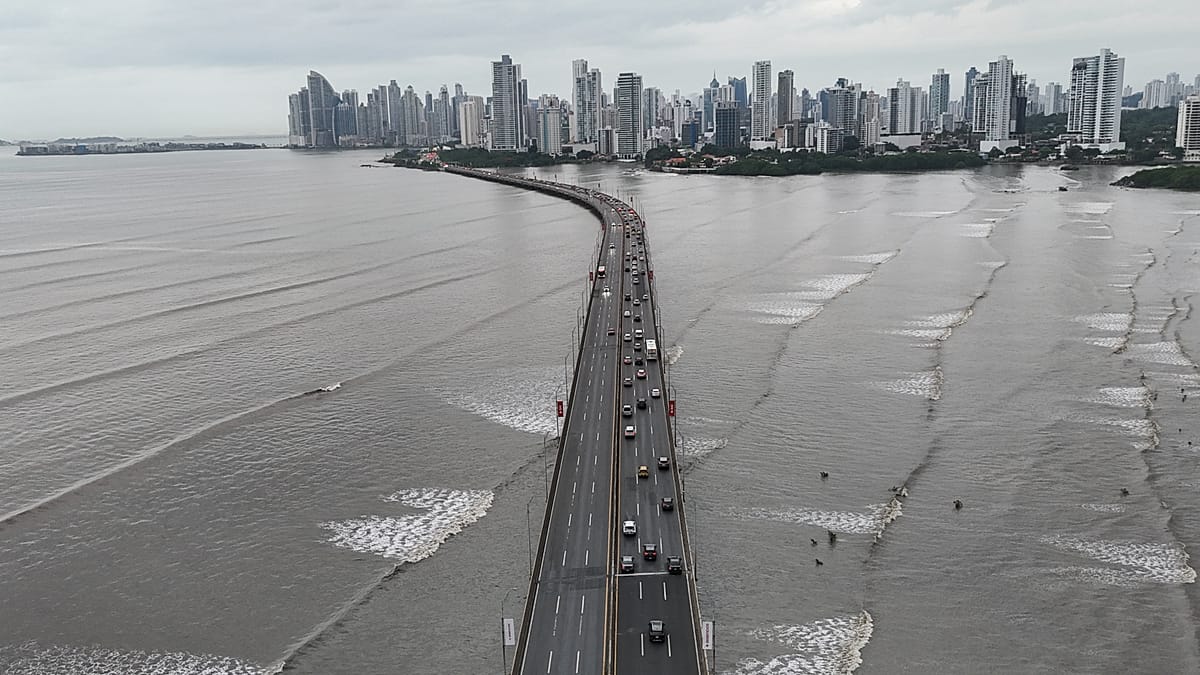
A major earthquake with a magnitude of 7.6 struck near Panama's southern coast on Friday morning, shaking buildings in Panama City and forcing residents to evacuate, according to the US Geological Survey (USGS). The quake's epicentre was located about 14 kilometres southwest of the remote community of Pitaloza Arriba, near the country's border with Colombia.
The tremor was felt strongly in the capital, where office workers and residents streamed into the streets as a precaution. Local media reported that the shaking was also noticeable in parts of neighbouring Colombia, particularly in the border region. Panama's Civil Protection agency said it was assessing potential damage in areas closest to the epicentre, though no immediate casualties have been reported.
Tsunami threat and regional response
The USGS issued a tsunami threat notice shortly after the quake, urging coastal communities to move to higher ground. The Pacific Tsunami Warning Center later said that waves of up to one metre could affect some coastlines, though the threat was not expected to be as severe as the 2004 Indian Ocean disaster. Authorities in Panama and Colombia were monitoring sea levels and advising residents along the Pacific coast to stay alert.
This seismic event comes amid a period of heightened attention to natural disasters and their cross-border impacts. For European readers, the episode is a reminder of how interconnected global early-warning systems are, with agencies like the USGS and European seismic networks sharing data in real time. The EU's Copernicus Emergency Management Service has been activated in similar situations to provide satellite-based damage assessments, though it is not yet clear if it will be deployed here.
Panama, a key transit hub for global trade, has a relatively modern infrastructure, but the remote southern region near the epicentre is sparsely populated. The country's location along the Pacific Ring of Fire makes it prone to seismic activity, and Friday's quake is among the strongest recorded in the area in recent decades.
While the immediate focus is on local response, the event also highlights broader questions about disaster preparedness in Central America, a region that has seen increased international cooperation with Europe on early warning systems and climate resilience. The lingering threat of natural hazards is a shared concern, as seen in recent European efforts to bolster civil protection mechanisms.
As of now, no major damage has been reported, but officials warn that aftershocks are likely. The USGS recorded several smaller tremors in the hours following the main quake. Residents in Panama City remained outdoors for some time, awaiting official updates, while schools and some businesses suspended operations as a precaution.
The quake also drew attention to the vulnerability of coastal communities in the region. In 2017, a 6.9-magnitude earthquake off the coast of Mexico triggered similar evacuations, and the lessons learned there have informed regional response protocols. European agencies, including the EU's Emergency Response Coordination Centre, have previously offered support to Latin American countries in the aftermath of major earthquakes, and it is possible that such assistance could be requested if the situation worsens.
For now, the priority is ensuring the safety of residents in the affected areas. The Panamanian government has activated its national emergency operations centre, and the military has been deployed to assist with evacuations and damage assessments. International partners, including the United States and the United Nations, have offered technical support.
This earthquake serves as a stark reminder of the power of natural forces and the importance of robust early warning systems. As climate change increases the frequency of extreme weather events, the need for cross-border cooperation in disaster management becomes ever more critical. European nations, with their own experience of seismic risk in places like Italy, Greece, and the Balkans, have a vested interest in supporting global resilience efforts.
Further updates will be provided as more information becomes available. In the meantime, residents in the affected areas are advised to follow instructions from local authorities and stay away from the coast until the tsunami threat is lifted.