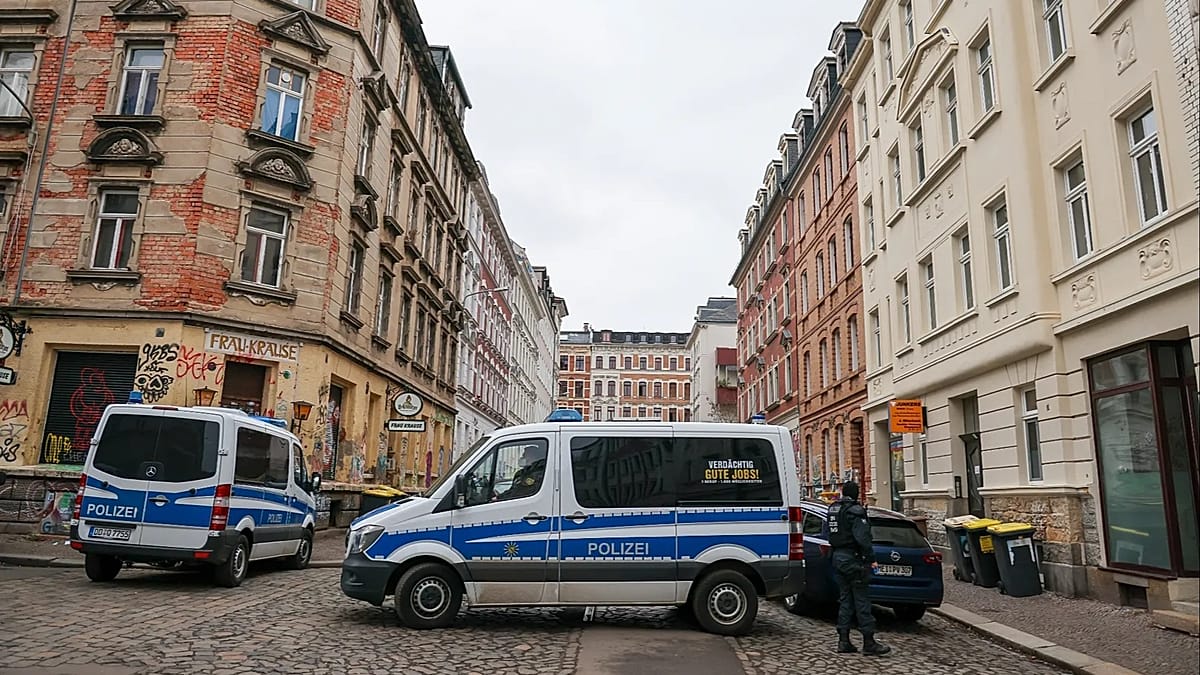
German federal police conducted a large-scale operation on Tuesday, raiding more than 50 residential and commercial properties in and around the eastern city of Leipzig. The coordinated action, involving approximately 1,000 officers, targeted a trafficking network accused of exploiting Syrian refugees' residency documents to facilitate illegal entry into Germany.
The federal police office in Halle an der Saale stated that the ring operated by obtaining genuine residency permits issued to Syrian refugees in Germany and sending them to individuals in Syria who bore a physical resemblance to the original holders. This allowed the recipients to travel to Germany using the fraudulently obtained documents.
Scope of the Operation
Most of the 44 suspects who underwent formal identification measures are believed to have allowed their documents to be used in the scheme. A smaller number face allegations of enabling unauthorized entry into the country. Police seized mobile phones, residency documents, flight booking records, and at least €93,000 in cash during the raids.
Authorities also uncovered violations of narcotics and explosives laws, with indications that some suspects have connections to organized crime. The operation highlights the ongoing challenges Germany faces in managing migration and document fraud, particularly within its large Syrian diaspora.
Germany is home to over one million Syrians, the largest Syrian community in the European Union, many of whom arrived during the peak of the migrant influx in 2015–2016. The country's interior ministry has been working to tighten border controls and improve document verification processes.
Many of the suspected fraud cases were identified by German police document and visa advisors stationed at airports in the Middle East. Since 2024, the German federal police have deployed 71 such advisors outside the EU to assist visa sections at German embassies and consulates, as well as airlines at major international hubs.
Political Context
The raids come amid a broader political push by Chancellor Friedrich Merz to enforce stricter immigration policies. In March, Merz met Syria's interim President Ahmed al-Sharaa in Berlin, where the two leaders discussed the return of Syrian refugees. Merz stated that they were working jointly towards more Syrians being able to return, aiming for 80% of the Syrian population in Germany to go back over the next three years.
Al-Sharaa, who has been building ties with Western governments, has made several overseas trips, including to the United States, France, and Russia. His meeting with Merz underscored the delicate balance between addressing security concerns and fostering diplomatic relations with Syria's new leadership.
Germany's approach to migration remains a contentious issue, with debates over integration, security, and economic impact. The recent raids underscore the government's determination to crack down on trafficking networks while navigating the complexities of asylum and residency policies.