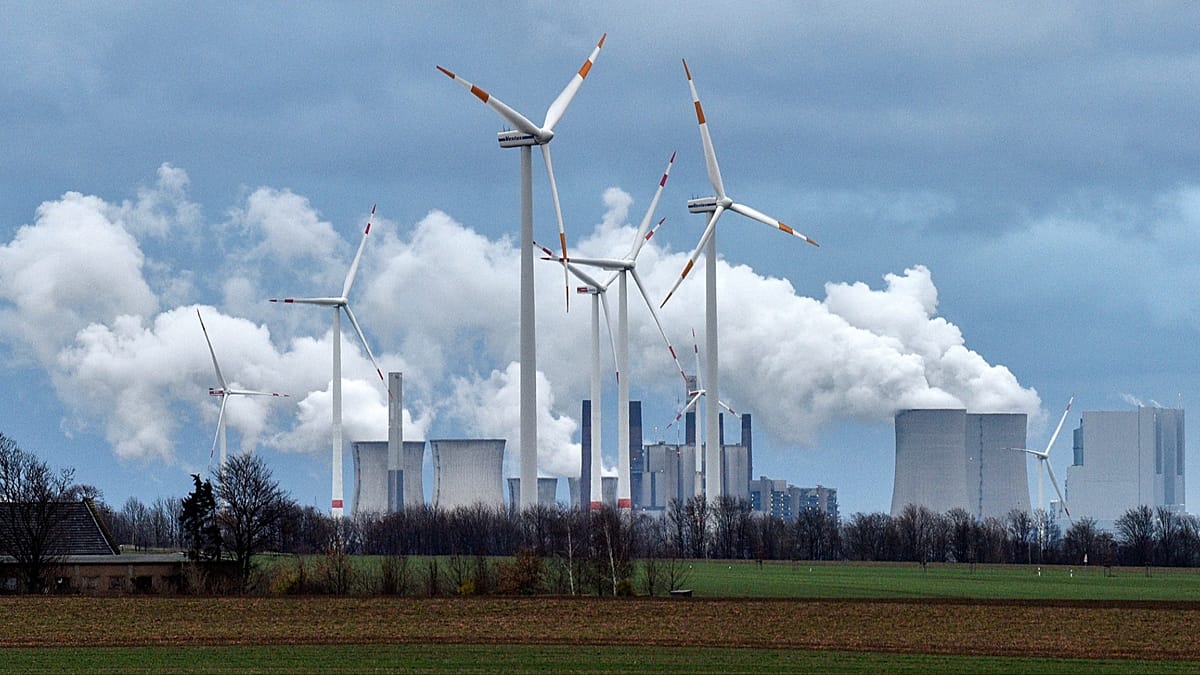
Six years after the European Union first committed to cutting greenhouse gas emissions by at least 55% by 2030, the bloc's largest economies are showing mixed results. The legally binding target, adopted in 2021, is central to the EU's broader ambition of carbon neutrality by 2050. In March, the European Council also set an interim goal of reducing net emissions by 90% by 2040, relative to 1990 levels. However, from 2036, member states may use international credits—up to 5% of 1990 net emissions—to meet the 2040 target, a provision critics say could delay domestic action.
Sarah Heck of Climate Action Tracker warns: "It's a risky step backwards that undermines the principle that climate targets should drive real, domestic emission reductions."
Germany's Stalled Progress
Germany, the EU's largest economy, has pledged to cut emissions by 65% by 2030 under its Federal Climate Change Act. Yet a recent report from the Council of Experts on Climate Change indicates the country may overshoot its CO2 projections by up to 100 million metric tonnes. Emissions remained flat in 2025, as declines in industry and energy were offset by increases in construction and transport. The land use sector, once a carbon sink, is now a net source of emissions—a trend expected to continue beyond 2045.
Chancellor Friedrich Merz unveiled a 67-point programme in March to address these shortfalls, including adding 12 GW of onshore wind capacity and boosting electric vehicle sales. But the government recently watered down a draft law requiring households to replace fossil-fuel boilers with climate-friendly alternatives. Katherina Droege, parliamentary leader of the Greens, called it "a complete abandonment of Germany's climate targets." Meanwhile, Germany's reliance on international credits and its LNG deal with Canada highlights the tension between domestic cuts and external offsets.
France's Slow Decarbonisation
France aims for a 50% reduction by 2030. While it led the EU in clean power generation in 2025—with nuclear providing the bulk and fossil fuels just 5.2%—overall emissions are falling too slowly. Data from Citepa shows a 1.5% decrease in 2025, following 1.8% in 2024 and 6.8% in 2023. To meet its target, France needs annual cuts of 4.6%, more than triple the current pace. Transport remains the main drag, accounting for nearly a third of emissions and dropping only 1.4% in 2025 against a 5% annual target.
In April, France unveiled a national roadmap to phase out coal by 2030, oil by 2045, and gas for energy by 2050. Measures include banning gas boilers in new buildings from 2026 and targeting two-thirds of new car sales as electric by 2030. Yet the late timing of these commitments raises doubts about their impact on the 2030 goal.
Italy's Coal Dependency
Italy must cut emissions by 43.7% by 2030. Renewable energy provided 41% of electricity in 2025, driven by a surge in solar (14.5% of the mix). However, the European Environment Agency warns that "significant acceleration" is needed. Italy still relies on coal, even as geopolitical tensions underscore the risks of fossil fuel dependence. Prime Minister Giorgia Meloni's government has yet to phase out coal entirely, a stance that contrasts with Spain's more aggressive transition.
Spain's Success Story
Spain is on track to exceed its 2030 target, thanks to rapid renewable deployment and a robust climate social plan. The country's €9 billion climate social plan supports the energy transition while protecting vulnerable households. Spain's emissions have fallen sharply, driven by wind and solar expansion, and it is expected to surpass its national goal. This success underscores the potential for ambitious policy to deliver results, even as larger economies lag.
The EU's 2030 target remains achievable collectively, but the divergence among member states highlights the need for stronger enforcement and domestic action. Without it, the bloc risks relying on international credits that critics argue undermine the integrity of its climate commitments.