In the small town of Klettwitz, deep in Germany's Lusatia region, a new landmark is taking shape. For decades, this area was defined by lignite mining, its landscape scarred by giant bucket-wheel excavators. Now, as Germany accelerates its coal phase-out, the region is reinventing itself as a hub for renewable energy—and at the heart of that transformation stands a structure that will soon dwarf the Eiffel Tower.
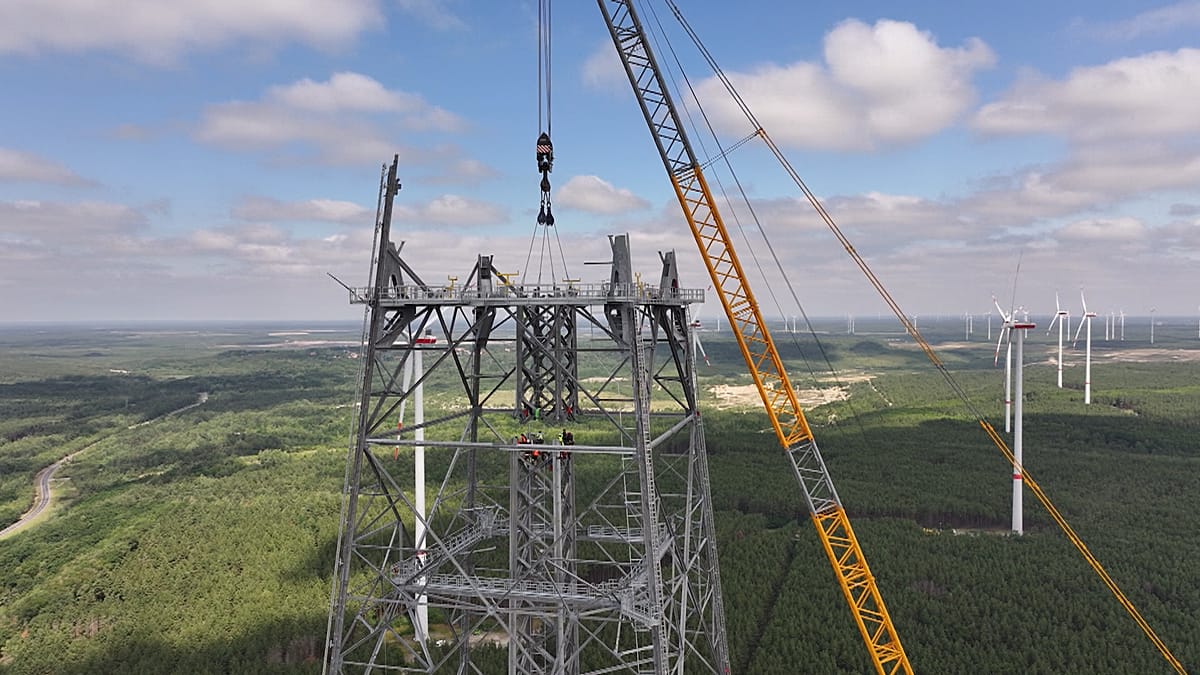
The GICON high-altitude wind power plant, currently under construction, will rise 365 metres above ground level when completed this autumn. That makes it the tallest wind turbine in the world, surpassing even the 330-metre Eiffel Tower in Paris. The project is a technical feat, requiring Europe's largest and most powerful crane to lift tower segments weighing many tonnes into place, while high-altitude climbers work at heights of 160 metres to assemble the structure.
Why go so high?
The logic behind the towering design is simple: wind speeds increase with altitude, and higher winds are both stronger and more consistent. Jochen Großmann, the founder and CEO of GICON, explains that the extra height allows the turbine to generate more than double the output of conventional turbines in the surrounding area. "Because the wind blows stronger and more steadily the further I get from the Earth's surface," he says, "that's why wind turbines have become taller and taller—because there's so much wind up there that they generate more than double the output of the turbines standing here in the surrounding area."
Großmann's vision extends beyond a single record-breaking turbine. He envisions future wind farms with "two storeys," where tall turbines are installed alongside existing ones, effectively harvesting wind at two different heights. "Retrofitting existing wind farms with taller windmills alongside regular ones gives us two tiers of high-altitude windmills, and allows us to triple the yield from the same area," he estimates. This approach could dramatically increase the efficiency of wind energy without requiring vast new tracts of land.
GICON plans to erect 100 high-altitude windmills by the early 2030s, with an ambitious goal of scaling up to 1,000 plants shortly thereafter. Großmann sees enormous potential, not just in Germany but globally. "All the wind farms in Germany would offer the potential for 4,000 additional high-altitude wind turbines," he stresses. "Simply by retrofitting existing wind farms. That's an incredible amount of potential. This also applies to African countries. We've had enquiries from Asia. The Chinese are asking about it. I think there's huge international potential here."
The project is a symbol of Germany's energy transition, or Energiewende, as the country moves away from fossil fuels. Lusatia, once a bastion of coal, is now dotted with solar and wind farms on the spoil heaps of former opencast mines. The GICON turbine stands as a testament to how former industrial heartlands can become pioneers in climate technology.
While the turbine is still under construction, its impact is already being felt. The project has attracted international attention, with inquiries from Asia and Africa. If GICON's plans come to fruition, the high-altitude design could become a standard feature of wind farms across Europe and beyond, helping to meet renewable energy targets while making more efficient use of land.
For now, the team in Klettwitz is focused on completing the structure. The yellow crane, a monster machine, continues its work, lifting segments into place as climbers move up and down the steel struts. By autumn, the world's tallest wind turbine will be operational, a striking addition to the Lusatian skyline and a clear signal that Germany is serious about its climate goals.
As Europe grapples with the challenge of scaling up renewable energy, projects like this offer a glimpse of what's possible. The GICON turbine is not just a feat of engineering; it's a blueprint for a future where wind power can be harvested more efficiently, even in areas already dedicated to renewable generation. And with the potential to retrofit existing wind farms, the impact could be felt far beyond Germany's borders.