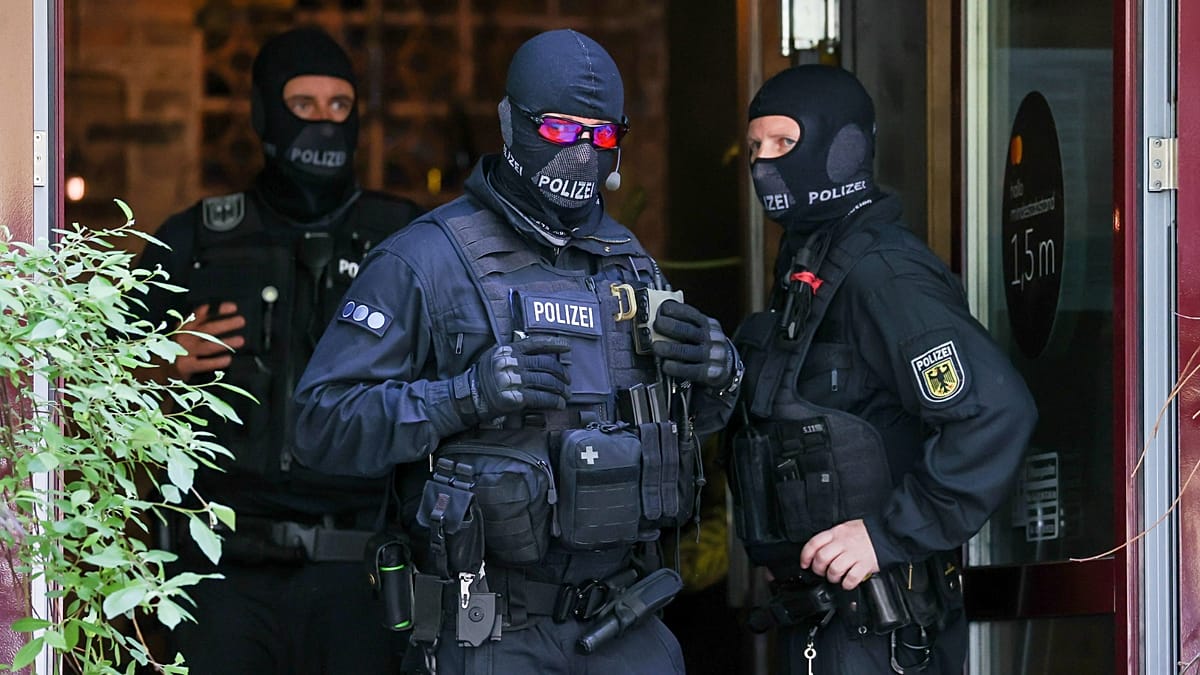
Germany's eastern state of Saxony has intensified its fight against organized crime with a dedicated unit targeting Syrian family clans. The Taskforce Clan, established in October 2023, has centered its efforts on four large Syrian families, according to Raiko Märtins, head of the Organized Crime Division at the State Office of Criminal Investigation (LKA) in Saxony.
The LKA warns that criminal activity by these clans remains at a consistently high level, with a notable increase in the Leipzig area. Between 700 and 1,000 people in Saxony are believed to belong to Syrian clans, and 130 are known to police for offenses ranging from violent crimes and drug trafficking to money laundering, tax evasion, and people smuggling.
Taskforce operations and tactics
Märtins told Focus magazine that the clans fund their entire lives through illegal business dealings and reject the German justice system, preferring to settle matters internally. "Basically, they despise our state and our entire system," he said, noting the enormous isolation within these family alliances.
Members set up legitimate-looking businesses to launder money and use front men to conceal their activities. In the Leipzig area, the focus is on four families, some with over 60 members. They support each other through false witness statements and by registering vehicles and bank accounts for others. One man is married to at least three women and has 32 children, with 25 grandchildren in Saxony, Märtins revealed.
In April 2026, authorities raided 50 flats and businesses in Leipzig and surrounding areas, uncovering an alleged people-smuggling operation. Around 50 Syrians are suspected of sending their identity documents to Syria so that lookalikes could enter Germany under false identities.
Rivalries and expert warnings
The emergence of new criminal structures has led to tensions with longer-established clans. Political scientist Mahmoud Jaraba, in a submission to the North Rhine-Westphalia state parliament, observed a growing trend of criminal activities in "new clans," particularly within Syrian communities. He cited an incident in Essen in June 2023, where dozens of people from a Lebanese-origin family attacked a Syrian restaurant, leading to violent clashes.
Jaraba warns against generalizing such incidents. The vast majority of Syrians in Germany have nothing to do with criminal structures, and blanket suspicion can reinforce social exclusion and hinder integration. The conflicts are not solely about crime; political and ethnic tensions from Syria and Lebanon are also carried over into Germany.
The Taskforce Clan, which includes staff from the LKA, Federal Police, customs, and tax investigation units, has conducted around 40 major operations, leading to arrests and prison sentences. Similar task forces exist in other federal states. Syrians constitute the largest group of foreign nationals involved, followed by Afghans and Iraqis.
As Germany grapples with these challenges, it also faces other security and social issues, such as the disappearance of Ukrainian soldiers during training and the record heat-related deaths last summer. The situation for Syrians in Germany remains complex, with some considering return after Assad's fall, but facing a harsh reality back home.