As Russia's full-scale invasion of Ukraine enters its fourth year, the Bundeswehr has trained roughly 29,000 Ukrainian soldiers on German soil. But a new investigation by the weekly magazine Die Zeit has revealed that a significant number of those troops never return to their units.
According to the report, the interior ministry of Saxony-Anhalt alone is aware of around 80 cases of Ukrainian soldiers who went missing after completing their training in the state. Across Germany, the number is believed to run into the hundreds, although the federal government has not published any nationwide statistics, and no other state has confirmed figures.
Training far from the front
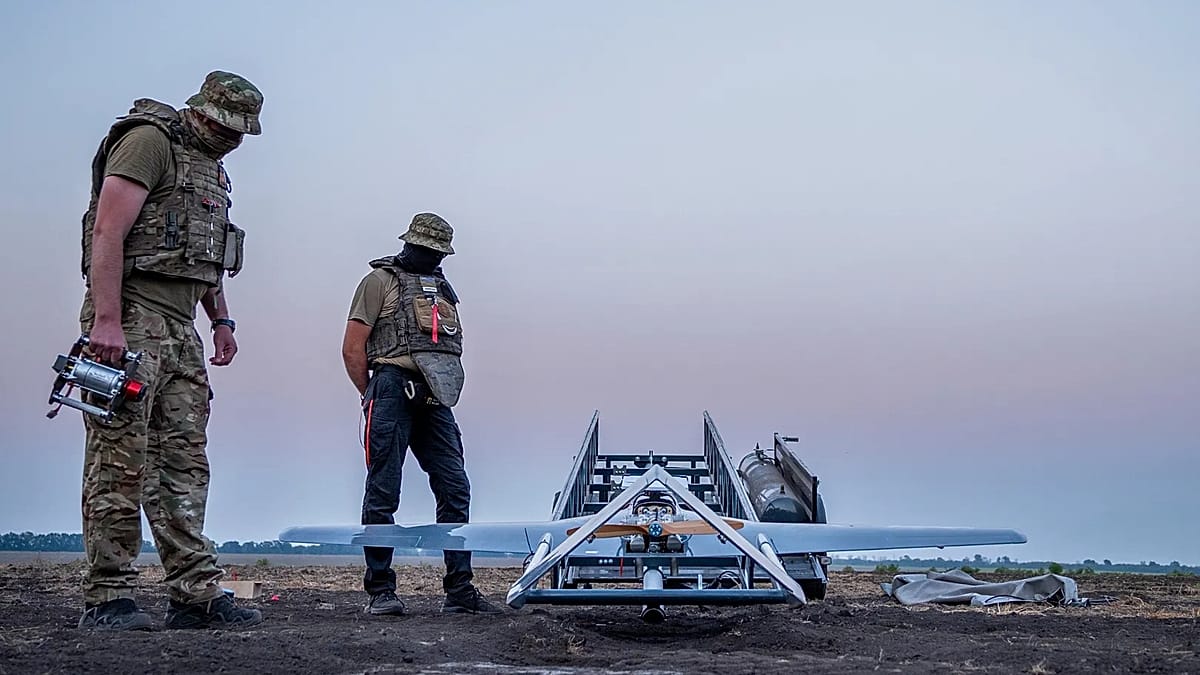
The instruction takes place at multiple Bundeswehr facilities, where Ukrainian recruits learn weapons handling, camouflage techniques, and basic first aid. Once the course ends, they are expected to head back to Ukraine and be deployed against Russian forces. For those who choose not to return, the consequences can be severe: under Ukrainian military law, leaving one's unit without permission can be treated as desertion, an offence punishable by several years in prison.
The situation also creates a legal grey area in Germany. The simplified residence status granted to Ukrainian war refugees does not automatically apply to soldiers who were sent to Germany for training. Some may attempt to stay by applying for asylum, but their chances are slim.
In June, EU member states agreed in Brussels to exclude men of military age from the bloc's automatic protection scheme, a move requested by the Ukrainian government. Under the new rules, only those who have already completed their military service or are formally exempt from it can benefit from simplified admission. Proof, such as a passport stamp or an official certificate, will be required to show that departure from Ukraine was lawful.
The desertions come at a delicate moment for Ukraine, which is struggling to replenish its ranks. The issue has already sparked political tensions in Kyiv, where protests have erupted over calls for wartime elections. Meanwhile, the war's economic toll continues to mount, with Ukrainian strikes on Russian refineries deepening Moscow's fuel crisis.
For Germany, the phenomenon poses a diplomatic and legal challenge. Berlin has been one of Kyiv's staunchest military backers, and the training programme is a cornerstone of that support. Yet the disappearance of trained soldiers raises questions about the effectiveness of the programme and the obligations of host nations.
The German interior ministry has not commented on the Die Zeit findings, and no official data is expected in the near future. But the report has already reignited debate in Berlin about how to handle Ukrainian soldiers who refuse to return to the battlefield.
In the meantime, the soldiers who remain in Germany face an uncertain future. With asylum applications likely to be rejected, they could find themselves in a legal limbo, unable to return to Ukraine without risking prosecution and unable to build a new life in the EU.
The situation is further complicated by recent security incidents involving Ukrainians in Europe, such as the detention of a Ukrainian in Croatia over the Nord Stream sabotage and the conviction of a Ukrainian man for spying in Germany. These cases have heightened scrutiny of Ukrainian nationals in the EU, even as the bloc remains committed to supporting Kyiv's war effort.
For now, the desertions remain a sensitive topic for both governments. Ukraine needs every trained soldier it can get, while Germany must balance its support for Kyiv with the legal realities on its own soil.