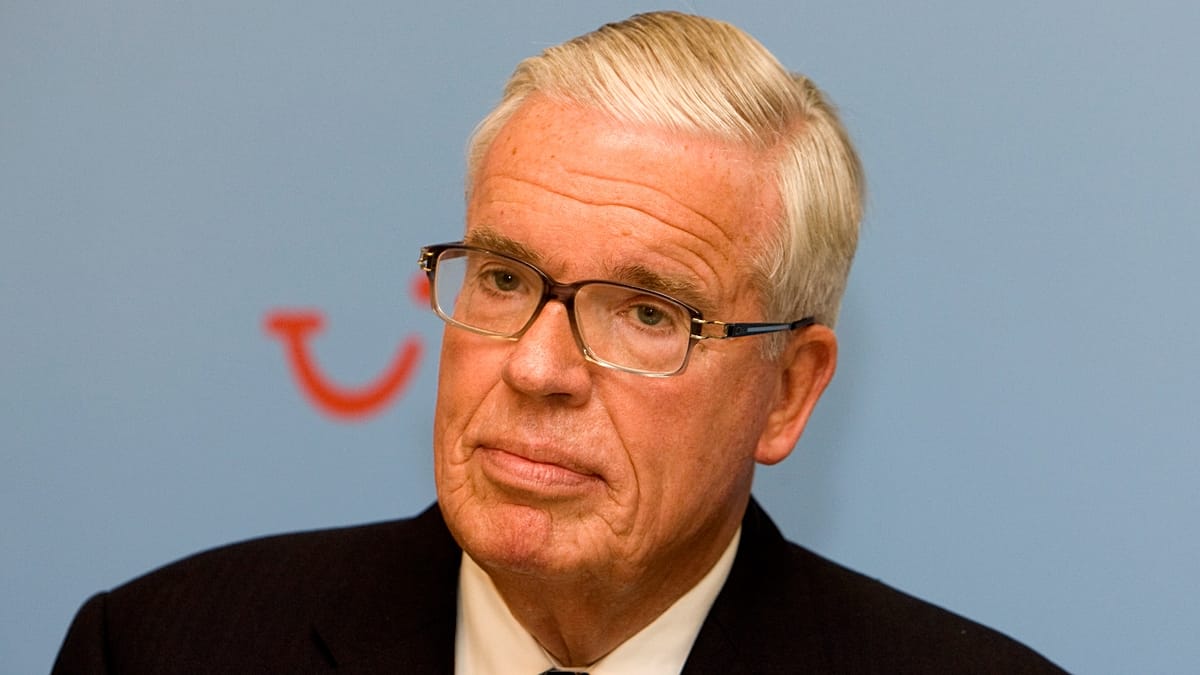
When Klaus-Michael Kühne died on 24 August 2026, the logistics magnate closed the final deal of his life. With no children and no direct heirs, his €42.2 billion fortune moved seamlessly into the Kühne Foundation, a charity he had established with his parents half a century earlier. The transfer, executed without passing through a will, a court, or a tax office, instantly elevated the foundation into the upper echelons of Europe's philanthropic institutions.
Kühne, who was 89, built his empire from the small Swiss village of Schindellegi in canton Schwyz, where he had lived for decades. His choice of residence was deliberate: Schwyz is one of only two Swiss cantons that levy no inheritance tax whatsoever, regardless of the relationship between the deceased and the beneficiary. This legal quirk, combined with Swiss rules that exempt private companies from publishing annual reports, allowed Kühne to shield a significant portion of his wealth from public scrutiny. German media estimates suggest that up to 30% of his true fortune may never have been disclosed.
Kühne's business career was defined by a contrarian strategy: buying and rescuing companies when they were struggling. This approach built Kühne+Nagel into the world's largest air and sea freight forwarder, and also gave him significant stakes in other transport giants, including a 30% holding in Hapag-Lloyd, one of the world's biggest container shipping lines, and a 15% stake in Lufthansa, Germany's flag carrier. He also briefly owned a fifth of VTG, Europe's largest private wagon-hire company, buying in for €160 million in 2016 and selling two years later for €300 million.
His net worth had more than quadrupled over the past decade, according to the Bloomberg Billionaires Index, reaching $49 billion (€42.2bn) at the time of his death. The bulk of this wealth was tied up in his nearly 60% stake in Kühne+Nagel, but the portfolio also included shares in chemicals group Brenntag, a chunk of bus operator Flix, and property such as Hamburg's Fontenay hotel.
A foundation with global ambitions
The Kühne Foundation, which already operates 20 subsidiary organisations and employs around 800 staff, will now control this vast conglomerate. Its 2026 budget is set at CHF135 million (€144.6 million), with spending allocated roughly 42% to logistics education, 20% to medicine, 15% to climate projects, 11% to humanitarian logistics, and 7% to culture. The influx of assets is expected to generate dividend income of around CHF1 billion a year in an ordinary year, according to the Swiss newspaper Neue Zürcher Zeitung, even if only part of that reaches the foundation itself.
The scale of the foundation now places it among the largest in Europe, though not at the very top. The world's biggest is the Novo Nordisk Foundation, the Danish charity behind the weight-loss drugmaker, which managed roughly €93 billion in assets at the end of 2025. Below that sit the Gates Foundation at around $70.2 billion (€60.5bn) and India's Tata Trusts at upwards of $100 billion (€86.2bn). Britain's Wellcome Trust, the medical research charity, held about $42.8 billion (€36.9bn) as of its most recent published figures — putting it in roughly the same bracket as Kühne's estimated incoming inheritance.
Germany's own Robert Bosch Stiftung, which owns 94% of engineering group Bosch, is a useful contrast in the other direction with around €5.5 billion in total assets — nearly eight times smaller than what Kühne has just handed over, despite Bosch being one of Germany's most recognisable industrial names. Denmark's Carlsberg Foundation follows a similar model to Kühne's, holding just under 30% of Carlsberg Group's shares with 77% of the voting power, plus around €1.55 billion in separate investments, funded by roughly a third of the brewer's annual dividend.
So while Kühne's foundation will not be the biggest charity of its kind in Europe, it lands squarely among the top ten wealthiest charitable foundations in the world, ahead of long-established names like Bosch and on par with Wellcome — built, unusually, almost entirely from one man's decision not to have children and to live in the one place in Switzerland where that decision cost him nothing in tax.
Kühne made no secret of his frustration with Germany's tax and economic system. In a 2022 interview with German broadcaster NDR, he said plainly that the state "cannot manage the economy properly". This sentiment, widely seen as a key reason for his Swiss base, also shaped his philanthropic focus: the foundation's largest allocation goes to logistics education, a field he believed was undervalued in Germany.
The foundation's board of trustees, which includes Kühne's wife and a small circle of long-time advisers, now faces the challenge of managing a conglomerate that spans shipping, aviation, chemicals, and real estate. The question of what a charitable foundation does with a controlling stake in a global freight forwarder remains open, but Kühne's legacy is clear: a fortune built on risk-taking and a tax-efficient structure that ensures his wealth will fund good causes for generations to come.