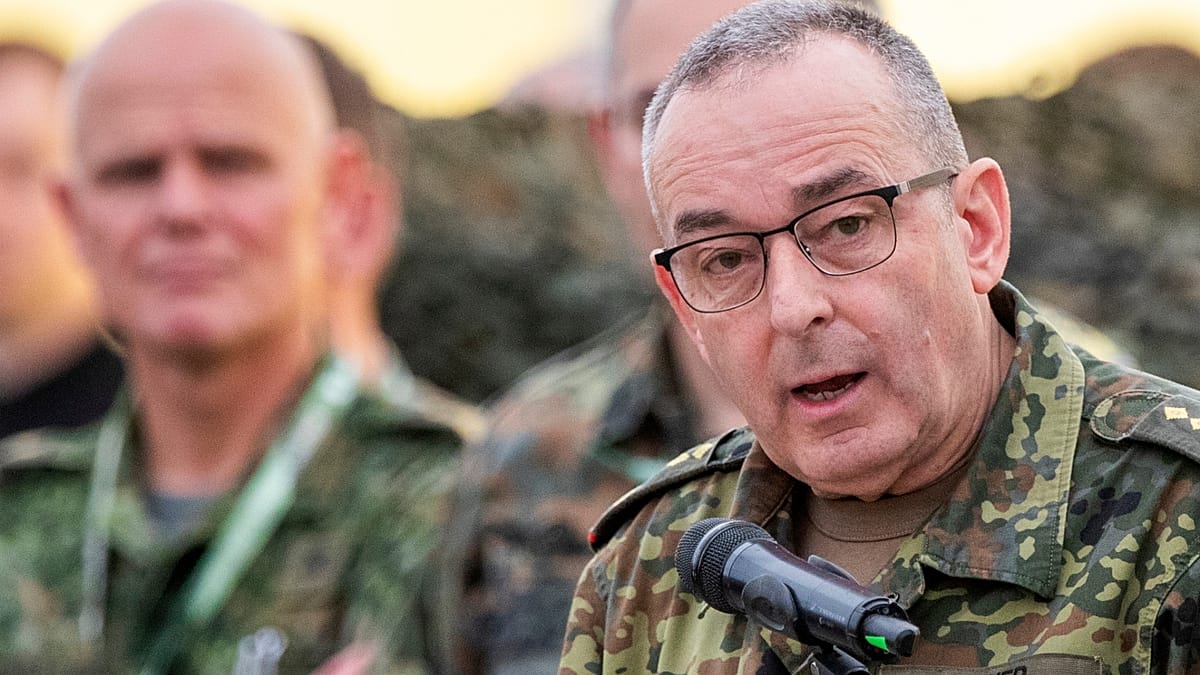
General Carsten Breuer, Germany's highest-ranking soldier, has been elected as the next chair of NATO's Military Committee, the alliance's principal military advisory body. The decision was announced on Saturday following a meeting of the 32-nation alliance's chiefs of defence in Copenhagen.
Breuer, who has served as Inspector General of the Bundeswehr since March 2023, will succeed Italian Admiral Giuseppe Cavo Dragone in July 2027. His three-year term will run through a period when NATO is intensifying efforts to strengthen deterrence against potential Russian aggression, with a strategic focus on readiness by 2029.
A key role in NATO's command structure
The chair of the Military Committee is one of the most influential positions in the alliance, alongside the Supreme Allied Commander Europe (SACEUR). In this role, Breuer will act as the principal military adviser to NATO Secretary-General Mark Rutte and serve as the crucial link between the alliance's chiefs of staff and its political decision-makers.
German Defence Minister Boris Pistorius welcomed the appointment, praising Breuer's strategic vision and his role in restructuring the Bundeswehr. "Now he will bring all his strength and experience to NATO, which faces major, historic challenges," Pistorius said, according to German media.
The selection comes as European allies are taking on greater responsibility for conventional deterrence, while the United States shifts more of its strategic attention to other regions. This evolving dynamic has been a central theme in recent NATO discussions, including those highlighted in von der Leyen's State of the Union address, where she framed defence as a defining challenge for the EU.
Breuer's career spans more than four decades. An army air defence officer who enlisted in 1984, he previously led the Bundeswehr's Territorial Command, which he established, and gained national prominence as head of the Federal Chancellery's COVID-19 crisis staff under Chancellor Olaf Scholz. He is married with three children.
His appointment signals Germany's growing influence in NATO's military leadership, reflecting Berlin's increased defence spending and its central role in European security. As the alliance prepares for a more demanding security environment, Breuer's experience in both operational command and crisis management will be closely watched.
The transition in 2027 will coincide with NATO's ongoing adaptation to new threats, including hybrid warfare and cyberattacks, as highlighted by EU defence chief's warning that Russia must pay a 'painful price' for such actions. Breuer will also work alongside allies exploring innovative defence technologies, such as those discussed by Rheinmetall's CEO on robots and space.
With his appointment, Germany cements its position as a key pillar of NATO's military structure, and Breuer's leadership will be instrumental in shaping the alliance's response to future challenges.