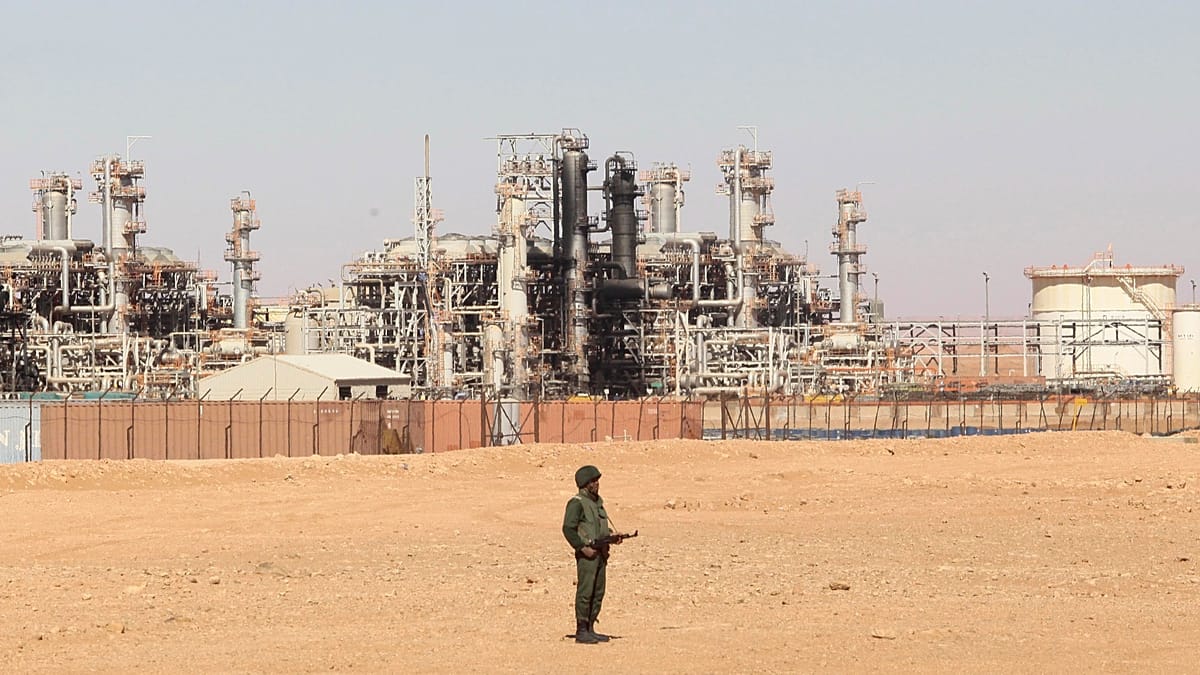
Germany's foreign minister, Johann Wadephul, arrived in Algiers on Tuesday with a business delegation to explore long-term gas deals with Algeria, as Berlin scrambles to secure energy supplies ahead of winter. Speaking to German public broadcaster ZDF on the second day of his visit, Wadephul stressed the urgency: "We need to diversify... We need long-term gas contracts."
The trip comes as Germany's gas storage facilities sit at just 53% capacity, well below the EU average of 65%, according to the Aggregated Gas Storage Inventory. With autumn approaching and no quick resolution to the crises affecting energy markets, Wadephul warned that diversification is no longer optional. "Since there is no prospect of a quick end to both crises it's clear that we need to diversify," he said. "We need more suppliers."
A shift away from Russian gas
Germany, the EU's largest economy, once relied heavily on cheap Russian pipeline gas. That supply largely dried up after Russia's full-scale invasion of Ukraine in 2022, dealing a severe blow to German industry. Since then, Berlin has turned to Norwegian piped gas and American liquefied natural gas (LNG), but LNG prices tend to be higher and more volatile than those secured through long-term pipeline contracts.
Wadephul's visit to Algiers is part of a broader effort to lock in more stable supply sources. He is scheduled to meet Algeria's Energy Minister Mourad Adjal, and representatives from German companies seeking long-term contracts are travelling with him. Noting that Algeria already has gas supply deals with Spain and Italy, Wadephul expressed hope that "Germany will now be able to secure part of its gas supply here. That is our core interest."
Algeria, a major gas exporter to Europe, has been expanding its role as a supplier since the 2022 crisis. Its proximity to southern Europe and existing pipeline infrastructure make it an attractive partner for Germany, which has historically relied on northern and eastern sources.
The urgency is heightened by rising gas prices across Europe, driven in part by the US-Israeli war on Iran. That conflict has put additional pressure on global energy markets, raising fears of a possible energy crunch this winter. German households and businesses are already bracing for higher bills, and the government is keen to avoid a repeat of the 2022 crisis.
In response to that earlier shock, Berlin introduced mandatory minimum storage levels to smooth out price spikes, with the state stepping in as a buyer if necessary. Most storage facilities are now required to be at least 80% full by 1 November. The current 53% level is a cause for concern, though not yet a crisis.
Wadephul's diplomatic push is part of a wider European effort to reduce dependence on a single supplier. The European Commission has been encouraging member states to diversify, and Algeria has emerged as a key partner for the continent. However, competition for Algerian gas is fierce, with Italy and Spain already well-established customers.
For Germany, the stakes are high. Its industrial base, particularly the chemical and manufacturing sectors, depends on reliable and affordable energy. A winter supply shortfall could force factory shutdowns and job losses, undermining the country's economic recovery.
The visit also carries symbolic weight. It signals that Germany is willing to look beyond its traditional partners and engage with North Africa as a strategic energy hub. Whether that translates into concrete contracts remains to be seen, but Wadephul's message was clear: Germany is open for business.
As the continent watches, the outcome of these talks could shape Europe's energy landscape for years to come. With winter looming, every deal matters.