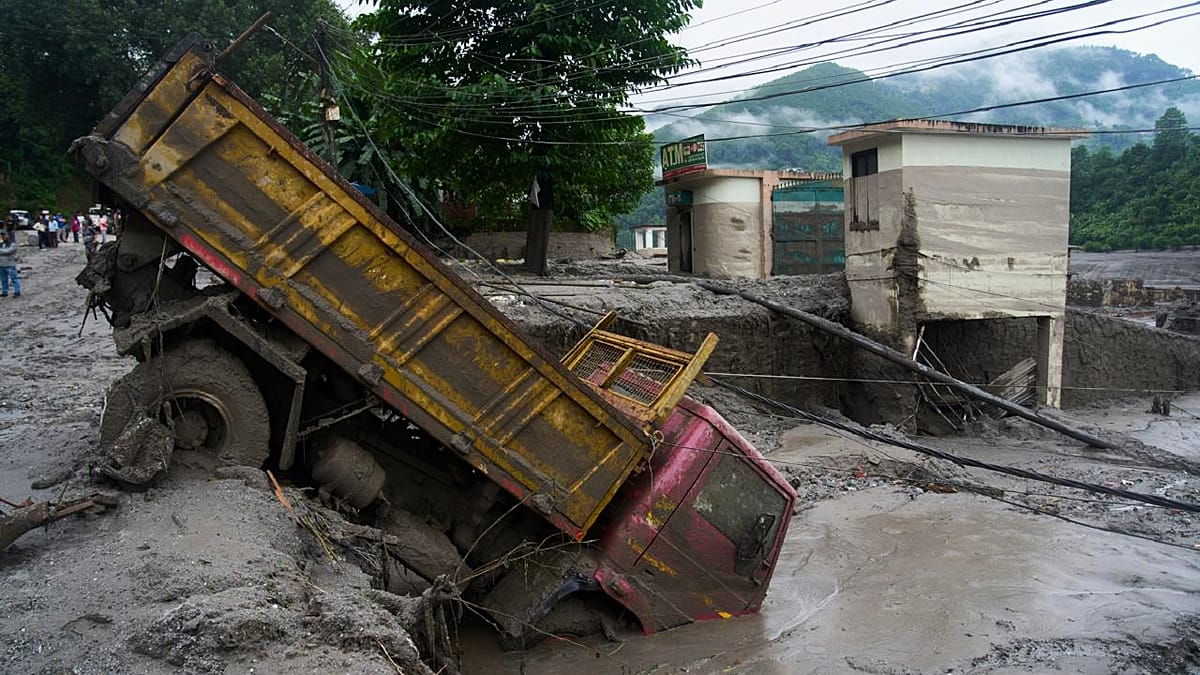
Scientists are increasingly confident that a colossal block of ice breaking from a high-altitude glacier set off the catastrophic flood that swept through Nepal and Tibet, killing at least 353 people and leaving more than 1,300 missing. The disaster, which struck on 23 August, has prompted a scramble to understand the precise chain of events, with researchers combining satellite imagery and ground measurements to piece together what happened.
Simon Cox, principal scientist at New Zealand's GNS Science, told AFP that a large chunk of glacier fell from about 5,200 metres into a valley below. The ice, he explained, “transformed into this raging mass of debris... where it picks up rocks and sediment and trees and anything in the way and fires it on down through the canyon.” The resulting wall of mud and water first engulfed a border post, with CCTV footage showing people fleeing as the debris-laden surge arrived. It then barrelled downstream into Nepal, destroying bridges, flooding villages, and leaving a trail of devastation.
What triggered the surge?
Initial speculation centred on a glacial lake outburst flood (GLOF), a phenomenon where a natural dam holding back meltwater suddenly fails, releasing a torrent. However, experts have found no existing glacial lakes near the collapse site. Adrian McCallum, a glaciologist at the University of the Sunshine Coast, noted that water does flow within and beneath glaciers, but argued that “the only reason why a large volume of water should all of a sudden flow down a valley is because it has been released.” He suggested that water may have accumulated beneath the glacier and been expelled as the ice fell.
Another possibility is that the falling ice temporarily dammed the river, allowing water to build up before bursting through. Summer glacier melt and monsoon rains had likely already raised river levels, and the debris and mud picked up along the way further swelled the flow, according to Cox. Water levels in the affected region rose by as much as nine metres in just 30 minutes, according to researchers at a Kathmandu-based climate group. “It was a huge rise, a huge surge of water that happened suddenly,” said Saswata Sanyal.
The collapse was powerful enough to register as a magnitude 5.2 seismic event at 8:37 am local time, initially mistaken for an earthquake. After further analysis, the US Geological Survey determined that it was a glacial collapse and debris flow, not a tectonic quake.
How satellites are helping
With much of the affected area inaccessible, scientists are turning to satellite imagery to reconstruct the disaster. Lauren Vargo, a glaciologist at Victoria University of Wellington, explained: “We can look at satellite imagery taken before and after the event, and try and see what has changed, essentially looking for what is missing from the mountains in the 'after' imagery.”
Shortly after the seismic event, a nearby water monitoring station stopped transmitting, according to Nepali authorities. Stations downstream then went offline one by one. In Kalikhola, near the Tibet border, water levels reached 12.3 metres at 2:14 pm local time.
Why warnings may not have been enough
Nepali authorities issued flood warnings at around 9:00 am local time, urging communities along the Bhote Khoshi river to “stay on high alert and stay in safe areas.” But it remains unclear how many people received the warning or how much time they had to react. McCallum warned that communities living beneath large glaciers or near potential GLOF sites face an inherent danger: “The reality is, if you are in a community underneath a large glacier and potentially a glacier lake where a GLOF could occur, then to some extent, it's a ticking time bomb.”
Even for those who did get the warning, escape options were limited. Hatim Sharif, a hydrologist at the University of Texas San Antonio, told AFP that “running will not help,” nor will fleeing by vehicle, because the fast-moving mud and water form a lethal combination “like liquid concrete.”
While individual glacial events cannot be directly attributed to climate change, experts stress that rising global temperatures are putting increasing pressure on glaciers worldwide. The disaster has renewed calls for better monitoring and early-warning systems in vulnerable mountain regions. For European readers, the event is a stark reminder of the far-reaching impacts of climate change, even in distant corners of the globe. As the region continues to grapple with the aftermath, the international community, including European research institutions, is likely to play a role in helping to understand and mitigate such risks.