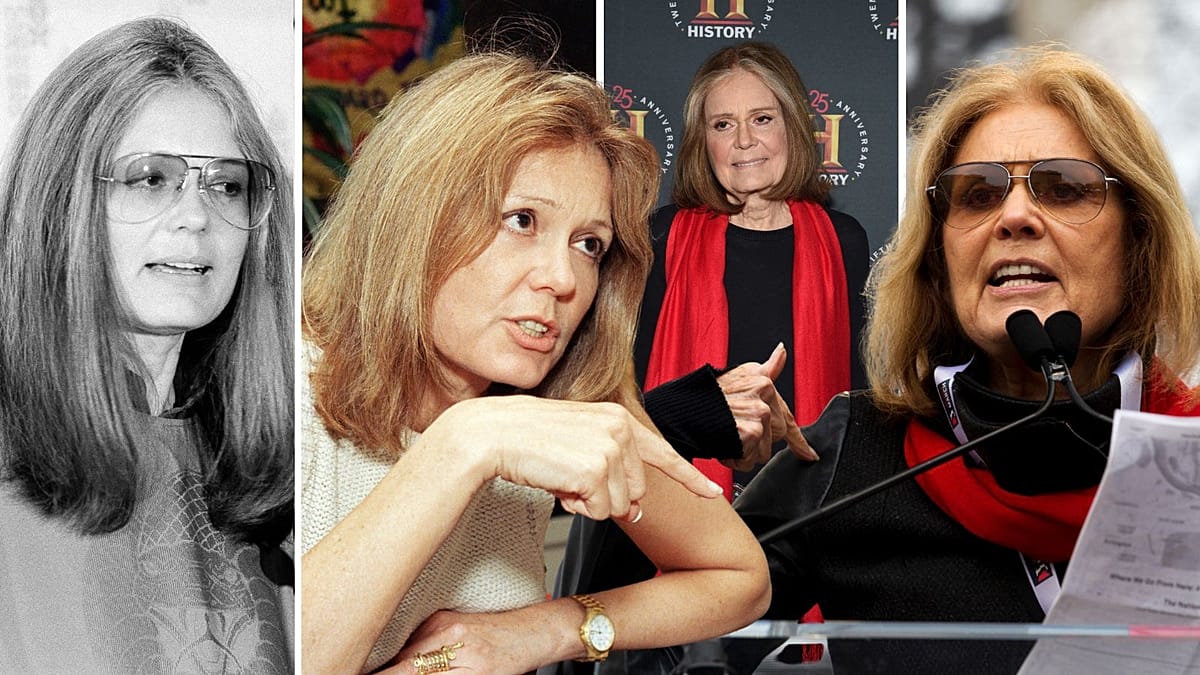
Gloria Steinem, the American writer and activist who became one of the most recognisable faces of modern feminism, has died at 92. Her influence stretched far beyond the United States, inspiring campaigns for equal pay, reproductive rights and political representation across Europe and the wider world.
Steinem was not just a campaigner; she was a sharp observer of power and its absurdities. Her wit often carried the sting of truth, and her quotes have been shared, quoted and misquoted for decades. As tributes pour in from politicians, artists and activists, it is worth revisiting some of her most powerful lines.
A life of unlearning
Steinem often argued that the biggest obstacle to progress was not ignorance but the refusal to question inherited assumptions. "The first problem for all of us, men and women, is not to learn, but to unlearn," she once said. That idea resonated across the Atlantic, where debates about gender quotas in boardrooms and parliaments have long been framed as a battle between tradition and change.
Her analysis of power was never limited to gender alone. "We'll never solve the feminization of power until we solve the masculinity of wealth," she declared, a line that has been cited in discussions from the Élysée to the Bundestag about who controls capital and who gets to shape policy.
Steinem also understood the interplay between culture and politics. "Pop culture shapes our ideas of what is normal and what our dreams can be and what our roles are. Politics, of course, decides how the power and the money in the country is distributed. Both are equally important, and each affects the other." That observation has become a touchstone for media critics and campaigners alike.
Wit as a weapon
Steinem's humour was often her most effective tool. Her famous quip that "a woman without a man is like a fish without a bicycle" was a playful rebuttal to the idea that single women were incomplete. It became a slogan for a generation of women who chose independence over convention.
She was equally unsparing about the institutions that demeaned women. "A woman reading Playboy feels a little like a Jew reading a Nazi manual," she wrote, a comparison that shocked many at the time but underscored her view that such publications were not harmless entertainment but part of a broader culture of objectification.
Her essay on menstruation, written in 1978, remains a classic of satirical feminist writing. Imagining a world where men menstruate, she speculated that "street guys would invent slang ('He's a three-pad man') and 'give fives' on the corner with some exchange like: 'Man you lookin' good!' 'Yeah, man, I'm on the rag!'". The piece exposed the double standards that still surround bodily functions and female biology.
She also turned her wit on political figures. Asked about Donald Trump, she said: "If Trump spoke well of me, I would shoot myself." It was a line that captured her refusal to court approval from those she saw as embodying patriarchal power.
Empathy and sisterhood
Beneath the sharp one-liners lay a deep commitment to solidarity. "Any woman who chooses to behave like a full human being should be warned that the armies of the status quo will treat her as something of a dirty joke. That's their natural and first weapon. She will need her sisterhood," she said.
Steinem believed that change came from collective action, not individual heroics. "The future depends entirely on what each of us does every day; a movement is only people moving," she insisted. That message has been echoed in recent years by organisers of women's marches from Warsaw to Madrid.
Her later years saw her reflect on the limits of earlier feminist victories. "Now we know that, say, women can do what men can do - most folks would agree with that. But we don't know that men could do what women can do," she said, pointing to the unpaid labour of care that still falls disproportionately on women.
Perhaps her most quoted line in recent years was also her most hopeful: "The truth will set you free, but first it will piss you off." It captured her belief that discomfort was a necessary precursor to change.
Steinem was awarded the Presidential Medal of Freedom by Barack Obama in 2013, a rare honour for an activist who had spent much of her career challenging the state. Her legacy, however, is not in the medals but in the countless women and men who took up her call to question everything.
As Europe continues to debate issues from the gender pay gap to violence against women, Steinem's words remain a reminder that progress is never guaranteed. It requires, as she put it, the courage to unlearn and the will to keep moving.