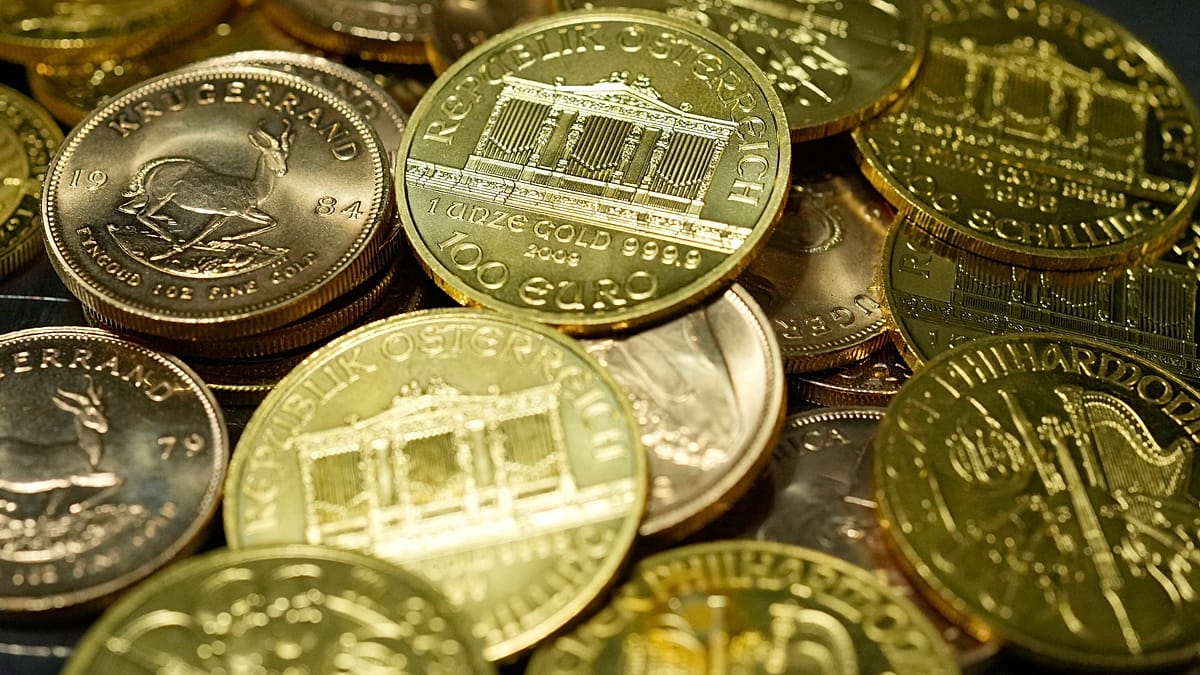
Gold and silver prices have tumbled to their lowest levels in more than a year, as a robust US dollar, climbing bond yields, and growing expectations of another Federal Reserve rate hike in December continue to erode the appeal of precious metals. The slide marks a sharp reversal from the record highs seen earlier this year and has left investors across Europe reassessing their portfolios.
On Monday, spot gold fell to $3,832 an ounce, its weakest level since October 2025, while silver dropped to $46.50 an ounce. Both metals rebounded slightly on Tuesday, with gold rising about 0.75% to $3,861 an ounce and silver climbing over 2% to $47.50 an ounce. Despite the bounce, gold is on track for its biggest annual decline since 2015.
A rates trade, not a safe haven
The fundamental issue is that gold pays no interest, making it less attractive when rates rise, as investors can earn more from bonds and savings. The Federal Reserve raised rates in September for the first time since 2023, and markets now fully price in another hike in December, according to CME Group's FedWatch tool. The yield on 10-year US government bonds has climbed to around 5%, and the US dollar reached its strongest level since April 2025, making metals priced in dollars costlier for buyers holding other currencies, including the euro and pound.
The conflict in Iran has not provided the usual safe-haven support. Instead, the war has driven oil prices and inflation higher, which in turn has fueled bets on higher interest rates. This is a stark contrast to January, when gold hit a record of about $5,600 an ounce and silver peaked at around $121.65 an ounce, before both crashed amid escalating geopolitical tensions in Venezuela and Iran, and after US President Donald Trump picked Kevin Warsh to lead the Fed.
Since then, gold has lost more than 30% from its peak and is down over 10% since the start of the year. Silver, which tends to swing even more sharply, has dropped about 60% from its peak and is down about 34% year-to-date. For European investors, who have traditionally viewed gold as a hedge against uncertainty, the current environment presents a challenge.
Gold edged higher in early trading on Tuesday as the US dollar and bond yields eased slightly, but expectations of a December hike capped the rebound. Investors are now awaiting Wednesday's release of the minutes from the Fed's October meeting for clues on how high rates could go. Warsh did not address the December decision when he spoke at an event on AI at the San Francisco Fed on Monday.
US investment bank Goldman Sachs has turned more cautious, cutting its forecasts earlier this month. It now sees gold at $4,150 an ounce at the end of the year, according to a note, which is still above current prices. That would require gold to climb roughly 7.5% from the current level until the end of 2026.
Central banks remain a source of support for demand. Central banks and other official institutions bought a net 675 tonnes of gold between January and September, 6% more than a year earlier, according to the World Gold Council, an industry body. This ongoing accumulation, particularly by emerging market central banks, provides a floor under prices.
For European markets, the precious metals slump has broader implications. It reflects a global shift towards dollar-denominated assets and higher yields, which can affect European equity markets and currency valuations. The stronger dollar also makes imports more expensive for European countries, potentially adding to inflationary pressures.
Meanwhile, the oil price dynamics linked to the Iran conflict continue to influence rate expectations. If oil prices remain elevated, central banks, including the European Central Bank, may need to keep rates higher for longer, which could further dampen the appeal of non-yielding assets like gold.
As the year draws to a close, investors will be watching the Fed's next moves and any signs of easing in geopolitical tensions. The US-Iran talks have raised hopes for an end to the conflict, which could reduce inflationary pressures and support a rebound in precious metals. However, until there is clarity on the rate path, gold and silver are likely to remain under pressure.