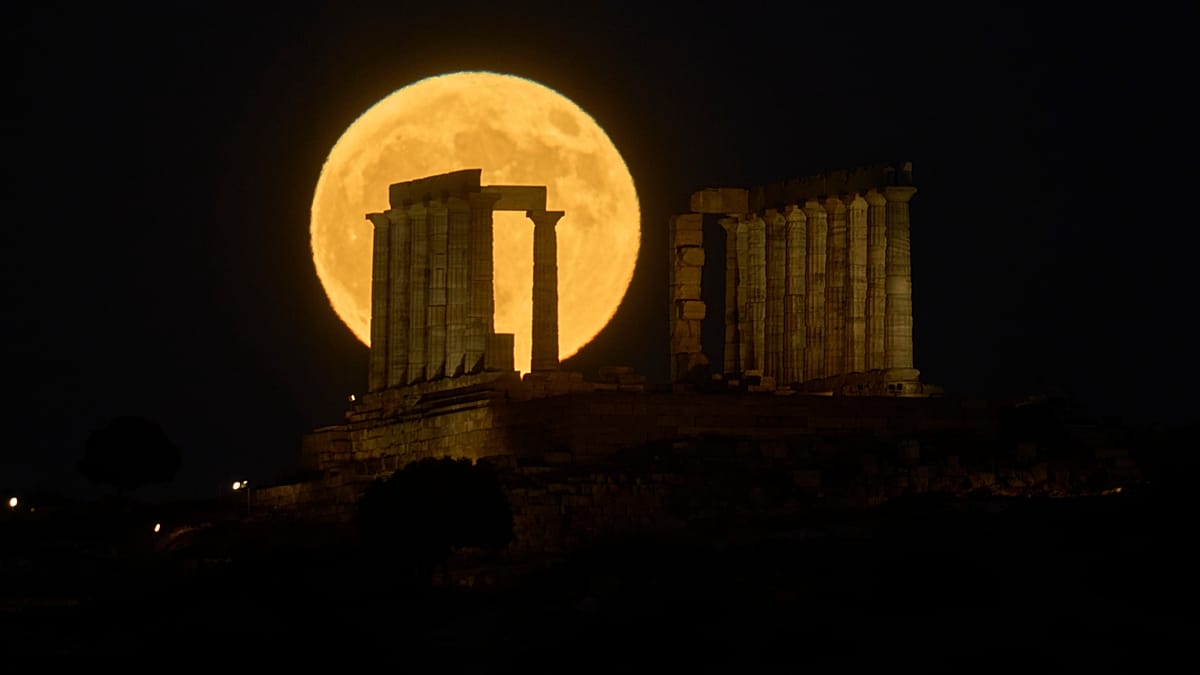
For the 27th consecutive year, Greece is celebrating the August full moon with a nationwide cultural programme that opens archaeological sites, monuments, and museums for free after dark. The initiative, coordinated by the Ministry of Culture, reaches its peak on Friday 28 August 2026, when dozens of venues across the country will welcome visitors under the moonlight.
The programme extends beyond the night of the full moon, continuing through Sunday 30 August. In total, 126 venues are participating, offering free admission on the main night. Of these, 61 have scheduled cultural events, while the remaining 65 will simply open their gates without a ticket. Opening hours vary by site, typically from 19:30 or 20:00 until 23:00 or midnight.
A continent-wide cultural tradition
The August full moon has become a fixture in Greece's summer calendar, drawing both locals and international visitors. This year's edition includes concerts, theatre and dance performances, exhibitions, and guided tours, organised by the General Directorate of Antiquities and Cultural Heritage and the General Directorate for Restoration, Museums and Technical Works. Many events are supported by municipalities, regions, and cultural institutions.
From the Acropolis in Athens to the Palace of the Grand Master in Rhodes, the list of participating sites spans the mainland and the islands. Visitors can explore ancient theatres, Byzantine churches, Venetian fortresses, and modern museums, all bathed in the glow of the full moon. The initiative is a reminder of Greece's rich archaeological heritage, which remains a major draw for travellers across Europe.
For those planning a visit, the Ministry of Culture has published a detailed schedule on its website, listing each venue and its specific hours. Some sites require advance booking for events, while others operate on a first-come, first-served basis. Visitors are advised to check local notices, as some locations may have limited capacity.
The full moon also coincides with other summer activities in Greece. Earlier this week, the country raised its wildfire alert to Code Red for the Ionian islands, a reminder of the dry conditions that often accompany August. Meanwhile, health authorities continue to monitor a West Nile virus outbreak, with 232 cases and 19 deaths reported. Despite these challenges, the cultural programme is proceeding as planned.
For those unable to attend in person, the ministry has promised to share highlights on social media, allowing a wider audience to experience the moonlit monuments. The event has also inspired similar initiatives in other European countries, where heritage sites occasionally open for special night visits.
As the full moon rises over the Aegean, Greece once again demonstrates how its ancient past can be woven into contemporary life. The free-entry nights are not just about access; they are an invitation to see familiar landmarks in a new light. Whether you are in Athens, Thessaloniki, or on a small Cycladic island, the August full moon offers a rare chance to connect with history in a uniquely atmospheric setting.
For more on Greece's cultural offerings and travel tips, see our evening update and midday briefing from earlier this week.