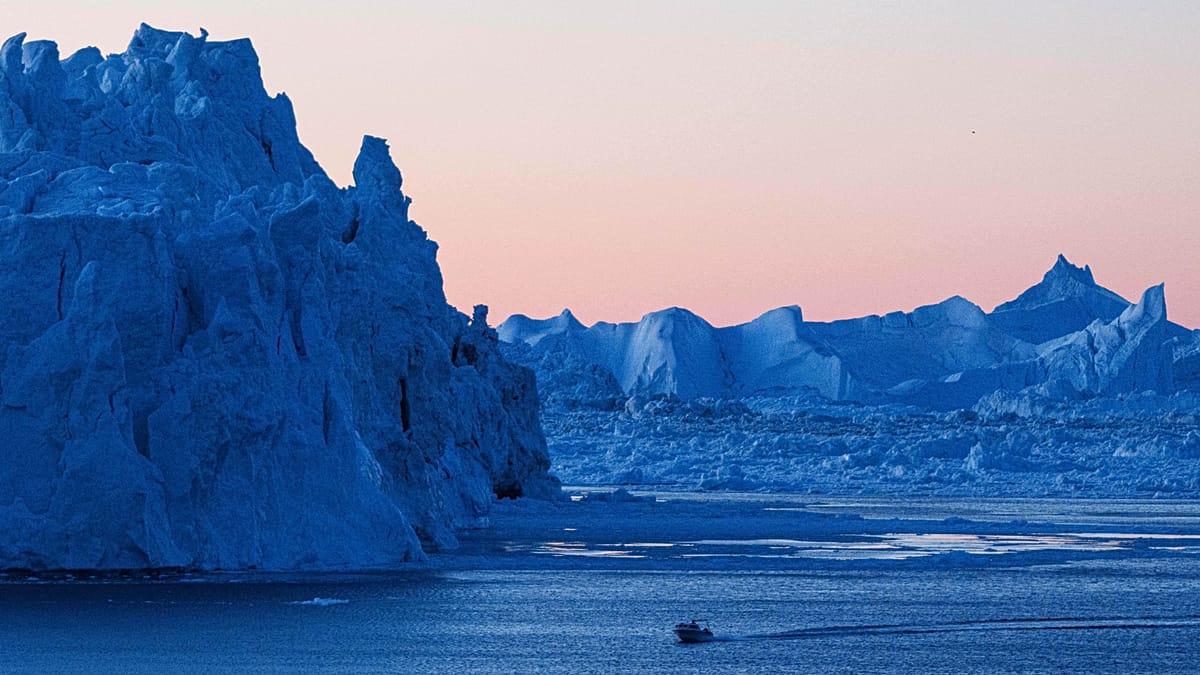
The Greenland Institute of Natural Resources, the Arctic territory’s leading centre for environmental and natural-resource research, has decided to halt new collaborations with United States-based partners. The move is intended to protect its scientists and the integrity of its data, according to the institute’s director, Josephine Nymand.
“I can confirm that we… made the decision to only engage in projects with US partners that we already are or have been working with,” Nymand told AFP. The institute, based in Nuuk, will continue existing projects but will not initiate any new ones with American institutions for the foreseeable future.
In an interview with Greenland’s public broadcaster, KNR, Nymand explained that the decision was driven by concerns over the Trump administration’s actions, including the deletion of large volumes of scientific data from government websites and restrictions on foreign scientists entering the United States. “I can’t do much to help our compatriots if they are detained on arrival in the United States,” she told KNR. “That’s why we decided the best thing was not to go there in the current situation.”
Renewed Tensions Over Greenland
The announcement comes amid a fresh spike in tensions between Washington and Copenhagen over the status of Greenland, a semi-autonomous Danish territory. Last week, US President Donald Trump revived his earlier claim that the island “should be controlled by the United States,” effectively reversing months of diplomatic efforts by European allies to persuade him to drop the demand. Trump’s renewed interest in Greenland, which he first floated in 2019, is widely seen as linked to the island’s strategic location and its vast mineral and energy resources.
The institute’s decision also reflects a broader unease among European researchers about the reliability of US scientific partnerships under the current administration. The Trump administration has cut billions of dollars in public research funding and fired government scientists, while reports and data on climate and the environment have been systematically removed from federal websites. For a research centre whose work depends on long-term climate monitoring and international data sharing, these developments pose a direct threat.
Greenland’s position as a focal point of Arctic geopolitics has only intensified. The island sits on critical shipping routes and is believed to hold substantial deposits of rare earth minerals, oil, and gas. The United States maintains a military base at Pituffik (formerly Thule Air Base) in northwestern Greenland, and Washington has long viewed the territory as vital to its northern defence strategy.
European diplomats have expressed concern that Trump’s annexation rhetoric could destabilise the region and undermine NATO’s cohesion, particularly as the alliance faces internal strains over defence spending and the war in Ukraine. The situation also echoes broader transatlantic tensions, as seen in recent US actions in the Gulf and elsewhere. For more on how these dynamics are testing the alliance, see our analysis on NATO's cohesion tested by Trump, Ukraine war, and internal strains.
For now, the Greenland Institute of Natural Resources is taking a cautious approach. Nymand stressed that the decision was not political but practical: “We need to ensure that our scientists can work safely and that our data remains reliable and accessible. In the current climate, we cannot guarantee that when working with new US partners.”
The institute’s stance may prompt other European research bodies to review their own collaborations with US institutions, especially in fields like climate science, where data integrity and researcher mobility are essential. As the Arctic warms at four times the global average, the need for uninterrupted, transparent scientific cooperation has never been greater.