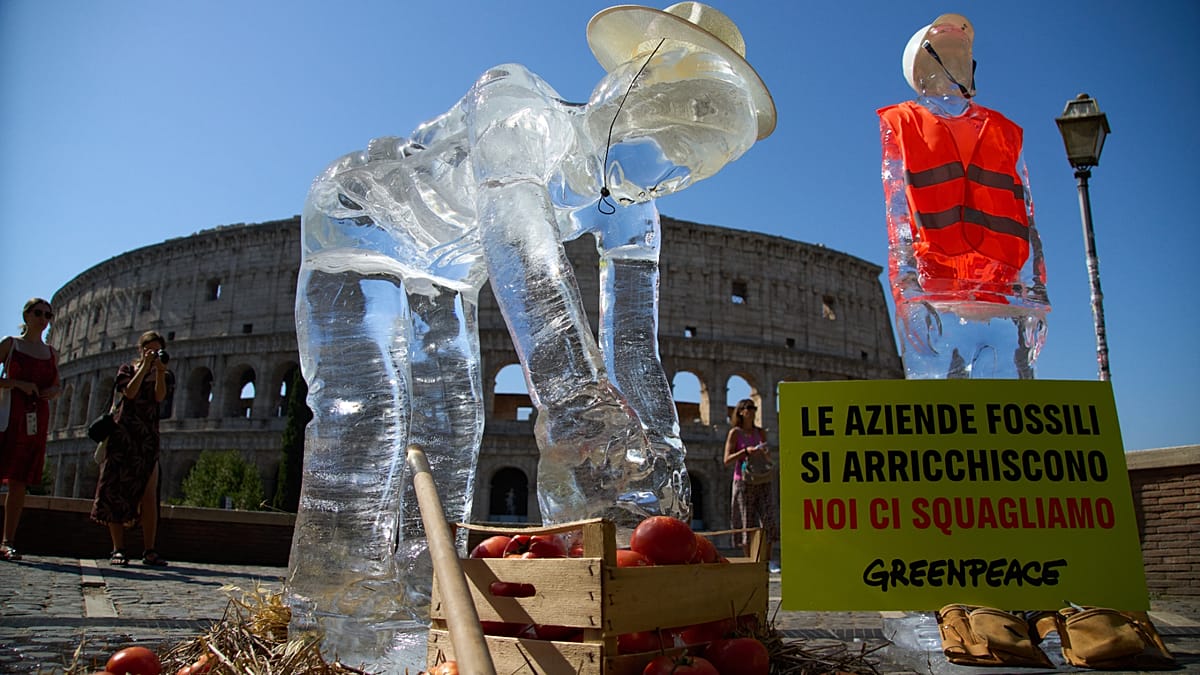
On 15 July 2026, activists from Greenpeace Italy and the CGIL union staged a striking protest outside Rome's Colosseum, melting ice statues to draw attention to the deadly heatwave gripping the Italian capital. The demonstration underscored the growing threat extreme temperatures pose to outdoor workers across Europe and demanded a swift end to fossil fuel dependence.
The ice sculptures, shaped like human figures, were placed in the blazing sun near the ancient amphitheatre. As they melted into puddles, protesters held signs reading “Stop fossil fuels” and “Protect workers.” The choice of location was deliberate: the Colosseum, a symbol of Rome's enduring heritage, now stands as a backdrop to a climate crisis that is reshaping daily life in southern Europe.
Heatwaves and Labour Rights
Italy has been sweltering under a prolonged heatwave, with temperatures in Rome exceeding 40°C for several consecutive days. The CGIL union, one of the country's largest labour organisations, has warned that outdoor workers—including construction labourers, agricultural hands, and delivery riders—face heightened risks of heatstroke and dehydration. “No one should have to choose between their health and their paycheck,” said a CGIL spokesperson at the protest.
Greenpeace Italy echoed these concerns, linking the extreme weather to broader climate trends. “This is not a one-off event,” said a Greenpeace campaigner. “Heatwaves are becoming more frequent and intense because we continue to burn fossil fuels. We need a just transition that protects both people and the planet.”
The protest comes amid a summer of record-breaking heat across Europe. In June, heatwaves were linked to over 10,000 excess deaths across the continent, according to a recent analysis. June heatwaves linked to over 10,000 excess deaths across Europe highlights the human toll of these extreme events.
France has also been hit hard, with authorities shutting three nuclear reactors as heatwave strains cooling regulations. France shuts three nuclear reactors as heatwave strains cooling regulations illustrates how the energy sector is struggling to adapt. Meanwhile, in Portugal, environmentalists are demanding climate shelters to protect vulnerable populations. Portuguese environmentalists demand climate shelters as heatwaves intensify shows a growing grassroots push for adaptation measures.
The Rome protest also drew attention to the need for systemic change. Greenpeace Italy reiterated its call for Italy to phase out coal, oil, and gas by 2035, aligning with the EU's broader climate goals. The CGIL union, for its part, urged the government to implement mandatory heatwave breaks for outdoor workers and to provide cooling stations in urban areas.
As the ice statues dissolved under the Roman sun, the message was clear: without decisive action, the heat will only get worse. The protest served as a visual reminder that climate change is not a distant threat—it is here, melting the very symbols of our civilisation.