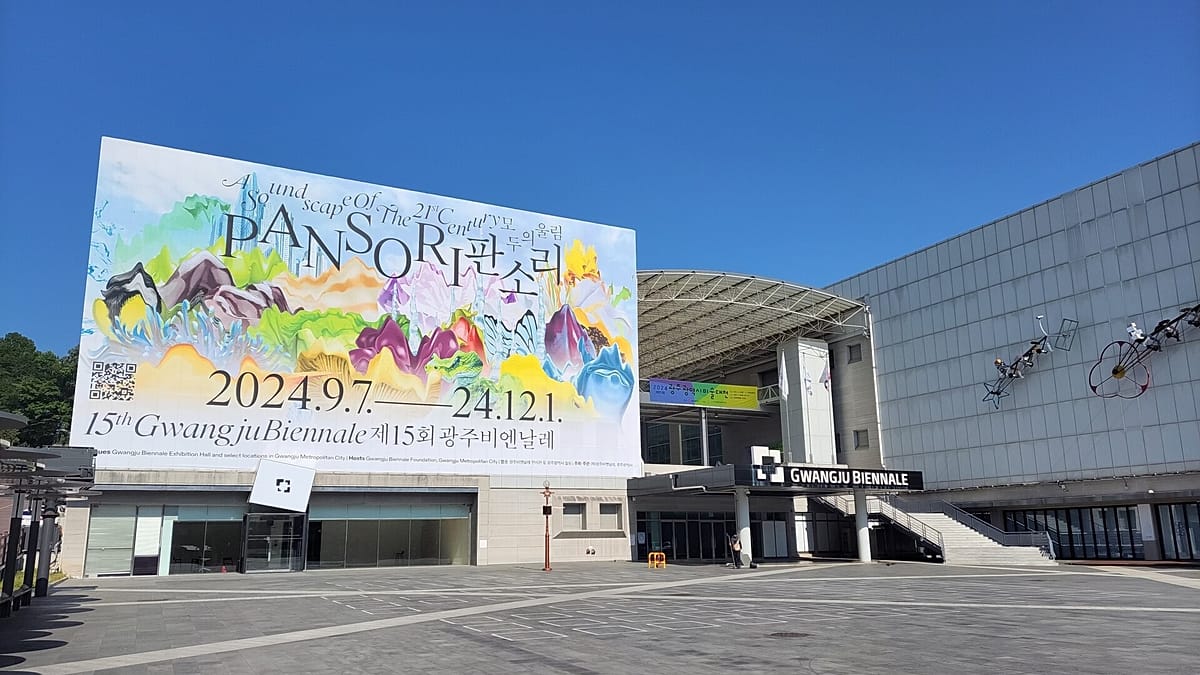
The Gwangju Biennale, one of Asia's most prominent contemporary art events, has become the latest flashpoint in the long-running debate over how Taiwan is named in international forums. The biennale's foundation has renamed Taiwan's exhibition from the "Taiwan Pavilion" to the "NTMoFA Pavilion", a move that Taiwanese artists and government officials condemn as political censorship.
Unlike other national pavilions at the biennale, which are identified by their countries, Taiwan's pavilion is now designated by the acronym of its organizing institution, the National Taiwan Museum of Fine Arts (NTMoFA). The change, which occurred without the consent of the participating artists, has reignited tensions over Taiwan's diplomatic status and its representation in global cultural events.
Artists cry foul
In a statement posted on Instagram on 15 August, the ten participating artists and curator Chen Hsiang-Wen said their project had been accepted as the "Taiwan Pavilion" in April. They claimed the biennale foundation changed the name without their approval, despite repeated objections from NTMoFA and attempts to negotiate.
The artists condemned the decision as part of a political climate in which "diplomatic pressure and economic resources" are used to silence artists. Taiwan's Ministry of Culture has backed the artists, stating that the proposal was approved as the "Taiwan Pavilion" on 2 April and that the agreement signed on 23 April also used that name. The ministry said the foundation only began using "NTMoFA Pavilion" in June.
The Gwangju Biennale Foundation has denied accusations of political censorship. In a statement released on 19 August, it described the dispute as an "administrative difference" and insisted it had no bearing on the exhibition's content or freedom of expression.
A familiar pattern
China has long objected to Taiwan being referred to by its name, and for years, cultural organizations and companies worldwide have yielded to Beijing's demands. The Gwangju Biennale's decision echoes earlier incidents, such as the 2002 São Paulo Biennial, where organizers removed "Taiwan" from the pavilion's name after China threatened to withdraw its artists. Taiwanese artist Chang Chien-chi responded by shutting down his installation, while other artists contributed letters from their signs to spell "TAIWAN" above the exhibition.
Taiwan also lost its national pavilion status at the Venice Biennale in 2001 after pressure from Beijing. Since then, the Taipei Fine Arts Museum has organized Taiwan's participation as a collateral event. The recent EU Commission's withdrawal of a €2 million grant from the Venice Biennale over the Russian pavilion's reopening shows how geopolitical disputes can affect major art events.
The commercial world has faced similar pressures. In 2018, Chinese authorities demanded that dozens of airlines stop identifying Taiwan as a country on their websites. European carriers including Air France, British Airways, and Lufthansa complied. The same year, Marriott hotels faced a backlash in China after a customer questionnaire listed Taiwan, Tibet, Hong Kong, and Macau as separate countries; the company apologized and adopted "Taiwan, China" in its Chinese-language listings.
Europe's shifting stance
However, Europe has become less willing to accommodate Beijing's demands in recent years. Last year, the EU rejected China's claim that UN Resolution 2758 recognized Taiwan as part of China. In July, the European Parliament went further, mentioning Taiwan 44 times in a recommendation on East Asia and describing it as a "reliable key democratic partner" of the EU.
The Gwangju Biennale dispute comes amid heightened global attention on Taiwan's status, including civil defense drills in Kaohsiung and ongoing debates in European capitals about relations with Beijing. For the artists involved, the naming issue is not merely symbolic; it affects how their work is perceived and the political context in which it is shown.
As the biennale prepares to open, the controversy shows no signs of abating. The artists have vowed to continue their protest, and Taiwan's government has pledged support. The foundation, meanwhile, maintains that the name change is a matter of administrative procedure, not politics. For observers, the episode is a reminder that in the art world, names can carry as much weight as the works themselves.